Three historic firsts. Two geographic poles. One extraordinary winning streak that changed the history of human exploration.
In the history of exploration, few individuals have assembled a record of consecutive landmark achievements as remarkable as Roald Amundsen.
The Norwegian explorer accomplished what generations of sailors, scientists, and adventurers had attempted for centuries. He navigated the legendary Northwest Passage, led the first expedition to reach the South Pole, and helped complete the first verified flight over the North Pole.
These were not isolated victories. They formed a remarkable sequence of historic firsts spanning two decades, achieved through preparation, adaptation, extraordinary endurance, and an almost obsessive attention to detail.
In 2026, the centennial of his historic North Pole flight, Winning Streak revisits the man who transformed the limits of human exploration.
The First Victory: The Northwest Passage, 1903–1906
For centuries, European explorers searched for a navigable sea route connecting the Atlantic and Pacific Oceans through the Arctic islands of northern Canada.
Many expeditions failed. Ships became trapped in ice. Crews suffered starvation, disease, and death. The disastrous expedition of Sir John Franklin in 1845 had become a haunting symbol of the dangers.
Amundsen approached the challenge differently.
In 1903, at age 30, he departed Norway aboard the Gjøa, a small fishing vessel adapted for Arctic exploration. Rather than commanding a large expedition, he selected a compact crew and a shallow-draft ship capable of navigating dangerous northern channels.
The expedition spent two winters near King William Island, in what is now Nunavut, Canada.
There, Amundsen made one of the most important decisions of his career: he learned from the Netsilik Inuit, whose generations of knowledge about Arctic survival surpassed anything available in European exploration manuals.
He studied their fur clothing, dogsled techniques, snow shelters, and methods of travelling and surviving in extreme cold.
These lessons would become instrumental in his future success.
By 1906, the Gjøa had completed the first successful navigation of the Northwest Passage by a single vessel.
Winning Streak No. 1: A centuries-old geographic challenge had finally been solved.
The Second Victory: The South Pole, 1911
Amundsen initially intended to pursue the North Pole, but reports in 1909 that American explorers Frederick Cook and Robert Peary had reached it prompted a dramatic change of direction.
He turned his attention south.
His principal rival was British naval officer Robert Falcon Scott, who was preparing an ambitious Antarctic expedition.
The race would become one of the most famous competitions in exploration history.
Amundsen established his Antarctic base, Framheim, at the Bay of Whales on the Ross Ice Shelf. His strategy emphasized speed, carefully positioned supply depots, reliable dogsled transportation, expert skiing, and equipment tested under extreme conditions.
On October 20, 1911, Amundsen and four companions began their final journey toward the geographic South Pole.
The five men were Roald Amundsen, Olav Bjaaland, Helmer Hanssen, Sverre Hassel, and Oscar Wisting.
They crossed vast ice fields, climbed the Axel Heiberg Glacier, and endured extraordinary cold and physical exhaustion.
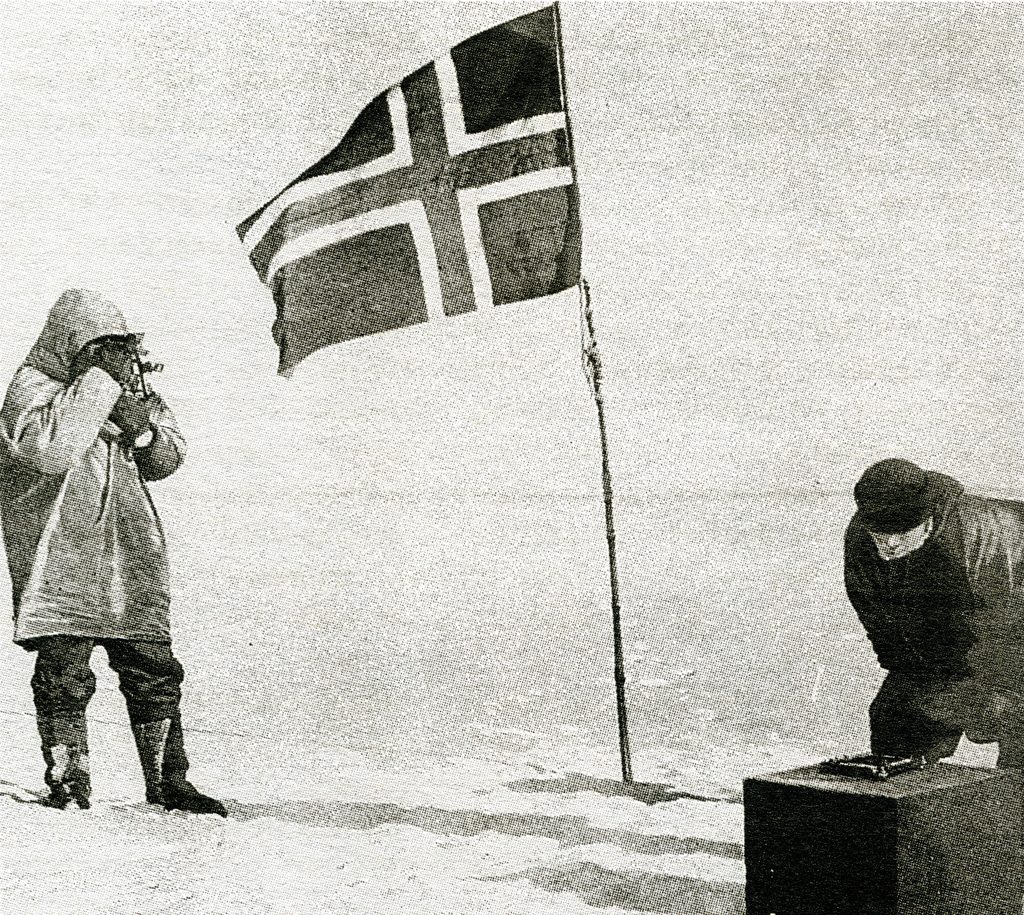
On December 14, 1911, they reached the South Pole.
They planted the Norwegian flag at the southernmost point on Earth, becoming the first confirmed expedition to reach that geographic destination.
Scott’s party arrived approximately five weeks later, discovering that the Norwegians had beaten them. Tragically, all five members of Scott’s polar party died during their return journey.
Amundsen and his four companions returned safely to Framheim in January 1912, completing a 99-day journey of approximately 3,000 kilometres.
Their success was not merely the result of courage. It was a demonstration of superior logistical preparation, practical knowledge, and the disciplined execution of a carefully developed plan.
Winning Streak No. 2: The first human expedition to reach the South Pole—and return safely.
The Years Between: A Winning Streak Tested
Amundsen’s career was not an uninterrupted string of easy victories.
In 1918, he launched another major Arctic expedition aboard the Maud, seeking to study the Arctic Ocean and pursue his long-standing ambition of crossing the polar basin.
The expedition navigated the Northeast Passage, although Amundsen was not the first to complete that route. The prolonged voyage generated valuable scientific observations but also brought financial difficulties and considerable frustration.
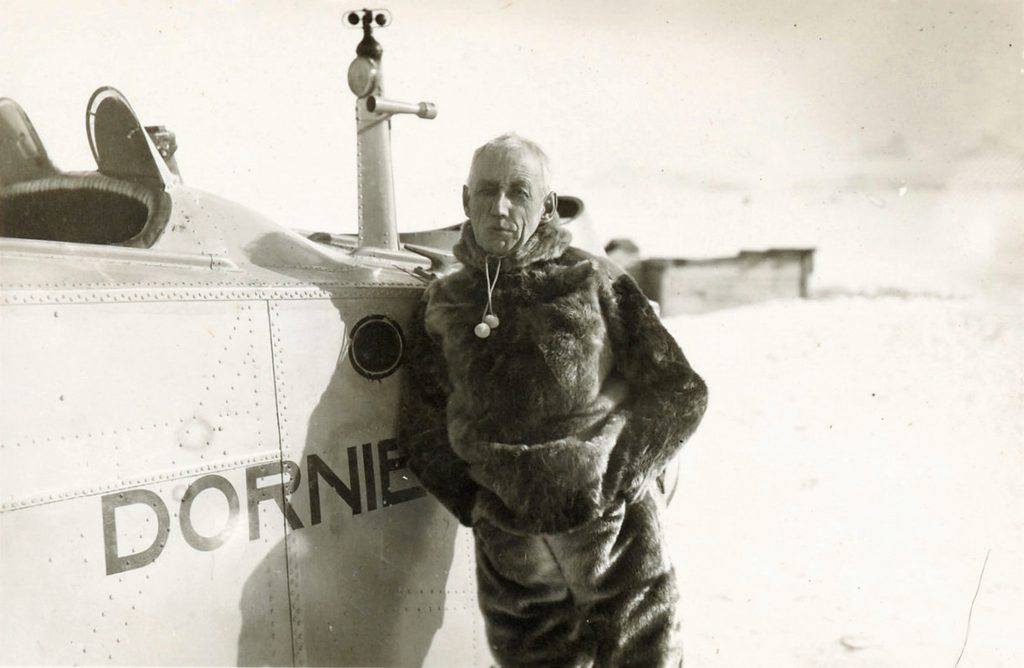
In 1925, Amundsen attempted to fly toward the North Pole with American explorer Lincoln Ellsworth using two Dornier flying boats.
The aircraft were forced to land on the Arctic ice at approximately 88 degrees north latitude, short of their destination.
The survivors spent weeks struggling to prepare an improvised runway before escaping in one aircraft.
It was a dramatic setback, but it also provided valuable practical experience.
Amundsen’s greatest remaining ambition was still ahead.
The Third Victory: The North Pole, 1926
On May 11, 1926, the airship Norge departed Ny-Ålesund, Svalbard, on an ambitious flight across the Arctic Ocean.
The international expedition was led by Amundsen and Lincoln Ellsworth, with the airship designed and piloted by Italian engineer Umberto Nobile.
Sixteen men were aboard.
On May 12, 1926, the Norge passed over the geographic North Pole, completing what is widely recognized as the first verified flight over the location.
Earlier claims of reaching the North Pole remained disputed, making the documented achievement of the Norge particularly significant.
Norwegian, American, and Italian flags were dropped onto the ice below.
The airship continued onward toward Alaska, successfully accomplishing the first aerial crossing of the Arctic Ocean.
With that flight, Amundsen and fellow explorer Oscar Wisting became the first people confirmed to have reached both geographic poles—on foot at the South Pole and by airship over the North Pole.
The achievement represented an extraordinary combination of maritime exploration, polar navigation, international cooperation, and emerging aviation technology.
Winning Streak No. 3: The first verified North Pole overflight, completing Amundsen’s historic achievement at both ends of the Earth.
The Method Behind the Winning Streak
What made Amundsen different?
His distinguishing strength was not an absence of fear or failure. It was his determination to remove unnecessary risks before undertaking extraordinary challenges.
He understood that successful exploration depended on much more than personal bravery.
He studied the environment, assembled experienced teams, selected suitable equipment, established dependable supply systems, and refined techniques based on lessons learned from earlier expeditions.
Perhaps most importantly, he recognized that knowledge was not confined to universities or the established authorities of his era.
The survival expertise of the Netsilik Inuit proved essential to his Antarctic achievements.
His expeditions also depended on the exceptional abilities of fellow explorers, sailors, scientists, aviators, cooks, and dog handlers. The record belongs to the expedition members as well as its famous leader.
Amundsen’s leadership had flaws. His secretive change of destination before the South Pole expedition and his treatment of some colleagues caused controversy. Nor were all his ventures successful.
The historical evidence therefore reveals something more compelling than an undefeated adventurer: a man who repeatedly converted hard-earned experience into achievements no one had previously completed.
That is what makes his record worthy of the Winning Streak archive.
The Final Expedition: 1928
Amundsen’s life ended during one final Arctic mission.
In May 1928, Umberto Nobile’s airship Italia crashed while returning from a North Pole expedition.
Despite personal tensions between the two explorers, Amundsen joined the international rescue effort.
On June 18, 1928, he departed Tromsø, Norway, aboard the French flying boat Latham 47.
The aircraft disappeared over the Arctic Ocean.
Amundsen and the other five men aboard were never found, although debris believed to be from the aircraft was subsequently recovered.
He was 55 years old.
His death marked the end of one of history’s most consequential careers in exploration.
The Winning Streak Legacy
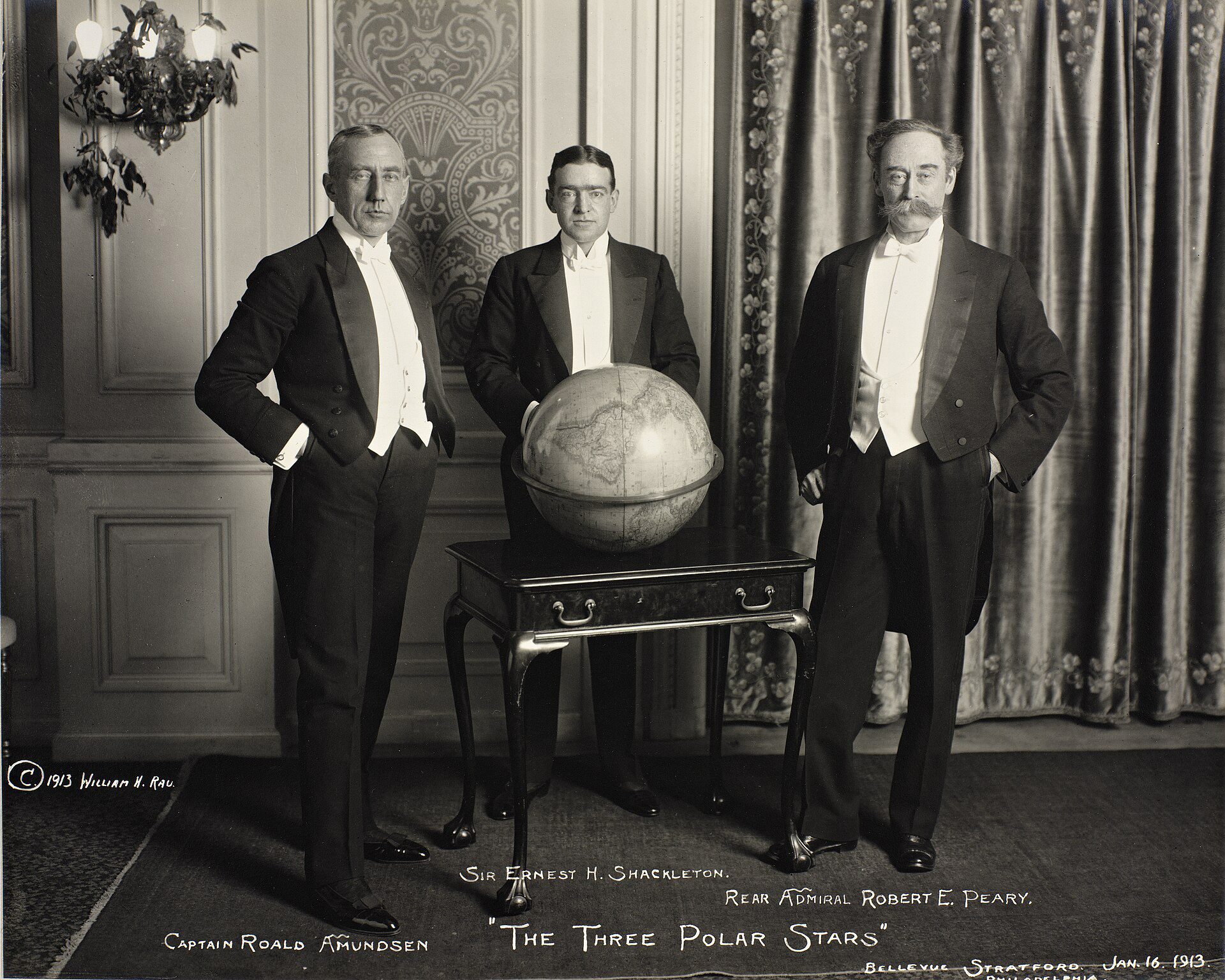
Nearly a century after his disappearance, Roald Amundsen remains a defining figure in the history of human achievement.
His three landmark firsts crossed continents, oceans, and generations of technological development.
He began his greatest successes aboard a small wooden vessel, crossed Antarctica behind teams of dogs, and ultimately flew over the North Pole in a hydrogen-filled airship.
The methods changed. The geography changed. The risks changed.
But his underlying discipline remained remarkably consistent.
The enduring lesson of Amundsen’s winning streak is that extraordinary achievement is rarely accidental. It emerges from accumulated knowledge, rigorous preparation, capable collaborators, and the willingness to adapt when circumstances demand it.
He did not win every expedition. His greatest record was the repeated accomplishment of what had previously been impossible.
Roald Amundsen, 1872–1928. Three defining historic firsts. One extraordinary legacy.
Winning Streak chronicles remarkable sequences of human achievement, investigating the history, individuals, decisions, and circumstances that made them possible.
Historical Research & References
- The Fram Museum — Roald Amundsen
- The Fram Museum — The Third Fram Expedition
- Smithsonian National Air and Space Museum — The First Flight Over the North Pole
- University of Oslo Historical Museum — The Netsilik Meet Amundsen
- Roald Amundsen’s Home — The Story of the Polar Explorer
Historical milestones cross-checked against the Fram Museum, Smithsonian, and Norwegian museum records.