
Seven consecutive wins in Mallorca. Two astonishing 6–0 match victories. A twentieth triumph against a former world champion. The extraordinary winning streak that carried an American chess genius toward the most famous championship match in history.
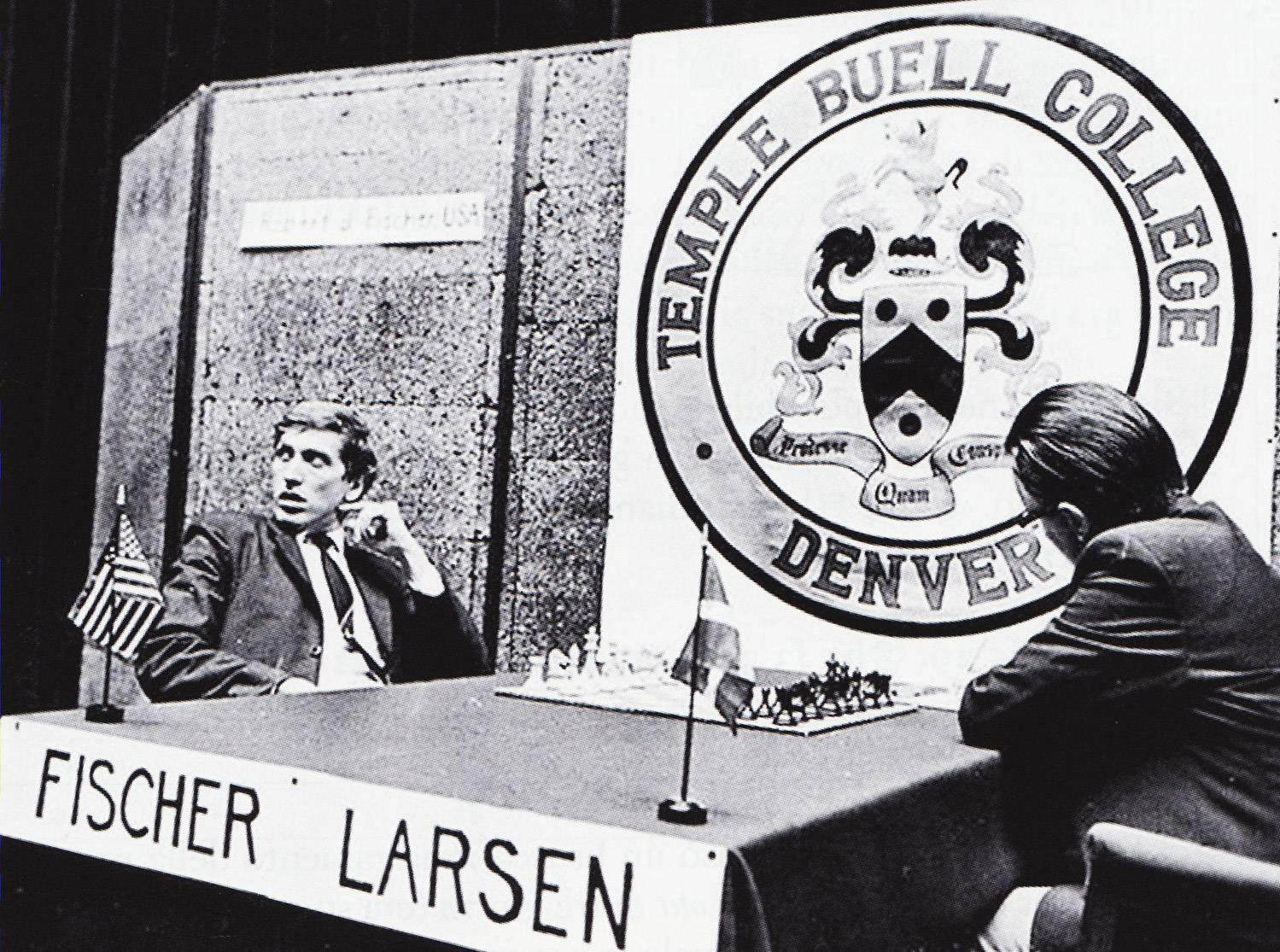
In July 1971, inside a chess tournament hall in Denver, Colorado, something extraordinary was happening.
Bobby Fischer, the American chess grandmaster, was systematically defeating one of the strongest players in the world.
His opponent was Bent Larsen of Denmark, a brilliant and internationally respected competitor who had recently been regarded as one of the few players capable of challenging Soviet supremacy.
Larsen had already lost the first game.
Then the second.
Then the third.
The defeats continued until the match ended with an almost unbelievable result.
Bobby Fischer 6. Bent Larsen 0.
Not a single draw. Not a single defeat.
Even more astonishing, Fischer had just defeated Soviet grandmaster Mark Taimanov by exactly the same score.
Twelve consecutive victories against two world-class challengers.
And that was only part of the story.
Including his earlier victories at the 1970 Palma de Mallorca Interzonal, Fischer’s streak would reach twenty consecutive wins before anyone could stop him.
The achievement became one of the most remarkable displays of competitive dominance in chess history.
Just one year later, Fischer would challenge Soviet world champion Boris Spassky in Reykjavík, Iceland, in a confrontation that transformed chess into an international spectacle.
This is the story of the winning streak that made it possible.
The Making of a Chess Prodigy
Robert James Fischer was born on March 9, 1943, in Chicago, Illinois, and grew up primarily in Brooklyn, New York.
He learned chess as a child and quickly developed an extraordinary ability to recognize positions, calculate variations, and analyze complicated strategic problems.
At thirteen, he produced a celebrated victory against Donald Byrne in 1956, later remembered as the Game of the Century.
At fourteen, he won the United States Chess Championship.
At fifteen, he qualified for the international grandmaster title, becoming the youngest grandmaster in history at that time.
His commitment to chess was exceptional.
Fischer studied openings, examined historical games, and spent enormous amounts of time investigating positions that other players might consider exhausted.
In the 1963–64 United States Championship, he accomplished something extraordinary.
Eleven games played. Eleven victories.
No draws.
No defeats.
He had won a national championship with a perfect score.
But conquering American chess was only the beginning.
The Soviet Union dominated the international chess establishment, producing a remarkable succession of world champions and grandmasters.
To become world champion, Fischer would have to defeat the strongest players that Soviet chess could offer.
In 1970, he began the campaign that would change the game.
Winning Streak No. 1: Palma de Mallorca — Seven Straight Victories
November–December 1970
The Palma de Mallorca Interzonal tournament was an essential qualifying stage for the world championship.
Twenty-four leading players competed for six places in the Candidates matches, which would determine the next challenger to world champion Boris Spassky.
Fischer almost missed the tournament.
He had not participated in the qualifying U.S. Championship, but fellow American grandmaster Pal Benko agreed to surrender his place so Fischer could compete.
It proved a consequential decision.
Fischer dominated the Interzonal, finishing with 18½ points from 23 rounds, an extraordinary 3½ points ahead of his nearest competitors.
Most importantly for Winning Streak, he finished with seven consecutive victories.
The final result came against Argentine grandmaster Oscar Panno, who forfeited rather than play the game. Therefore, six of those final seven wins were achieved over the board.
The distinction matters, but the competitive momentum was unmistakable.
Fischer had entered the final stages of world championship qualification in exceptional form.
Winning Streak: 7 consecutive results in his favor.
The next challenge was a direct elimination match against Soviet grandmaster Mark Taimanov.
Winning Streak No. 2: Vancouver — Fischer 6, Taimanov 0
May–June 1971
Mark Taimanov was no ordinary opponent.
He was a distinguished Soviet grandmaster, a former Soviet chess champion, and an accomplished concert pianist.
His experience included decades of competition against the world’s strongest players.
The Candidates quarterfinal was held in Vancouver, Canada.
Most observers expected an intensely competitive match.
Instead, Fischer produced one of the most astonishing results in chess history.
He won the opening game.
Then the second.
Then the third.
Taimanov attempted to adapt, but Fischer repeatedly found ways to convert favorable positions into victories.
The match ended 6–0.
There were no draws.
The Soviet grandmaster had failed to score even half a point.
The result was a major shock to the international chess establishment.
It demonstrated that Fischer’s superiority was not limited to individual tournaments or isolated games.
He could dominate a highly experienced grandmaster across an entire match.
Winning Streak: 13 consecutive victories, including the Palma de Mallorca results.
Taimanov had been eliminated.
Next came Bent Larsen.
Winning Streak No. 3: Denver — Fischer 6, Larsen 0
July 1971
Bent Larsen was among the most creative and formidable players in international chess.
The Danish grandmaster had won major international tournaments and was widely regarded as a credible challenger for the world championship.
Unlike Taimanov, Larsen’s playing style was particularly enterprising.
He was known for unconventional opening choices, imaginative attacking ideas, and the confidence to challenge established chess theory.
The semifinal took place in Denver, Colorado.
Again, Fischer won the opening game.
Again, his opponent struggled to recover.
And again, Fischer continued winning until the match ended 6–0.
The combined result against Taimanov and Larsen was extraordinary.
Twelve games. Twelve victories. Zero draws. Zero defeats.
At this level of competition, even the strongest players normally surrender occasional half-points.
Fischer had not surrendered one.
The contrast between the expectations and the results was so extreme that the chess world struggled to explain it.
He was no longer simply a talented challenger.
He had become a formidable threat to the Soviet Union’s long-standing control of the world championship.
Winning Streak: 19 consecutive victories.
Only one obstacle remained between Fischer and a championship match against Boris Spassky.
That obstacle was Tigran Petrosian.
Winning Streak No. 4: Buenos Aires — Victory Number 20
September–October 1971
Tigran Petrosian was a former world chess champion whose defensive skill had earned him the nickname Iron Tigran.
He possessed an exceptional understanding of positional chess.
Where aggressive opponents sought immediate tactical opportunities, Petrosian often prevented those opportunities from developing.
He was renowned for anticipating threats before they became dangerous.
If any competitor could disrupt Fischer’s relentless series of victories, Petrosian appeared exceptionally well qualified.
Their Candidates final began in Buenos Aires, Argentina, on September 30, 1971.
Fischer won the opening game.
The streak reached twenty.
Twenty consecutive victories in official competition, including nineteen games actually played and one victory by forfeit.
For a competitor facing the world’s strongest grandmasters, the sequence was extraordinary.
But the following game finally ended the streak.
Petrosian defeated Fischer.
After twenty consecutive winning results, the American had lost.
The interruption was significant.
But it did not prevent Fischer from completing his larger objective.
After three consecutive draws, Fischer won the final four games of the match.
The overall result was 6½–2½.
He had defeated another former world champion.
And he had earned the right to challenge Boris Spassky for the World Chess Championship.
Winning Streak Achievement No. 4: Twenty consecutive victories, followed by victory in the Candidates final.
The winning streak had ended.
The journey to the world championship had succeeded.
The Match of the Century — Reykjavík, 1972
The championship confrontation between Bobby Fischer and Boris Spassky became far more than a sporting event.
It unfolded during the Cold War, when international competition between the United States and Soviet Union carried considerable political symbolism.
Soviet players had held the world chess title continuously since 1948.
Fischer was challenging a remarkable national tradition of state-supported chess development.
The championship began in Reykjavík on July 11, 1972.
And almost immediately, the American encountered serious trouble.
He lost the first game.
He forfeited the second following a dispute over playing conditions and television cameras.
Fischer was trailing 2–0.
The extraordinary competitor who had once won twenty consecutive games appeared capable of abandoning the biggest match of his career.
Instead, the contest resumed.
Fischer won the third game.
His confidence returned.
In Game 6, he produced one of the most admired positional victories of his career, defeating Spassky with the white pieces in a Queen’s Gambit Declined.
The match gradually turned in his favor.
After 21 games, Fischer prevailed by 12½ points to 8½.
On September 1, 1972, he became the eleventh World Chess Champion.
For the first time since 1948, the title was no longer held by a Soviet player.
The victory created enormous interest in chess throughout the United States and internationally.
Fischer had completed the remarkable journey begun in Mallorca.
The winning streak had become a world championship.
The Mind Behind the Streak
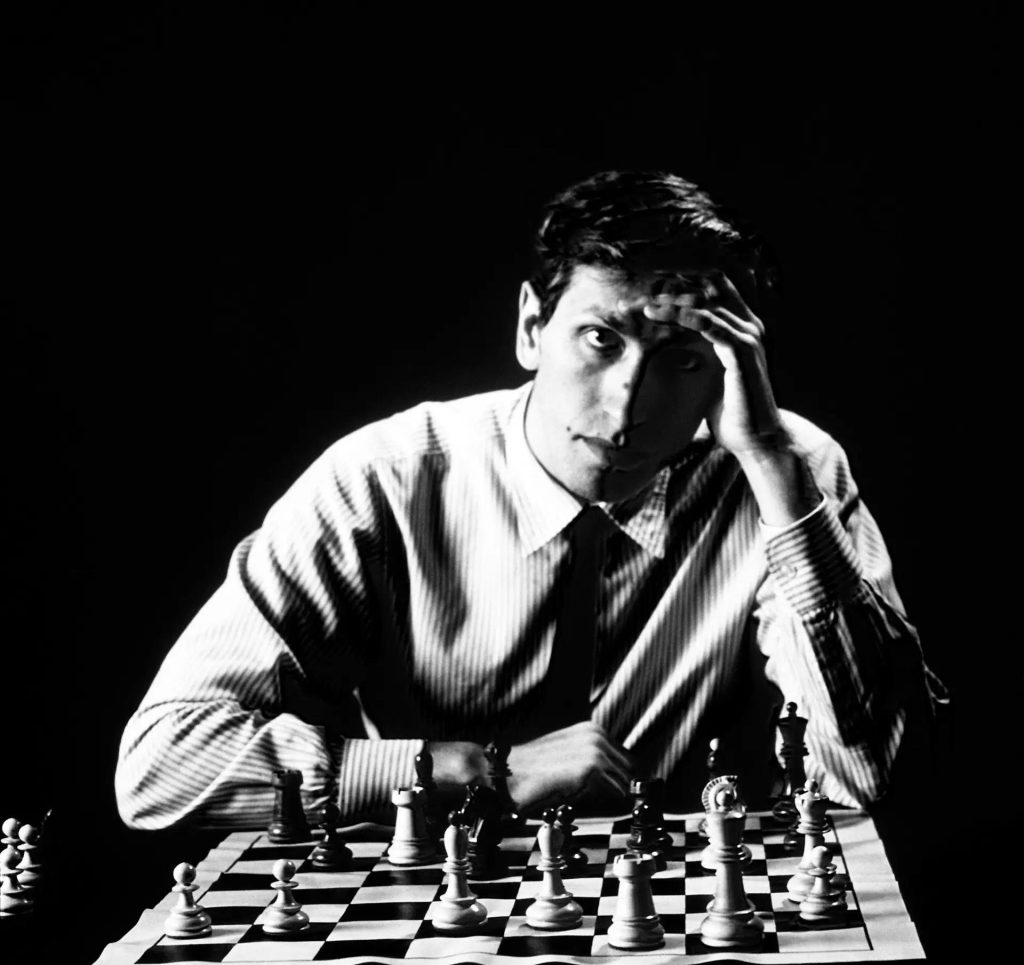
What made Fischer’s sequence of victories so exceptional?
His style combined unusually detailed preparation with a relentless determination to convert even small advantages into wins.
He approached openings with scientific intensity, searching for improvements in positions that grandmasters had studied for decades.
His calculation allowed him to navigate complex tactical situations.
His endgame technique helped him win positions that other competitors might have accepted as draws.
And his competitive temperament made him unusually unwilling to settle for a peaceful result when he believed winning chances remained.
This combination placed enormous pressure on opponents.
They could not rely upon a quick draw to interrupt his momentum.
Nor could they assume that surviving the opening meant they had survived the danger.
Fischer continued searching for opportunities throughout the entire game.
His achievements were also built upon years of study, tournament experience, and the accumulated knowledge of earlier generations of chess masters.
He was not winning through inspiration alone.
He was applying extraordinary preparation to an intensely demanding intellectual competition.
There was, however, another side to his personality.
Fischer’s disputes with tournament organizers and chess authorities frequently complicated his career.
In 1975, after negotiations over the conditions for defending his world championship failed, he forfeited his title to Anatoly Karpov rather than play.
His later life was marked by prolonged isolation and troubling public controversies.
His achievements on the chessboard remain historically significant without requiring an idealized account of the individual.
The Winning Streak Legacy
The twenty-game sequence remains one of the most extraordinary runs in elite chess history.
The final accounting is simple:
- 1970: Seven consecutive winning results at Palma de Mallorca.
- 1971: Six consecutive victories over Mark Taimanov.
- 1971: Six consecutive victories over Bent Larsen.
- 1971: One opening victory against Tigran Petrosian.
Total: 20 consecutive victories, 19 played over the board.
Petrosian ended the run in the second game of their match.
Fischer then recovered, won the Candidates final, and defeated Spassky for the world championship the following year.
The sequence illustrates something remarkable about competitive excellence.
At the highest level, opponents are extraordinarily well prepared.
Draws are common.
Small mistakes can be decisive.
Winning consistently requires technical knowledge, concentration, psychological resilience, and the ability to maintain precision over many hours.
Fischer demonstrated those qualities repeatedly against some of the strongest players of his generation.
He did not remain undefeated.
He did not retain the world championship indefinitely.
But between late 1970 and the autumn of 1971, he produced a sequence of victories that transformed the expectations of the international chess community.
And in 1972, he completed the journey.
Bobby Fischer (1943–2008). Twenty consecutive winning results. Two perfect 6–0 Candidates matches. One World Chess Championship.
For Winning Streak, the enduring lesson is that one extraordinary achievement can create momentum—but sustained excellence requires the ability to repeat it against ever-stronger opposition.
Bobby Fischer’s greatest winning streak did not simply make him famous. It carried him to the world championship.
Winning Streak chronicles remarkable consecutive achievements, investigating the history, individuals, decisions, and circumstances that made them possible.
Historical Research & References
- International Chess Federation (FIDE) — History of the Candidates — Official Candidates match results and championship chronology.
- U.S. Chess — Fischer’s Road to the World Championship — Palma de Mallorca, Pal Benko’s qualification sacrifice, and Fischer’s seven-game run.
- World Chess Hall of Fame — A Memorable Life: Bobby Fischer — His perfect 1963–64 U.S. Championship.
- FIDE Open Chess Museum — Robert Fischer — Candidates matches, world championship and legacy.
- FIDE Open Chess Museum — 1972 Championship Program — Reykjavík and the final score.
- ChessBase — Fischer Becomes World Champion — The conclusion of the 1972 title match.