
Thirty-two consecutive victories on an undefeated tour. Fourteen Test wins in a perfect season. Eighteen consecutive international victories. Three Rugby World Cups, including the first back-to-back championships in history. The extraordinary story of a nation that transformed rugby excellence into a tradition spanning generations.
On October 31, 2015, more than 80,000 spectators watched a remarkable chapter of sporting history unfold at Twickenham Stadium in London.
The New Zealand All Blacks were defending their Rugby World Cup championship against their fiercest trans-Tasman rivals, Australia.
With approximately fifteen minutes remaining, what had appeared to be a comfortable New Zealand lead had narrowed to just four points.
The Australians were charging back.
New Zealand’s historic ambition was suddenly in danger.
Then Dan Carter, one of the most accomplished rugby players of his generation, stepped forward.
From approximately 40 metres, he struck a drop goal that sailed between the uprights.
The All Blacks regained control.
Minutes later, Beauden Barrett scored a final try, sealing a 34–17 victory.
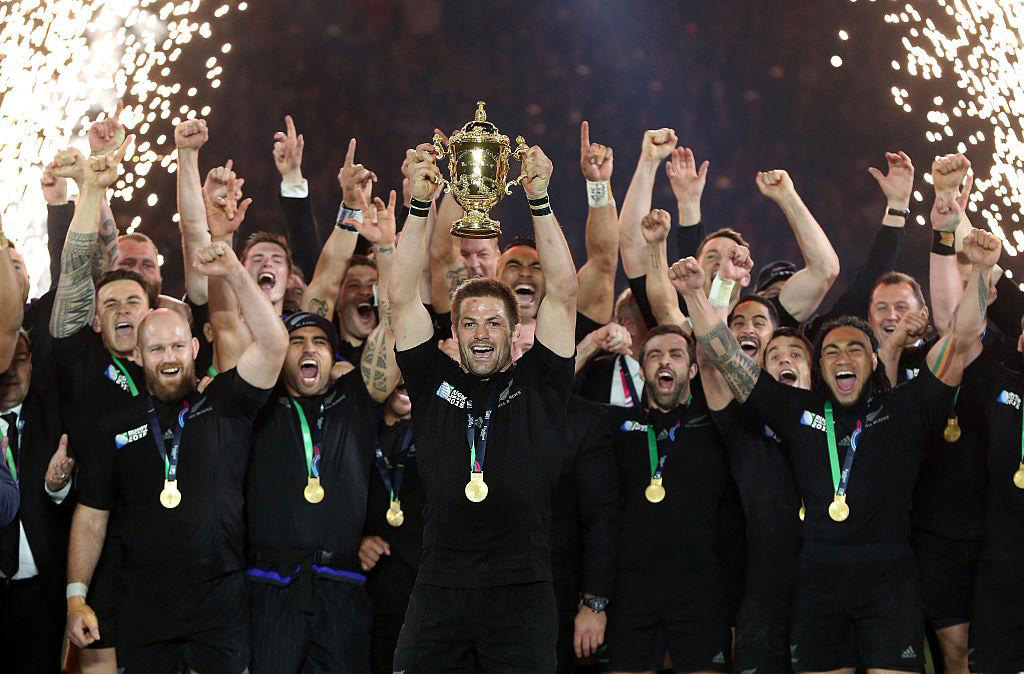
Captain Richie McCaw raised the Webb Ellis Cup for the second consecutive tournament.
No national team had ever successfully defended the Rugby World Cup.
New Zealand had just become the first.
But this triumph was not an isolated moment of sporting greatness.
It was the culmination of a tradition that began more than a century earlier, when a small South Pacific nation started producing rugby teams capable of defeating opponents across the world.
The All Blacks had transformed winning from an occasional achievement into a sustained institutional expectation.
Their history includes some of the most remarkable winning streaks ever recorded in international team sports.
And unlike dynasties built around a single superstar, their success has survived generations of changing players, coaches, and opponents.
This is the story of the All Blacks, one of sport’s most enduring dynasties.
The Origins: A Small Nation Challenges the World
New Zealand’s relationship with rugby began during the nineteenth century, when British settlers introduced the game to the islands.
The sport gradually became an important part of the country’s developing national identity.
Māori players and communities contributed significantly to its growth, bringing athletic talent, competitive traditions, and cultural identity to New Zealand rugby.
In 1888–89, a predominantly Māori team known as the New Zealand Native football team toured internationally, establishing an important precedent for future overseas expeditions.
By the beginning of the twentieth century, New Zealand had developed a distinctive approach to the game.
Its teams emphasized physical conditioning, coordinated support play, ball-handling skills, and the ability to maintain pressure throughout a match.
In 1905, a New Zealand representative side departed on a historic international tour.
The players wore black uniforms bearing the silver fern.
They became known as the All Blacks.
What happened next helped establish a sporting identity that would endure for more than a century.
Winning Streak No. 1: The Originals — 34 Victories in 35 Matches
1905–1906: The team that announced New Zealand to the world
The 1905 All Blacks toured Britain, Ireland, France, and Canada.
Their opponents included established rugby clubs, regional selections, and national teams from countries that regarded themselves as the traditional authorities of the game.
New Zealand arrived as a relatively unknown challenger from the other side of the world.
The results were astonishing.
The All Blacks won their opening matches with overwhelming authority.
Their speed, fitness, and combination play surprised opponents who expected a comparatively inexperienced colonial side.
Over the full tour, they played 35 matches.
They won 34.
Their only defeat came against Wales, 3–0, in Cardiff on December 16, 1905.
That narrow loss became part of rugby folklore, but it did little to diminish the achievement.
New Zealand had demonstrated that it could compete with, and frequently overwhelm, the established rugby nations.
The tour helped popularize both the All Blacks nickname and the team’s distinctive sporting identity.
Winning Streak Achievement No. 1: Thirty-four victories in thirty-five matches during the historic 1905–1906 tour.
The Originals established an extraordinary benchmark.
Nineteen years later, another New Zealand team would surpass it.
Winning Streak No. 2: The Invincibles — 32 Matches, 32 Victories
1924–1925: Perfection across four countries
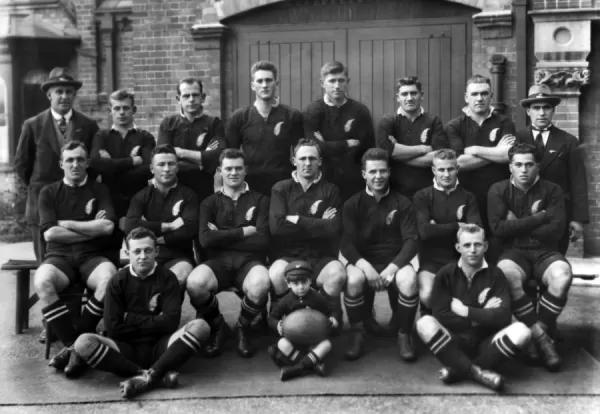
In July 1924, a New Zealand rugby squad departed Wellington aboard the Remuera for an extensive international tour.
Their itinerary included matches throughout Britain, Ireland, France, and Canada.
The expedition would last more than seven months.
Expectations were high, but there were doubts about whether the team could match the accomplishments of the celebrated 1905 Originals.
Those doubts disappeared.
Under captain Cliff Porter and vice-captain Jock Richardson, the All Blacks began winning.
And they never stopped.
The team combined extraordinary fitness with rapid support play and exceptional handling skills.
Among its leading players was the remarkable young fullback George Nēpia, who appeared in every match of the tour.
Across 32 games, New Zealand scored 838 points while conceding just 116.
They defeated Ireland 6–0.
They defeated Wales 19–0.
They defeated England 17–11.
They defeated France 30–6.
Every match ended in victory.
When the team returned to New Zealand in March 1925, it had accomplished something extraordinary.
Thirty-two games played. Thirty-two games won. Zero defeats.
The players became known as the Invincibles.
Unlike a short tournament winning streak, this achievement required sustained excellence through months of travel, changing weather, unfamiliar opponents, and physical exhaustion.
The 1924–1925 tour remains one of the clearest examples of an undefeated international sporting expedition.
Winning Streak Achievement No. 2: A perfect 32–0 record on a seven-month international tour.
The foundation of New Zealand’s rugby dynasty was firmly established.
The First World Championship — 1987
A tradition becomes a global title
When the inaugural Rugby World Cup was organized in 1987, New Zealand was selected to co-host the tournament with Australia.
For decades, the All Blacks had built their reputation through international tours and Test series.
Now there was a formal world championship to contest.
New Zealand entered with an exceptional squad.
Captain David Kirk led a team featuring players such as John Kirwan, Michael Jones, Sean Fitzpatrick, and Grant Fox.
From the opening match, the All Blacks demonstrated formidable attacking ability.
Against Italy, John Kirwan scored one of the most memorable tries in early World Cup history, running from deep inside his own half through the Italian defense.
New Zealand advanced through the tournament without defeat.
On June 20, 1987, the All Blacks faced France in the final at Eden Park in Auckland.
They won 29–9.
David Kirk became the first captain to raise the Webb Ellis Cup.
The All Blacks were officially world champions.
The victory confirmed what generations of supporters believed: New Zealand’s rugby tradition could deliver success in the sport’s ultimate international competition.
But the dynasty was about to face an extended period of frustration.
The Twenty-Four-Year Wait
Winning once was not the same as establishing a World Cup dynasty.
Following their 1987 triumph, the All Blacks struggled to reclaim the championship.
In 1991, they lost to Australia in the semi-finals.
In 1995, they were defeated by South Africa in the final.
In 1999, France eliminated them in a dramatic semi-final.
In 2003, Australia ended their campaign.
And in 2007, France delivered another stunning upset, defeating New Zealand 20–18 in the quarter-finals.
For a nation accustomed to rugby excellence, the repeated disappointments were difficult to accept.
The All Blacks frequently dominated matches between World Cups but failed to secure the tournament that mattered most.
The recurring setbacks forced New Zealand rugby to examine its preparation, leadership, team culture, and approach to high-pressure competition.
The pursuit of another championship became a national obsession.
The next breakthrough arrived at home.
Winning Streak No. 3: Two Consecutive Rugby World Cups — 2011 and 2015
The dynasty of Richie McCaw, Dan Carter, and Steve Hansen
The modern All Blacks dynasty began with a transformation in leadership and preparation.
Under head coach Graham Henry, New Zealand placed increasing emphasis on managing pressure, developing leaders within the playing group, and building a consistent team culture.
Richie McCaw became central to that transformation.
A tireless openside flanker, McCaw combined tactical intelligence, physical endurance, and exceptional competitive discipline.
Alongside him was fly-half Dan Carter, whose game management, passing, tactical kicking, and goal-kicking made him one of rugby’s most influential players.
In 2011, New Zealand hosted the Rugby World Cup.
The tournament brought enormous expectations.
Every victory increased the pressure.
Injuries disrupted the squad, including the loss of Carter before the knockout stages.
Nevertheless, the All Blacks continued advancing.
On October 23, 2011, they faced France in the final at Eden Park.
It was a tense, physical match in which New Zealand struggled to establish a comfortable advantage.
Tony Woodcock scored the All Blacks’ only try.
Replacement fly-half Stephen Donald added a crucial penalty.
France fought back relentlessly.
When the final whistle sounded, New Zealand had won 8–7.
The 24-year wait was over.
McCaw lifted the World Cup.
For millions of New Zealanders, the victory represented the fulfillment of a generation’s sporting ambition.
But the greatest achievement of the modern dynasty was still to come.
The 2015 title defense
After the 2011 tournament, Steve Hansen succeeded Graham Henry as head coach.
Hansen retained and developed many of the principles established by his predecessor while introducing new players and refinements to the team’s attacking strategy.
The All Blacks approached the 2015 Rugby World Cup with unusual experience and continuity.
McCaw remained captain.
Carter returned as the team’s tactical leader.
The squad also featured outstanding players including Ma’a Nonu, Conrad Smith, Kieran Read, Aaron Smith, Julian Savea, and Ben Smith.
New Zealand navigated the group stage successfully.
In the quarter-final, they overwhelmed France 62–13.
In the semi-final, they defeated South Africa 20–18.
Then came Australia in the final.
On October 31, 2015, the All Blacks delivered another championship performance, winning 34–17.
They had captured two consecutive Rugby World Cups.
Across the 2011 and 2015 tournaments, they had won all fourteen of their matches.
For the first time in history, a nation had successfully defended the men’s Rugby World Cup.
New Zealand had also become the first country to win three titles.
Winning Streak Achievement No. 3: Fourteen consecutive World Cup victories across two championship tournaments.
It was the defining accomplishment of the modern All Blacks dynasty.
Winning Streak No. 4: The Perfect Season — 2013
Fourteen Tests. Fourteen Victories.
Between their two World Cup triumphs, the All Blacks produced another extraordinary achievement.
In 2013, under Steve Hansen, New Zealand played fourteen international Test matches.
They won every one.
The campaign included victories over major rugby nations across the northern and southern hemispheres.
But the perfect season almost ended on November 24, 2013.
Facing Ireland in Dublin, New Zealand fell behind 19–0.
The Irish, searching for their first victory over the All Blacks, appeared to be on the verge of a historic breakthrough.
Late in the match, Ireland still led 22–17.
New Zealand needed a converted try to win.
With the clock beyond eighty minutes, the All Blacks continued attacking.
Ryan Crotty eventually crossed the try line.
Aaron Cruden added the conversion, completing a dramatic 24–22 victory.
The All Blacks had escaped defeat in the final moments of their final match of the year.
They completed 2013 with a perfect record.
Fourteen Test matches. Fourteen victories.
New Zealand became the first team in the professional era to win every Test in a calendar year while playing such a full international schedule.
The result illustrated something important about sporting dynasties.
Dominance does not always mean winning comfortably.
Sometimes it means finding a way to prevail when defeat appears inevitable.
Winning Streak Achievement No. 4: A perfect 14–0 international Test season in 2013.
Winning Streak No. 5: Eighteen Consecutive Test Victories — 2015 to 2016
A record built across two seasons
Following an August 2015 victory against Australia, the All Blacks began another extraordinary sequence.
They won every match of the 2015 Rugby World Cup.
The winning continued in 2016.
Opponent after opponent failed to stop them.
The streak reached its eighteenth consecutive victory on October 22, 2016, when New Zealand defeated Australia 37–10 at Eden Park.
At the time, it represented a new record for consecutive Test wins by a top-tier men’s international rugby team.
The previous mark of seventeen had been achieved by several leading nations, including earlier All Blacks sides.
England subsequently equalled the eighteen-match record in 2017.
New Zealand’s streak finally ended on November 5, 2016.
At Soldier Field in Chicago, Ireland defeated the All Blacks 40–29.
It was Ireland’s first victory over New Zealand in 111 years of international rugby encounters.
The result ended New Zealand’s extraordinary run and provided another reminder that no sporting dynasty remains invincible forever.
Winning Streak Achievement No. 5: Eighteen consecutive international Test victories between August 2015 and October 2016.
It remains a benchmark of elite international rugby consistency.

The Haka: More Than a Ritual
The All Blacks’ global identity extends far beyond their victories.
Before matches, the team performs the haka, an expression rooted in the living culture and traditions of Māori, the Indigenous people of Aotearoa New Zealand.
Haka can express identity, unity, challenge, welcome, remembrance, and collective determination.
The most famous haka associated with the All Blacks is Ka Mate, composed by Ngāti Toa chief Te Rauparaha in the early nineteenth century.
In 2005, the All Blacks introduced Kapa o Pango, a haka composed specifically for the team by Māori cultural expert Derek Lardelli of Ngāti Porou.
Its themes connect the players to New Zealand, the silver fern, and the responsibility of representing their country.
For international audiences, the haka has become one of the most recognizable moments in world sport.
But its deeper meaning is cultural rather than simply competitive.
It connects generations of players through a shared expression of heritage and identity.
It is not a guarantee of victory or merely a psychological weapon against opponents.
It represents something larger than the game.
In a team whose membership changes continuously, the haka provides a powerful symbol of continuity.
The players change.
The black jersey remains.
The connection to the past continues.
The Culture Behind the Dynasty
What explains the extraordinary longevity of All Blacks success?
It is tempting to attribute their record to superior athletic ability or a small country’s obsession with rugby.
Those explanations are incomplete.
The All Blacks’ sustained success reflects a combination of factors that have developed across generations.
1. A Nation That Develops Rugby Talent
Rugby has long occupied an unusually important position in New Zealand’s sporting culture.
Schools, clubs, provincial competitions, and representative teams have provided pathways for players to develop their skills.
The country’s established rugby structures have helped identify and develop talent long before players reach international competition.
This creates continuity across generations.
2. Skill Across Every Position
The All Blacks traditionally emphasize handling ability, support running, decision-making, and adaptability throughout the team.
Forwards are expected to contribute beyond scrums and lineouts.
Backs must defend as effectively as they attack.
The result is a style that can create opportunities through movement, speed, and collective awareness.
3. Leadership Beyond the Captain
Successful All Blacks teams have relied upon multiple experienced players who can make important decisions under pressure.
Richie McCaw’s era demonstrated the value of distributing leadership throughout the squad.
Rather than relying exclusively on instructions from the sideline, players were encouraged to recognize changing situations and respond collectively.
4. Relentless Preparation
The All Blacks’ competitive success depends upon careful preparation, conditioning, analysis, and repeated training.
Small improvements become particularly important when leading teams are separated by narrow margins.
The 2011 World Cup final, decided by a single point, demonstrates how preparation and composure can prove decisive.
5. Respect for the Jersey
The black jersey and silver fern have become symbols of a tradition extending far beyond the current players.
Every new squad inherits the achievements and expectations of previous generations.
That history can create pressure.
But it can also produce a powerful sense of responsibility.
The All Blacks do not have to invent their identity every time a new team takes the field.
They inherit one.
A Dynasty That Also Faced Difficult History
An accurate history of the All Blacks cannot consist entirely of championships and celebrations.
New Zealand rugby has also been involved in difficult national debates about race, identity, and international politics.
During the apartheid era, sporting relationships with South Africa became deeply controversial.
For decades, racial restrictions affected the selection of Māori players for tours to South Africa.
The 1981 Springbok tour of New Zealand triggered widespread protests and confrontations between demonstrators and police.
The controversy divided the country and raised fundamental questions about whether sporting competition could be separated from institutional racial discrimination.
Those events form an important part of New Zealand rugby’s history.
They demonstrate that a great sporting institution can achieve remarkable success while also confronting serious shortcomings.
The modern All Blacks’ celebration of Māori identity and multicultural teamwork must be understood alongside that complex past.
A dynasty’s historical legacy includes the challenges it has faced, not merely the trophies it has collected.
The Streak Ends, but the Dynasty Continues
The All Blacks’ extraordinary success has never made them immune to defeat.
In 2019, England eliminated New Zealand from the Rugby World Cup in the semi-finals, ending a tournament winning streak that had reached eighteen consecutive matches dating back to 2011.
In 2023, the All Blacks returned to the World Cup final in France.
There, they faced the defending champions, South Africa.
In a dramatic match, New Zealand captain Sam Cane received a red card for a dangerous tackle.
The All Blacks fought back despite playing most of the contest with fourteen men.
But South Africa prevailed 12–11, becoming the first nation to win four men’s Rugby World Cups.
The result ended New Zealand’s hope of matching its rival’s championship total.
Yet reaching another final demonstrated the continuing strength of the All Blacks institution.
The era of Richie McCaw and Dan Carter had passed.
New generations of players had assumed responsibility.
The standard of international competition had risen.
And the All Blacks remained a major force in world rugby.
The dynasty was no longer defined by uninterrupted victories.
It was defined by its capacity to regenerate.
The Winning Streak Legacy: More Than a Century of Excellence
Few sporting institutions can point to a history of competitive achievement as long and distinguished as that of the New Zealand All Blacks.
Their record spans vastly different eras.
The amateur tours of the early twentieth century.
The development of international Test rugby.
The first Rugby World Cup in 1987.
The transformation of the sport into a professional global enterprise.
And the modern era of sophisticated coaching, sports science, and international competition.
Across those generations, the All Blacks produced remarkable sequences of success:
- 1905–1906: Thirty-four victories in thirty-five tour matches.
- 1924–1925: Thirty-two consecutive victories in an undefeated international tour.
- 1987: Victory in the inaugural Rugby World Cup.
- 2011–2015: Fourteen consecutive World Cup victories and two championships.
- 2013: Fourteen international Test victories in a perfect calendar year.
- 2015–2016: Eighteen consecutive international Test victories.
These achievements represent different types of winning streaks, measured across tours, tournaments, and international Test matches.
But their common characteristic is unmistakable.
The All Blacks repeatedly developed teams capable of sustaining excellence under the most demanding competitive conditions.
The players who achieved those records were separated by decades.
They competed under different rules.
They travelled using different technologies.
They trained using different methods.
Yet they were connected by a continuing institutional identity.
That is what makes the All Blacks especially significant within the Winning Streak archive.
Individual champions eventually retire.
Great teams inevitably change.
Even the longest winning streak must someday end.
But a successful sporting institution can preserve the knowledge, traditions, and competitive standards that make new winning streaks possible.
New Zealand All Blacks. Established as an international rugby tradition in the nineteenth century. Thirty-two victories without defeat on the Invincibles tour. Fourteen wins in a perfect Test season. Eighteen consecutive international victories. Three Rugby World Cup championships.
Their greatest achievement is not any single record.
It is the ability to produce extraordinary achievements again and again, across more than a century.
The All Blacks demonstrate that the most enduring winning streak belongs not to one generation of champions, but to a tradition capable of creating the next.
Winning Streak chronicles remarkable consecutive achievements, investigating the history, individuals, decisions, and circumstances that made them possible.
Historical Research & References
- New Zealand History — The Original All Blacks, 1905
- New Zealand Rugby — The 1924 Invincibles
- New Zealand History — All Blacks Win the First World Cup, 1987
- World Rugby — Rugby World Cup Tournament History
- New Zealand History — All Blacks Win Their Third Rugby World Cup
- BBC Sport — New Zealand’s Perfect 2013 Season
- Guinness World Records — Consecutive International Rugby Victories
- All Blacks — History and Meaning of the Haka
- New Zealand History — The 1981 Springbok Tour
- World Rugby — The 2023 World Cup Final