
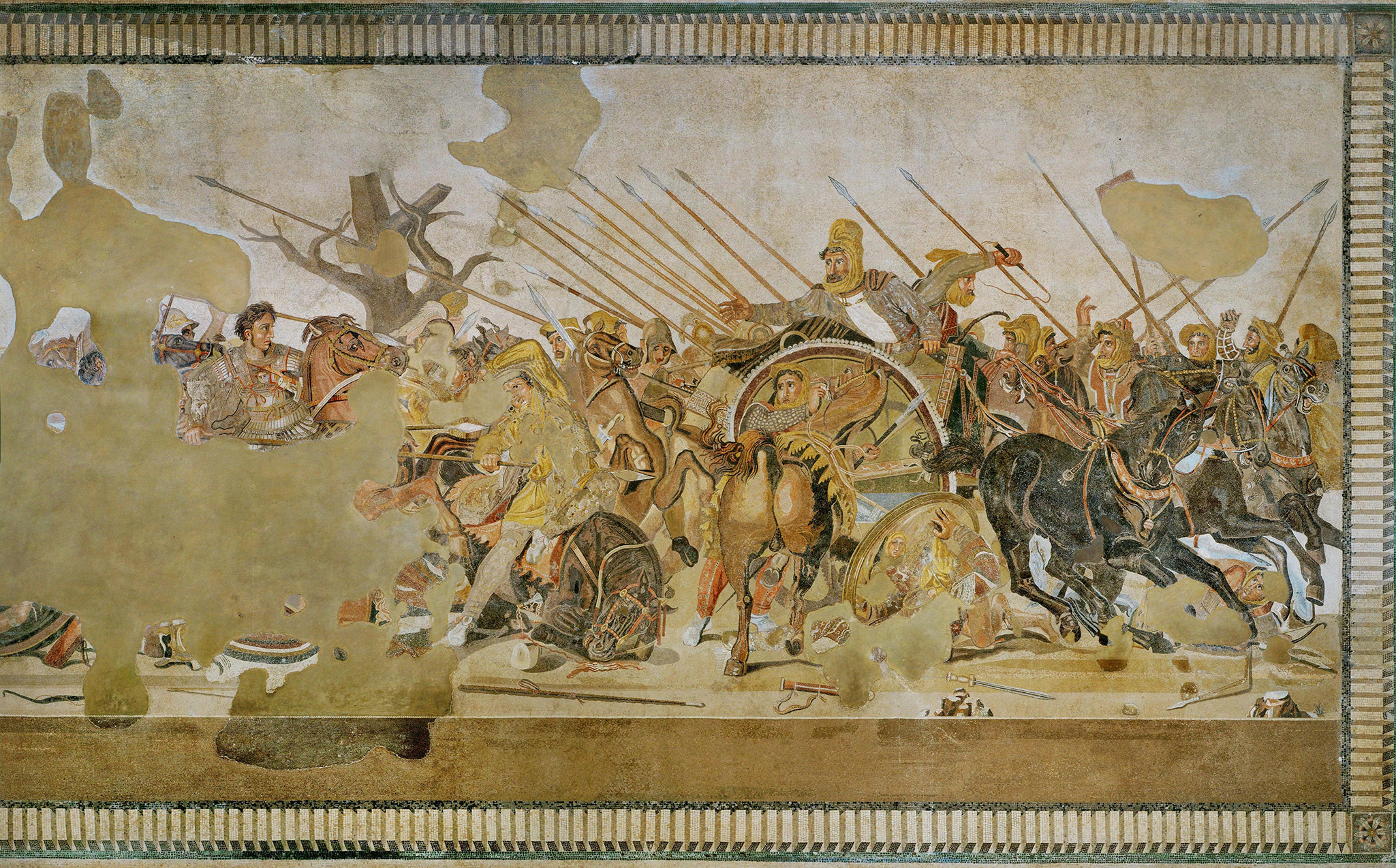
Six extraordinary victories. An empire stretching from Greece to India. Thirteen years on the throne. The remarkable winning streak of a military commander who changed the course of world history before his 33rd birthday.
In 336 BC, a 20-year-old prince inherited the throne of Macedonia following the assassination of his father, King Philip II.
His name was Alexander III.
Thirteen years later, he controlled an empire stretching from the Balkans and Egypt to the borders of India.
Between those two moments, Alexander the Great established one of the most extraordinary military winning streaks in recorded history.
He defeated Persian armies, conquered fortified cities, overcame dangerous terrain, and repeatedly prevailed against powerful opponents.
Most remarkably, he suffered no recorded defeat in a major pitched battle throughout his career.
Alexander’s victories were not simply a matter of overwhelming force. He inherited the formidable Macedonian military system developed by his father and used it with exceptional speed, coordination, and tactical imagination.
Here are the six landmark victories that defined his winning streak.
Victory No. 1: The Battle of Granicus — 334 BC
The invasion of Persia begins.
At the Granicus River in Asia Minor, modern-day Turkey, Alexander confronted a Persian force determined to stop his advance.
He attacked across the river, committing his cavalry to a dangerous confrontation with Persian horsemen.
The Macedonians prevailed.
Granicus opened the way for Alexander’s conquest of western Asia Minor and demonstrated that the Persian Empire could be defeated on its own territory.
The achievement: His first major victory against Persian forces, establishing the momentum of an extraordinary campaign.
Victory No. 2: The Battle of Issus — 333 BC
The first defeat of the Persian king.
At Issus, Alexander confronted King Darius III, ruler of the vast Achaemenid Persian Empire.
The Macedonian army faced a formidable royal force.
Alexander personally led a decisive cavalry attack that helped break the Persian position.
Darius fled the battlefield, leaving behind members of his royal family, valuable possessions, and the symbols of his authority.
The victory established Alexander as a direct challenger to the Persian throne.
The achievement: Defeating Darius III in their first major confrontation, transforming a regional invasion into a struggle for an empire.
Victory No. 3: The Siege of Tyre — 332 BC
Seven months against an island fortress.
The Phoenician city of Tyre occupied a heavily fortified island off the Mediterranean coast.
Its defenses presented an extraordinary engineering challenge.
Alexander ordered construction of a massive causeway from the mainland, supported by siege engines and naval operations.
After approximately seven months of determined resistance, Macedonian forces breached the city’s defenses.
The conquest secured an important Mediterranean position and weakened Persian naval power.
The victory came at a terrible human cost, with large numbers of Tyre’s inhabitants killed or enslaved.
The achievement: Overcoming one of the ancient world’s most formidable defensive positions through persistence and innovative siege engineering.
Victory No. 4: The Battle of Gaugamela — 331 BC
The battle that decided an empire.
On October 1, 331 BC, Alexander confronted Darius III for the second time near Gaugamela, in present-day Iraq.
The Persian king had assembled another enormous army, including cavalry and scythed chariots.
Alexander employed a carefully coordinated maneuver to create an opening in the Persian battle line.
He then led his Companion cavalry toward the exposed center.
Darius fled once again.
The Persian army was defeated.
Gaugamela opened the way to Babylon, Susa, and Persepolis, the great centers of Achaemenid power.
It was the decisive military victory of Alexander’s career.
The achievement: Defeating the Persian king for a second time and effectively securing control of the empire’s heartland.
Victory No. 5: The Persian Gates — 330 BC
Turning an ambush into victory.
Alexander’s advance toward Persepolis encountered fierce resistance at a narrow mountain passage known as the Persian Gates.
Persian forces commanded by Ariobarzanes initially repulsed the Macedonians, inflicting significant losses.
Alexander was forced to adapt.
Using local knowledge and a difficult mountain route, he maneuvered forces around the defenders and attacked their position from another direction.
The Persian resistance was overcome.
The road to Persepolis lay open.
This episode demonstrates why Alexander’s undefeated reputation requires careful definition: he suffered genuine tactical setbacks, even though he ultimately prevailed in the campaign.
The achievement: Recovering from a serious ambush through maneuver, adaptation, and coordinated attack.
Victory No. 6: The Battle of Hydaspes — 326 BC
The last great victory, against war elephants.
Alexander’s eastern campaign brought him to the Hydaspes River, in present-day Pakistan.
There, King Porus commanded an Indian army that included powerful war elephants.
Alexander crossed the river in difficult weather conditions, using deception to prevent Porus from knowing exactly where his main attack would occur.
The Macedonians eventually defeated the Indian army after a demanding battle.
Impressed by Porus’s resistance and leadership, Alexander allowed him to continue governing under Macedonian overlordship.
Hydaspes became Alexander’s final major pitched-battle victory.
His exhausted army subsequently refused to continue farther east at the Hyphasis River, forcing the conqueror to turn back.
The achievement: Defeating a formidable new opponent in unfamiliar conditions and extending his empire into the northwestern Indian subcontinent.
The Winning Streak: 334–326 BC
Across eight extraordinary years, Alexander’s campaigns repeatedly transformed military victories into territorial expansion.
The secret was not one tactic or one weapon.
His army combined the Macedonian phalanx, elite Companion cavalry, disciplined infantry, engineers, and experienced commanders.
Alexander’s distinctive strength lay in coordinating those capabilities while exploiting opportunities with remarkable speed.
Yet the conquests were costly. Cities were devastated, populations displaced, and resistance continued long after celebrated battlefield victories.
Nor did his empire remain united.
Alexander died in Babylon in June 323 BC, aged just 32, without establishing an effective succession arrangement.
His generals eventually divided the empire, creating powerful Hellenistic dynasties, including the Ptolemies in Egypt, the Seleucids in Asia, and the Antigonids in Macedonia.
The political empire fragmented, but its cultural and historical consequences endured for centuries.
The Winning Streak Legacy
Alexander the Great accomplished something extraordinarily rare.
He repeatedly confronted major armies, unfamiliar military systems, fortified cities, and determined resistance across thousands of miles—without losing a recorded major pitched battle.
His career was not free of failure or suffering.
But his sequence of decisive victories fundamentally changed the political geography of the ancient world.
Alexander the Great (356–323 BC). Six landmark victories. No recorded defeat in a major pitched battle. One of history’s most consequential military winning streaks.
For Winning Streak, the most remarkable fact is not merely that Alexander conquered an empire.
It is that his greatest victories occurred before most modern leaders would have reached the beginning of their careers.
Winning Streak chronicles remarkable consecutive achievements, investigating the history, individuals, decisions, and circumstances that made them possible.