The Greatest Business Empire Nobody Planned
In 1957, eight brilliant scientists and engineers made a decision that would change the world of business forever.
They quit their jobs.
Their employer was William Shockley, a Nobel Prize-winning physicist and co-inventor of the transistor. Their destination was uncertain. They had no established company, no factory of their own, and no committed financial backer.
What they possessed was extraordinary technical talent, a determination to remain together, and an introduction to a young Wall Street investment banker named Arthur Rock.
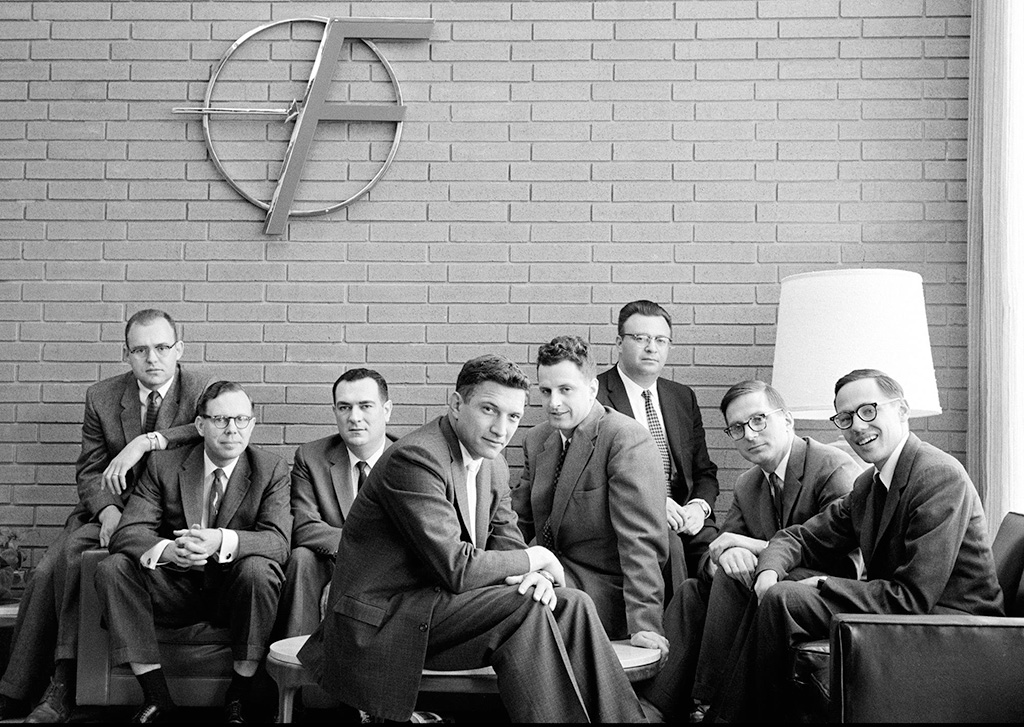
The men would become famous as the Traitorous Eight. Their company, Fairchild Semiconductor, would help create Silicon Valley.
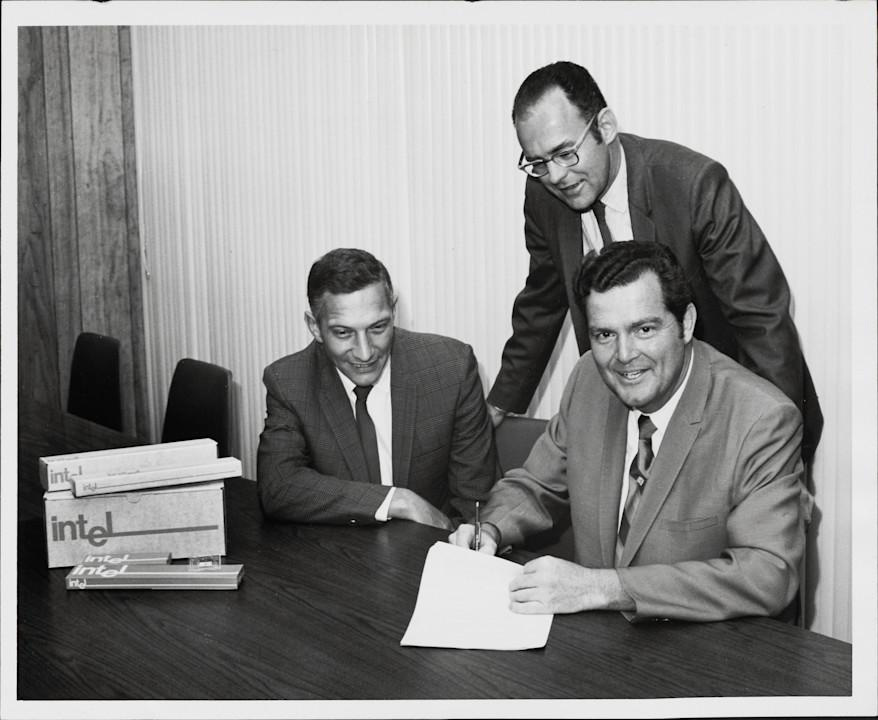
Eleven years later, Rock would take the lessons of that experiment and apply them to another startup: Intel. A remarkably concise financing and governance memorandum would establish principles that helped define modern venture capital.
The resulting winning streak was not simply one company growing larger. It was something more consequential: successful entrepreneurs repeatedly creating the conditions for the next generation of successful entrepreneurs.
1957: Eight Men Against the Establishment

William Shockley had recruited outstanding scientific talent to his semiconductor laboratory in Mountain View, California.
His management style, however, proved deeply divisive.
By September 1957, eight employees had decided to leave:
- Robert Noyce
- Gordon Moore
- Eugene Kleiner
- Jean Hoerni
- Jay Last
- Julius Blank
- Victor Grinich
- Sheldon Roberts
They initially hoped to find an established corporation willing to employ them as a team.
Through Eugene Kleiner’s family connections, their request eventually reached Arthur Rock at Hayden, Stone & Co. in New York.
Rock saw a possibility that the engineers had not originally proposed.
Why find these men another employer when they could become owners of their own enterprise?
It was a remarkably unconventional suggestion for corporate America in the 1950s.
Rock and his colleague Alfred “Bud” Coyle began approaching potential financial sponsors. Approximately 35 companies were identified in the original effort, with later accounts describing more than 40 approaches.
The answer was repeatedly no.
Established corporations were reluctant to finance an independent group of scientists who would own equity in the business.
Finally, Rock found someone willing to reconsider the rules.
His name was Sherman Fairchild.
The First Victory: Fairchild Semiconductor
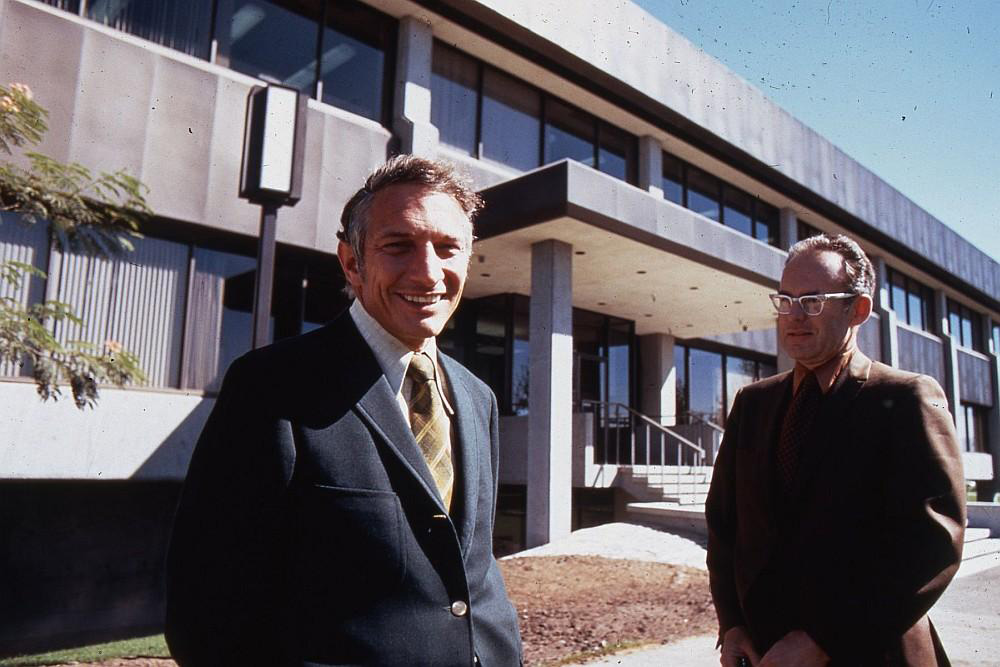
Right: Gordon Moore — Co-founder of Intel and originator of Moore’s Law.
Photograph: Taken in 1970 outside Intel’s headquarters in Santa Clara, California.
Sherman Fairchild, an inventor and wealthy industrialist, recognized the opportunity.
Fairchild Camera and Instrument agreed to provide approximately $1.38 million in financing, with contractual rights to acquire the new company.
Fairchild Semiconductor was born in September 1957.
The arrangement gave the engineers an ownership stake and a chance to build an enterprise around their own technical judgment.
That decision changed the economics of innovation.
In 1959, Fairchild’s parent exercised its purchase option, producing a substantial financial return for the founders.
By 1960, Fairchild Semiconductor had surpassed $20 million in annual sales.
But its greatest achievement was not its immediate commercial success.
Jean Hoerni developed the planar semiconductor manufacturing process. Robert Noyce recognized how to create an integrated circuit using that technology. Gordon Moore articulated the observation that became Moore’s Law.
Together, these advances transformed electronics manufacturing.
The semiconductor industry was no longer simply making better individual transistors. It was laying the foundation for an entirely new technological economy.
And the people building that economy were learning something equally important:
Engineers could become entrepreneurs. Entrepreneurs could become investors. Investors could finance the next generation of engineers.
The winning streak had begun.
1968: The Four-Page Memo That Changed Venture Capital

The next decisive chapter arrived in 1968.
Robert Noyce and Gordon Moore were leaving Fairchild to establish another semiconductor company.
They called Arthur Rock.
This time, financing was remarkably straightforward.
Rock understood the founders, their capabilities, and the opportunities emerging in semiconductor memory.
Noyce and Moore needed approximately $2.5 million. Rock arranged the financing through his network in a matter of days.
The company was incorporated on July 18, 1968.
Its name was Intel.
But the truly revolutionary aspect of the transaction was not merely the capital raised.
It was how that capital, ownership, employee compensation, and corporate governance would work together.
In a Stanford Law School interview, Professor Joseph Grundfest described Rock’s four-page Intel financing document as the “Magna Carta of the venture capital industry.”
The memorandum described a financing structure involving convertible securities and a philosophy of employee ownership and governance that became highly influential.
Three principles stand out.
First: Capital should back exceptional people.
Rock placed extraordinary importance on the abilities, integrity, and judgment of founders. His confidence in Noyce and Moore rested on what they had already accomplished, rather than on an elaborate forecast.
Second: Employees should share in the upside.
Intel helped popularize broad-based stock options, extending potential ownership beyond a handful of senior executives.
The approach associated with Intel included vesting arrangements designed to reward employees for remaining with the enterprise and contributing to its success.
Third: Investors should help build the company.
Rock’s model was not passive speculation. It emphasized active governance, thoughtful capital allocation, and collaboration between investors and management.
Taken together, those ideas created a powerful business development formula:
Identify talent. Supply capital. Share ownership. Establish sound governance. Build value. Repeat.
Rock did not invent venture capital single-handedly. Earlier investors and institutions had already helped pioneer the field. His contribution was to make this combination of founder financing, employee incentives, and investor engagement a model that others could adopt.
The Winning Streak Becomes a Family Tree
Fairchild’s most remarkable legacy was the network of companies that descended from it.
Employees left to establish new enterprises. Successful founders became investors. Experienced engineers joined younger companies and helped them scale.
Intel became one of the most consequential descendants.
Eugene Kleiner went on to co-found the venture capital partnership Kleiner Perkins in 1972.
Other branches of the Fairchild family tree included companies such as AMD, National Semiconductor, and Signetics.
The movement extended well beyond semiconductor manufacturing.
According to historical research presented by the Computer History Museum, an estimated 70% of 130-plus publicly traded Bay Area technology companies examined in 2014 could be traced to Fairchild’s founders and employees.
Those 92 companies had a combined value estimated at approximately $2.1 trillion at the time.
That is an extraordinary measure of business multiplication.
One enterprise had generated a vast network of enterprises.
And while not every company succeeded, the ecosystem continued producing new founders, investors, products, and markets.
Failures were part of the process. The lasting achievement was the ability to regenerate.
Arthur Rock’s Personal Winning Streak
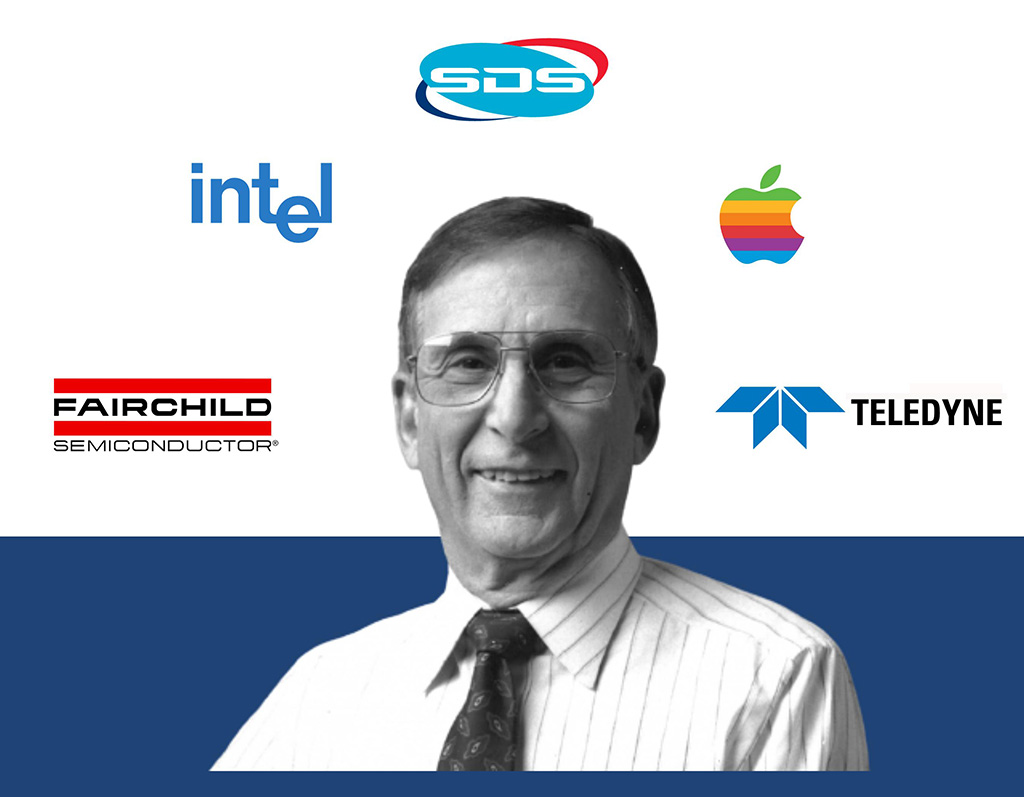
Rock’s influence reached far beyond Fairchild and Intel.
In 1961, he established Davis & Rock with Thomas J. Davis Jr., helping institutionalize venture investing on the West Coast.
Harvard Business School records that between 1961 and 1968, Davis & Rock invested approximately $3 million and returned roughly $100 million to investors.
His career included pivotal involvement with:
- Fairchild Semiconductor
- Scientific Data Systems
- Teledyne
- Intel
- Apple
These were not interchangeable successes. They operated in different markets, with different leadership teams and technologies.
What linked them was Rock’s ability to recognize exceptional entrepreneurs and support their ambitions with appropriate capital and organizational structures.
His involvement with Apple demonstrated that the approach was not confined to semiconductors.
The model could evolve with the industries it helped create.
Why This Winning Streak Endured
Winning Streak examines consecutive achievements, but Arthur Rock’s story represents an unusual form of consecutive success.
There was no undefeated season or uninterrupted climb in a stock price.
Instead, the achievement was institutional.
Fairchild’s engineers developed technologies. Their departures helped produce new companies. Their financial successes created investors. Those investors financed additional founders.
The system built upon itself for generations.
Three characteristics made this possible:
Talent multiplied. Successful organizations became training grounds for future founders.
Capital circulated. Wealth created in one successful venture could finance another.
Ownership changed behavior. Engineers and employees could participate directly in the value they helped produce.
By turning employee talent into entrepreneurial ownership, Silicon Valley developed a mechanism for repeatedly creating enterprises rather than relying entirely on established corporations.
That mechanism continued to evolve through personal computing, networking, software, the internet, and mobile technology.
The Winning Streak Verdict
Arthur Rock did not invent the transistor.
He did not invent the integrated circuit.
And he did not personally create every company that descended from Fairchild.
His achievement was recognizing that great technology required a new relationship between talent and capital.
In 1957, he helped eight dissatisfied scientists become founders.
In 1968, he helped two of those founders establish Intel under a financing and ownership philosophy that became a defining feature of Silicon Valley.
The four-page document was a crystallization of lessons learned through more than a decade of entrepreneurial experience.
The Computer History Museum would later describe Fairchild as the “First Trillion Dollar Startup”—not because Fairchild itself reached that valuation, but because of the immense cumulative value of companies descended from it.
For Winning Streak, that is the extraordinary achievement.
Arthur Rock helped turn a single business victory into a system capable of producing victories across generations.
The greatest winning streak in business development may not belong to any individual corporation.
It may belong to the model that keeps creating the next one.
Winning Streak Historical Intelligence
Business & Markets | Discovering the consecutive achievements that changed history.
Historical research: Computer History Museum; Harvard Business School Baker Library; Stanford Law School; Intel Archives.