
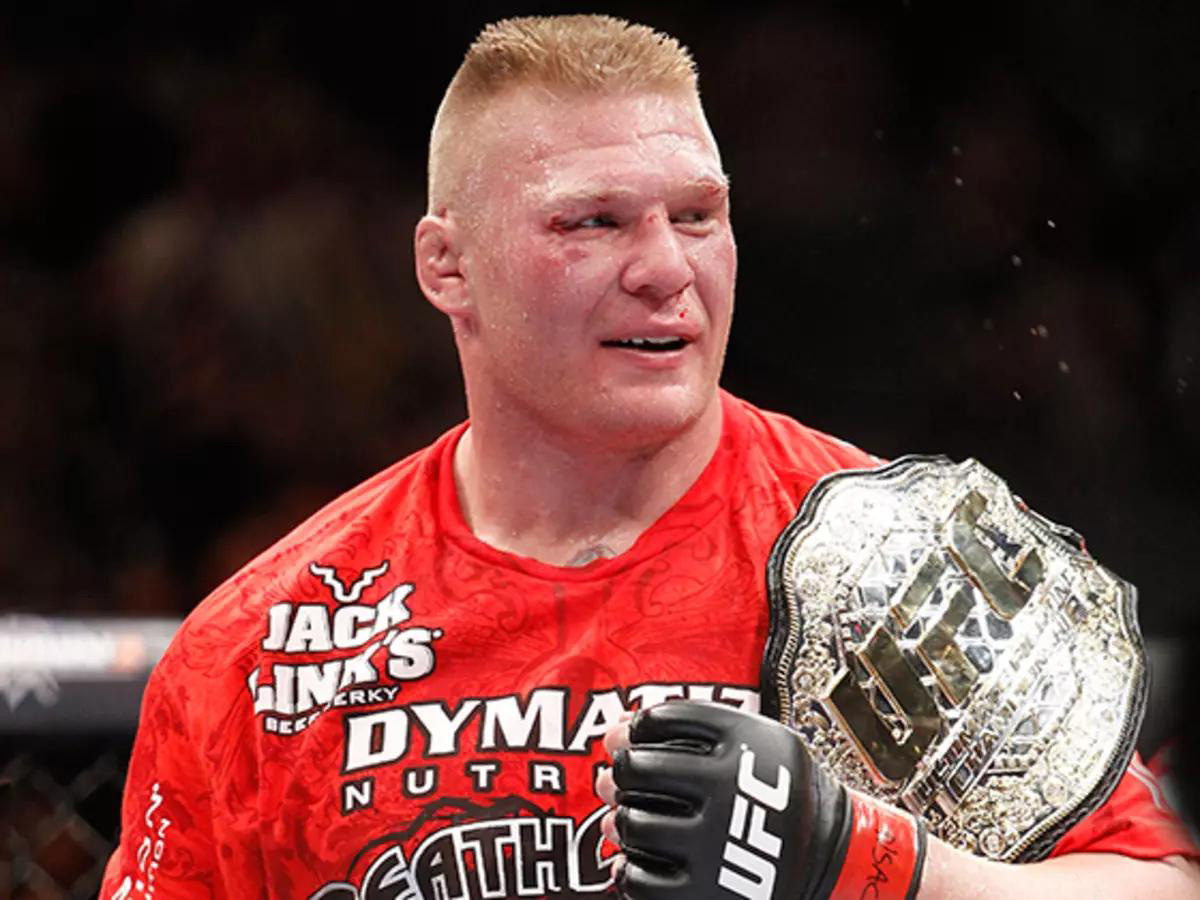
Three Worlds. Four Consecutive UFC Victories. One Unforgettable Career.
Some champions dominate a single discipline. Others establish dynasties that last for generations. Then there is Brock Lesnar, a competitor whose extraordinary combination of size, speed, strength, and intensity carried him to the summit of amateur wrestling, professional wrestling entertainment, and mixed martial arts.
Born July 12, 1977, in Webster, South Dakota, Lesnar grew up far from the bright lights of Las Vegas and Madison Square Garden. Yet his remarkable journey would eventually lead him to championship glory in three dramatically different arenas.
His winning streak was not one uninterrupted series of victories. It was something arguably more difficult: the ability to reach the top, enter a different competitive world, and do it again.
The Foundation: 106 Collegiate Victories
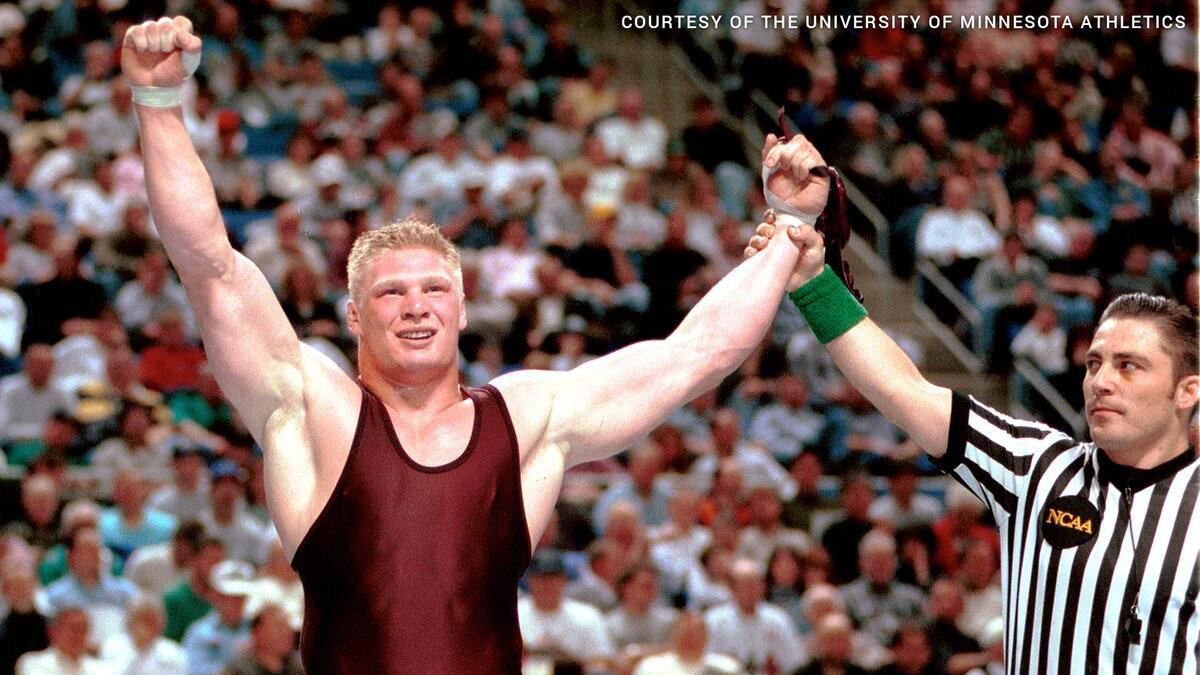
Before the world knew him as The Beast Incarnate, Brock Lesnar was already building a formidable wrestling record.
After winning the 1998 National Junior College Athletic Association heavyweight championship, Lesnar transferred to the University of Minnesota.
There, he compiled a 55–3 record, earned two consecutive Big Ten heavyweight championships, and became a two-time NCAA All-American.
In 1999, he finished runner-up in the NCAA heavyweight division, losing the championship final to Stephen Neal.
One year later, Lesnar returned and completed the mission. At the 2000 NCAA Division I Wrestling Championships in St. Louis, he defeated Iowa’s Wes Hand, 3–2, in a tiebreaker to claim the national heavyweight title.
His overall collegiate record stood at an exceptional 106 victories against just five defeats.
This was the foundation of everything that followed: real competition, measurable success, and the discipline required to defeat some of America’s finest collegiate wrestlers.
The Next Big Thing: WWE’s Youngest Champion
On March 18, 2002, Lesnar made his televised WWE debut.
With Paul Heyman as his advocate, the enormous newcomer immediately became one of professional wrestling’s most compelling attractions.
Lesnar won the 2002 King of the Ring tournament, earning an opportunity to challenge The Rock at SummerSlam.
On August 25, 2002, he defeated The Rock to capture the Undisputed WWE Championship.
At just 25 years old, Lesnar became the youngest WWE Champion in history.
His ascent was astonishing. In barely five months, he had progressed from televised newcomer to the company’s premier championship.
Lesnar would eventually accumulate seven WWE Championship reigns, three Universal Championship reigns, and two Royal Rumble victories.
Unlike NCAA wrestling or UFC, WWE is scripted sports entertainment. Its championships reflect a different kind of achievement: athletic performance, audience appeal, storytelling, and the ability to become a defining attraction.
By those measures, Lesnar was an undeniable phenomenon.
Four Straight Victories: Conquering the UFC
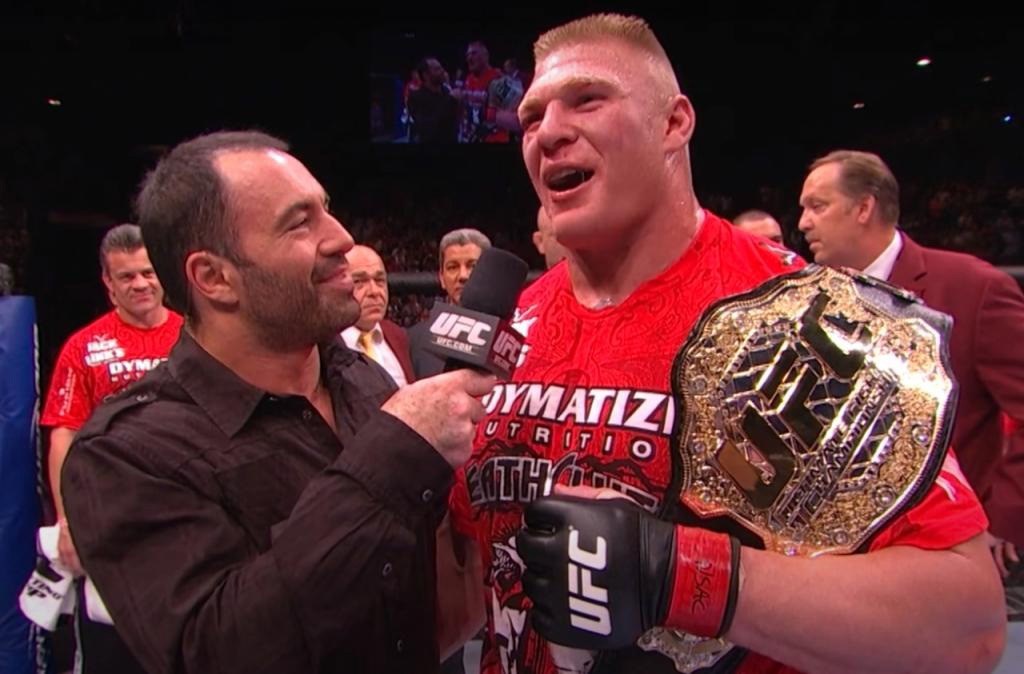
Many professional wrestlers have portrayed themselves as unbeatable fighters. Lesnar took the extraordinary step of entering genuine mixed martial arts competition to test his abilities.
His UFC debut in February 2008 ended in defeat against former heavyweight champion Frank Mir.
But what followed was the competitive winning streak that established Lesnar’s credibility inside the Octagon.
Four consecutive UFC victories:
- August 9, 2008 — Heath Herring: Lesnar dominated the experienced heavyweight and won by unanimous decision.
- November 15, 2008 — Randy Couture: Lesnar stopped the UFC legend in the second round to become heavyweight champion.
- July 11, 2009 — Frank Mir: At UFC 100, Lesnar avenged his earlier defeat, winning by second-round TKO and unifying the heavyweight championship.
- July 3, 2010 — Shane Carwin: After surviving a punishing opening round, Lesnar submitted the previously unbeaten contender to retain his title.
The significance was extraordinary.
Lesnar captured the UFC heavyweight championship in only his fourth professional MMA fight, becoming one of the fastest-rising heavyweight champions in the organization’s history.
His four-fight winning streak eventually ended against Cain Velasquez in October 2010. Yet during those two years, Lesnar had demonstrated that his wrestling credentials could translate into success against elite mixed martial artists.
The Comeback: Defeating More Than Opponents
Lesnar’s UFC accomplishments become more remarkable when considering what happened outside the Octagon.
In 2009, he developed diverticulitis, a serious intestinal condition that threatened his career. His illness kept him out of competition for nearly a year.
His return against Shane Carwin in July 2010 became one of the most dramatic moments of his MMA career.
Carwin battered the champion during the opening round. Lesnar survived, recovered, and secured a second-round submission.
For a competitor widely recognized for overwhelming physical strength, this victory demonstrated something different.
Resilience.
Lesnar subsequently endured another episode of diverticulitis requiring surgery, eventually concluding his principal UFC career and returning to WWE.
The lesson extended beyond combat sports: physical dominance can win championships, but perseverance is required when the greatest opponent is adversity itself.
WrestleMania XXX: The Man Who Ended the Streak
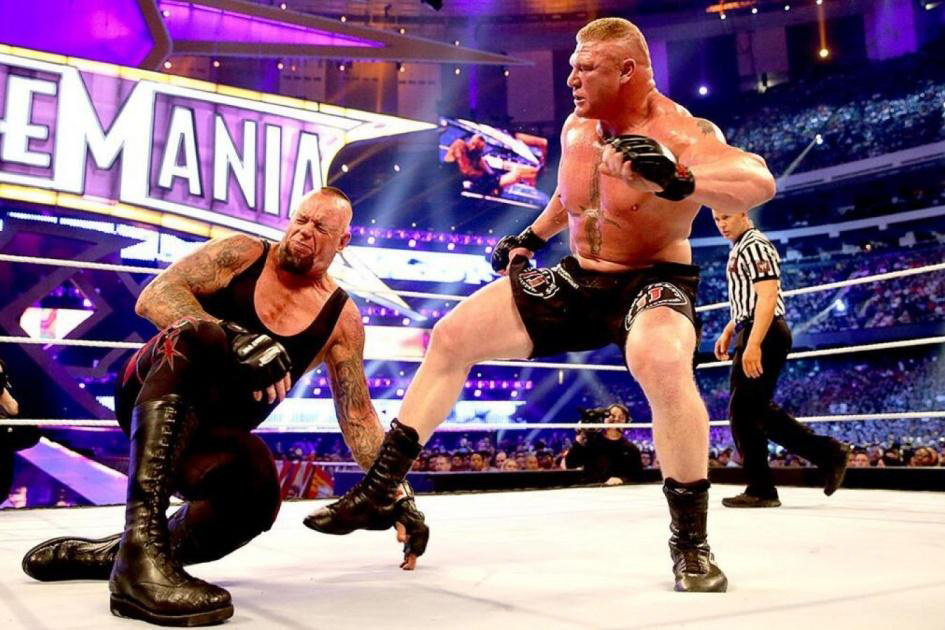
On April 6, 2014, Lesnar entered the Mercedes-Benz Superdome in New Orleans for an encounter that would become one of the most memorable moments in professional wrestling history.
His opponent was The Undertaker.
For more than two decades, The Undertaker had maintained an undefeated WrestleMania record.
Twenty-one appearances. Twenty-one victories. Zero defeats.
Then Lesnar delivered three F-5 finishing moves and pinned the legendary competitor.
The scoreboard told the story:
21–1.
The audience reacted in disbelief.
Lesnar had not extended his own undefeated run that evening. Instead, he became the man chosen to end perhaps the most celebrated winning streak in professional wrestling entertainment.
It was a historic storytelling decision, not an unscripted sporting upset. Nevertheless, its impact on WWE history was immense.
The man who had already conquered collegiate wrestling and captured a UFC championship had now become the defining figure in another legendary streak.
The Winning Streak Legacy
Brock Lesnar’s career offers a fascinating study in competitive reinvention.
He was a national collegiate champion before becoming WWE’s youngest champion. He subsequently abandoned the security of sports entertainment to become a genuine UFC heavyweight champion.
He even attempted a transition to professional football, participating in the Minnesota Vikings’ 2004 training camp and preseason before returning to other pursuits.
Not every attempt produced victory. Not every streak continued forever.
That is precisely what makes his story compelling.
In 2026, the University of Minnesota recognized his collegiate accomplishments by naming him to its M Club Hall of Fame class—a fitting acknowledgment of the competitive foundation on which his remarkable career was built.
Lesnar’s legacy is not defined by uninterrupted perfection. It is defined by the willingness to repeatedly confront new challenges, absorb setbacks, and achieve extraordinary success.
The Winning Streak Verdict
Brock Lesnar belongs among the most unusual crossover champions in modern sports and entertainment history.
His 106 collegiate wrestling victories, NCAA national championship, four consecutive UFC wins, UFC heavyweight title, and historic WWE achievements represent a sequence of milestones few performers could even attempt to duplicate.
The underlying lesson is powerful:
A winning streak does not have to last forever to become legendary. Sometimes the greatest accomplishment is proving you can build another one.
Winning Streak — Investigating the remarkable achievements that make history.