
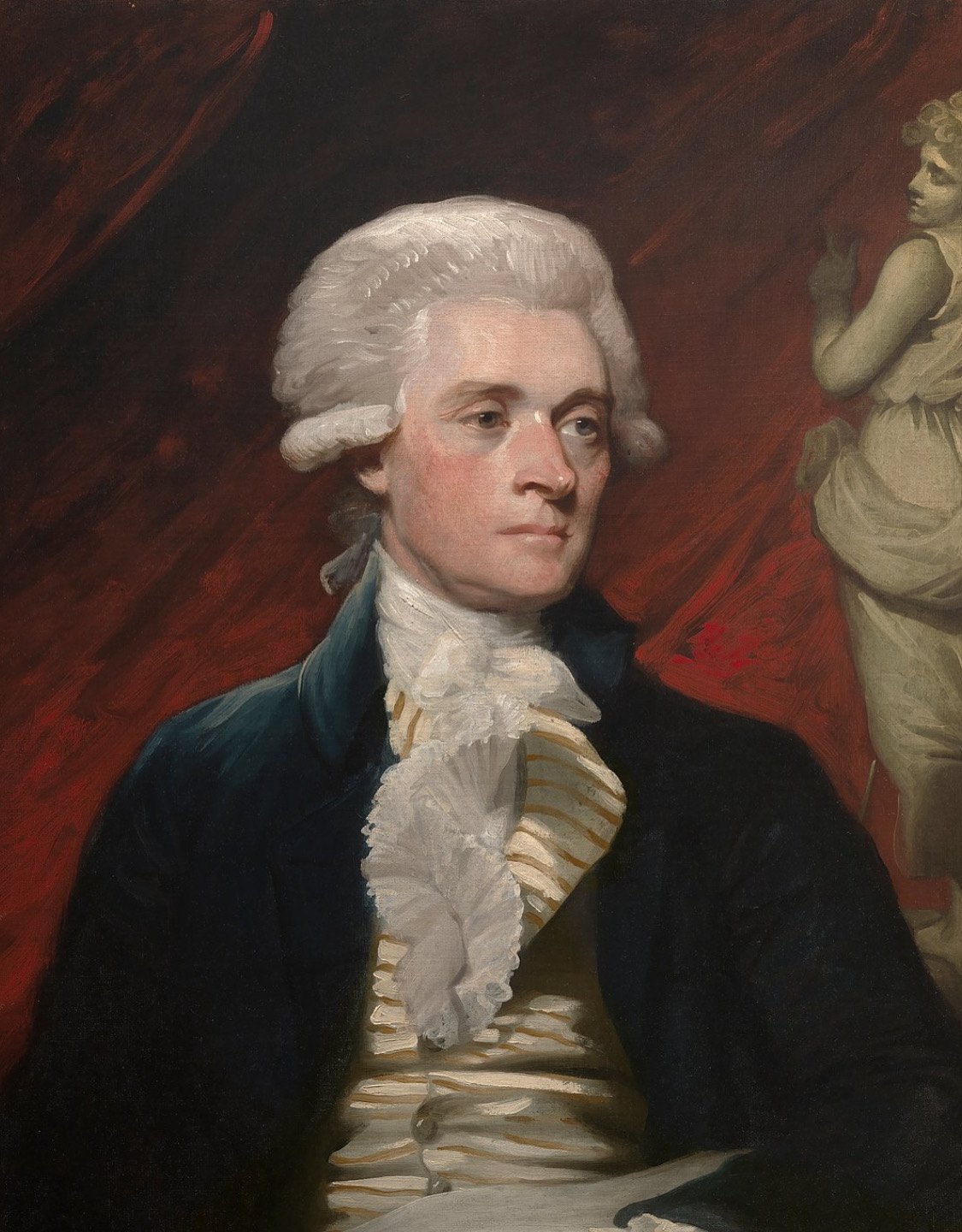
From Paris in 1785, Thomas Jefferson sent his 15-year-old nephew a plan for building a mind, and every book on it is still waiting for you.
In the summer of 1785, Thomas Jefferson was a long way from Virginia.
He was in Paris, newly installed as the American minister to France, carrying the business of a young republic through the courts of Europe.
Yet on August 19 he sat down to write to a teenager.
The teenager was Peter Carr, his nephew. Peter’s father, Dabney Carr, had been Jefferson’s closest friend and brother-in-law, and had died in 1773. Jefferson took responsibility for the boy’s education.
Peter was 15, at school in Williamsburg, and he had fallen behind. Jefferson did not soften it.
“Time now begins to be precious to you,” he wrote.
What followed was not a scolding. It was a blueprint: what to read, in what order, how to spend each hour, and what kind of man to become.
Jefferson put character first. “An honest heart being the first blessing,” he wrote, “a knowing head is the second.”
For the knowing head, he turned to the ancients. In that letter, in a follow-up two years later, and in the reading lists he drew up across his life, the same names keep returning.
Here they are, one by one. Read the full 1785 letter on Founders Online.
Herodotus: Where History Begins
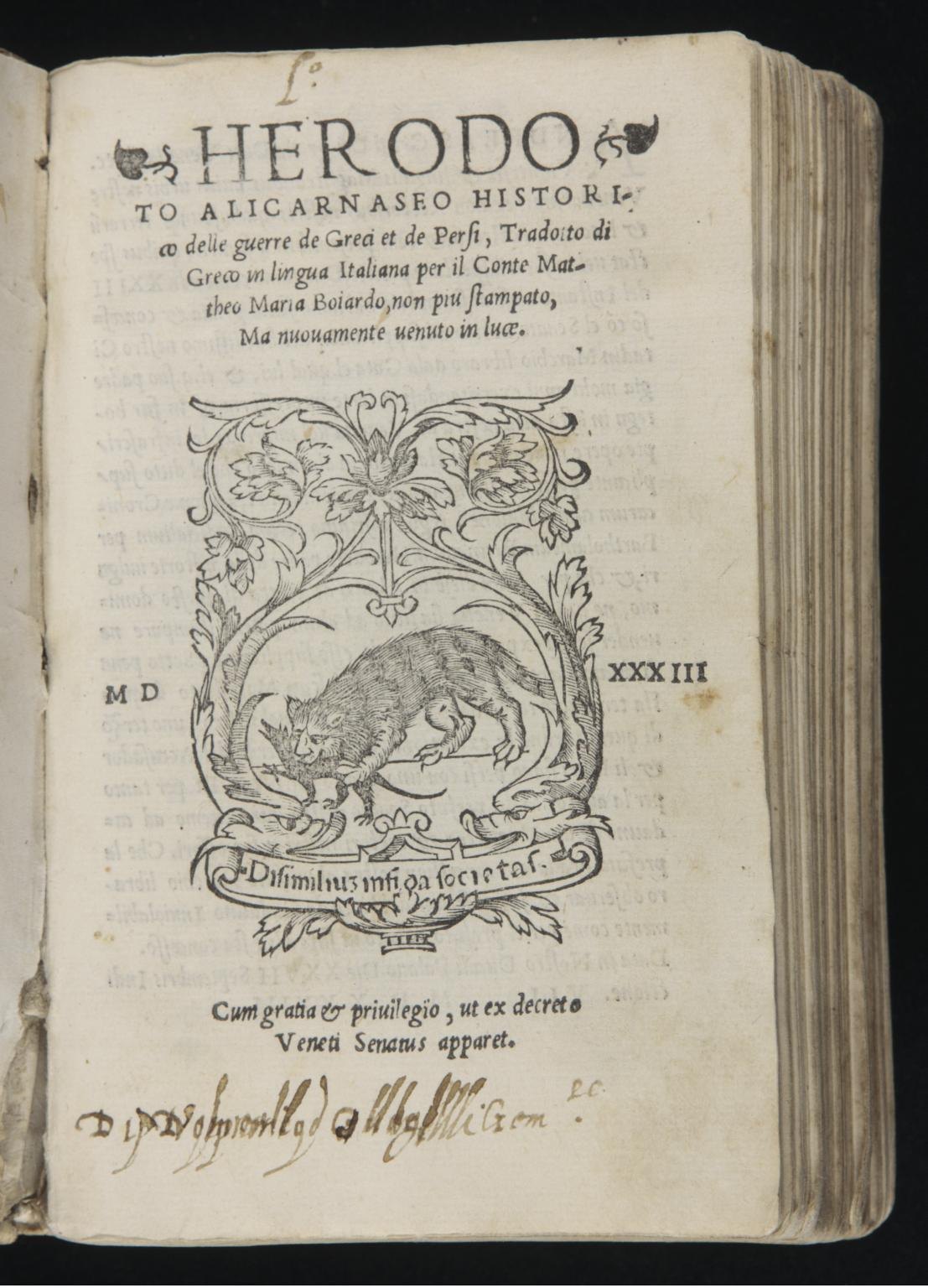
Jefferson told Peter to start with a modern overview, Goldsmith’s history of Greece. Then came the real thing.
“Then take up antient history in the detail, reading the following books in the following order. Herodotus. Thucydides. Xenophontis hellenica. Xenophontis Anabasis. Quintus Curtius. Justin.”
Herodotus came first, and for good reason. His Histories tell how the Greek city-states stood against the Persian Empire, and they practically invented the idea of history as an inquiry into causes.
For a boy from a small new nation that had just defied an empire, the story needed little explanation.
Read it today: The History of Herodotus, translated by G. C. Macaulay, Volume I and Volume II (Project Gutenberg).
Thucydides: The Hard Lessons of Power
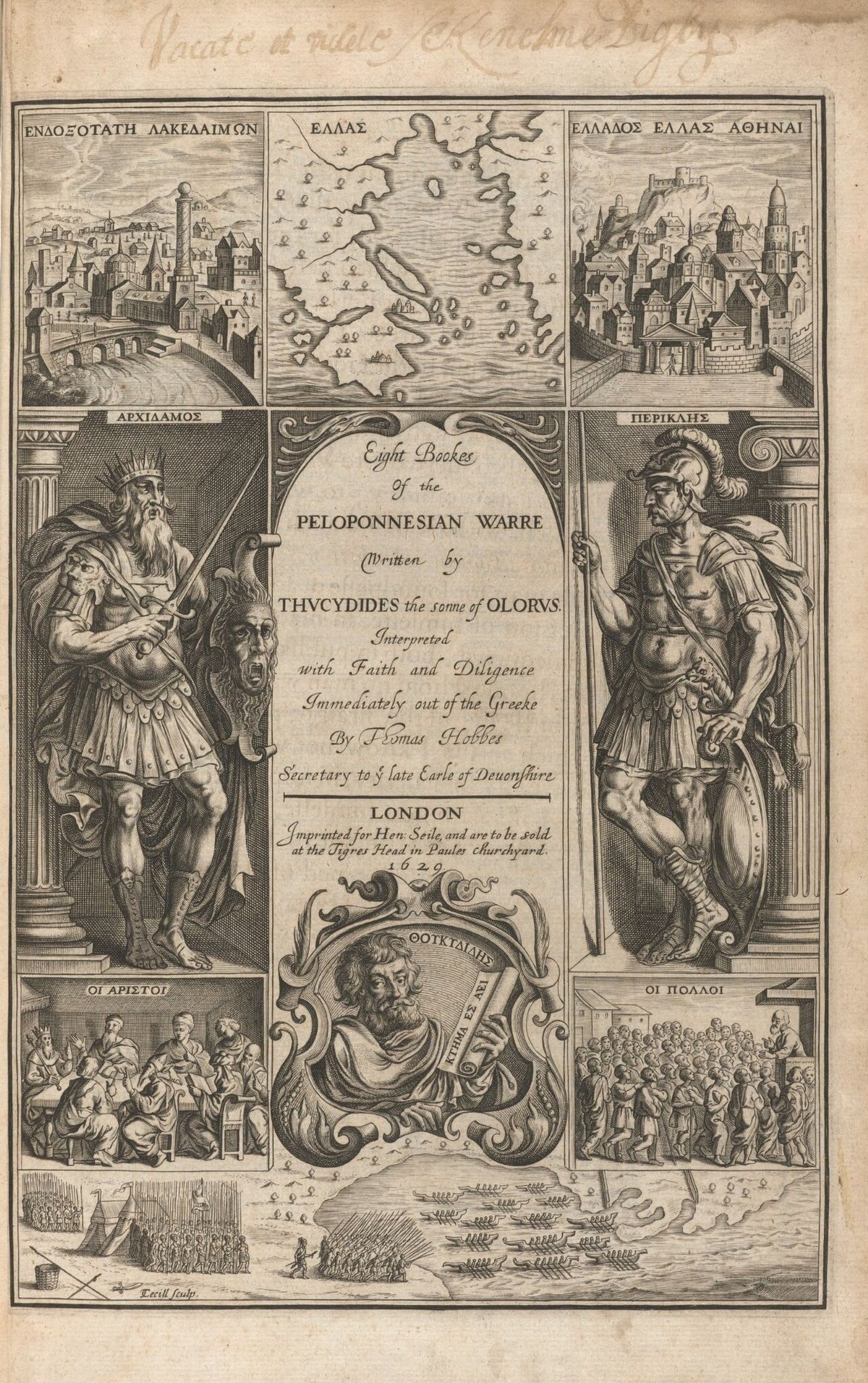
Second on the list was Thucydides, whose History of the Peloponnesian War follows Athens from confidence to catastrophe.
Herodotus tells you what happened. Thucydides asks why powerful democracies make fatal mistakes.
Jefferson never outgrew him. Decades later, retired at Monticello, he told John Adams: “I have given up newspapers in exchange for Tacitus & Thucydides, for Newton & Euclid; & I find myself much the happier.” (Founders Online)
Read it today: The History of the Peloponnesian War, translated by Richard Crawley (Project Gutenberg).
Xenophon: Soldier, Historian, Student of Socrates
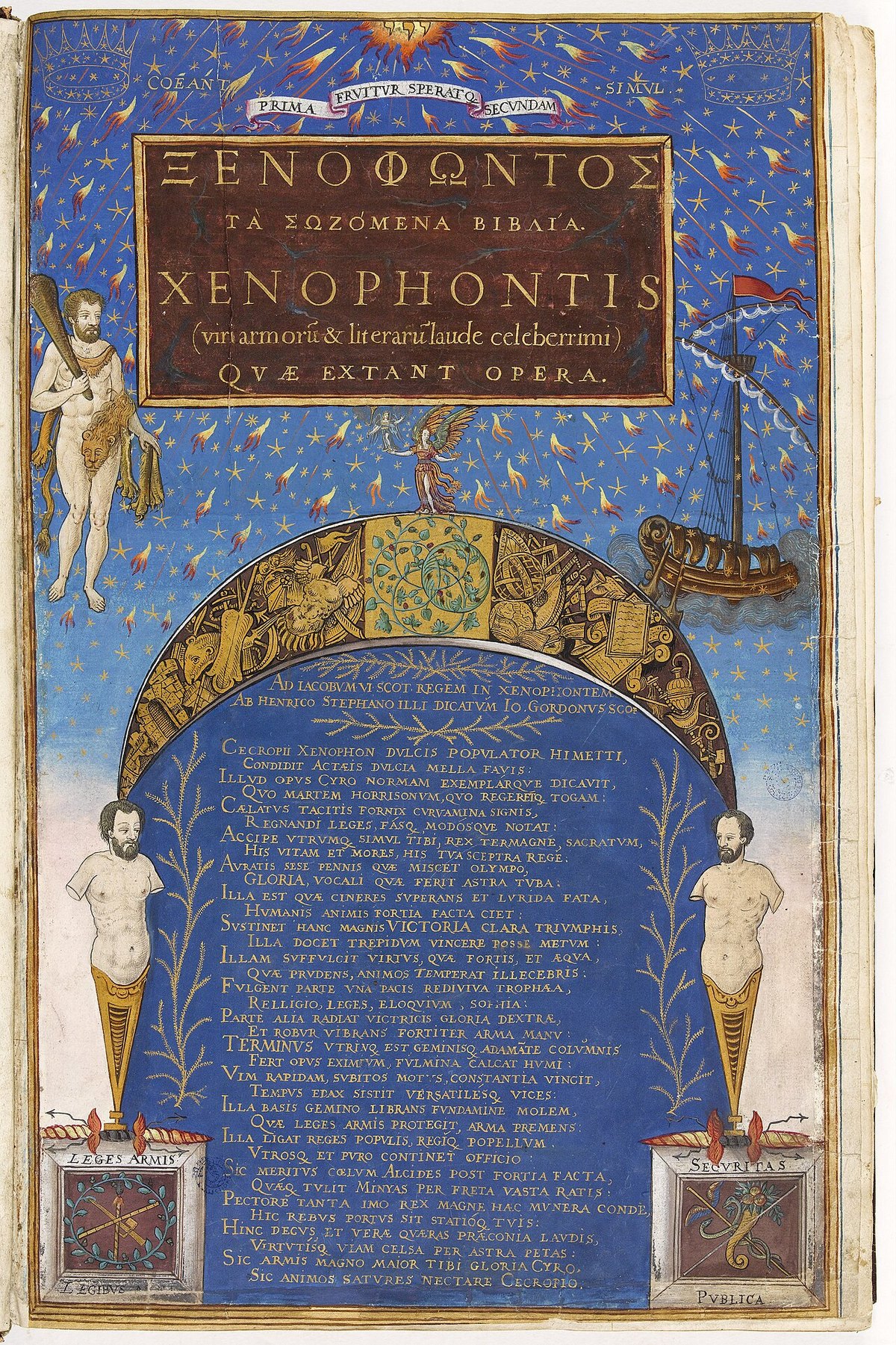
Xenophon is the only author who appears twice in Jefferson’s 1785 plan, once in history and once in morality.
His Hellenica picks up the story of Greece where Thucydides breaks off. His Anabasis is one of the great adventure stories ever written: ten thousand Greek soldiers stranded deep in Persia, fighting their way home.
His Memorabilia is something else again. It is a portrait of his teacher, Socrates, and Jefferson placed it among the books on how to live.
Jefferson was serious enough to buy them. He told Peter he had ordered “Xenophon’s Hellenics, Anabasis, and Memorabilia” sent to him from London.
Read it today: Anabasis, Hellenica and The Memorabilia, translated by H. G. Dakyns (Project Gutenberg).
Homer: The Poet Behind Everything
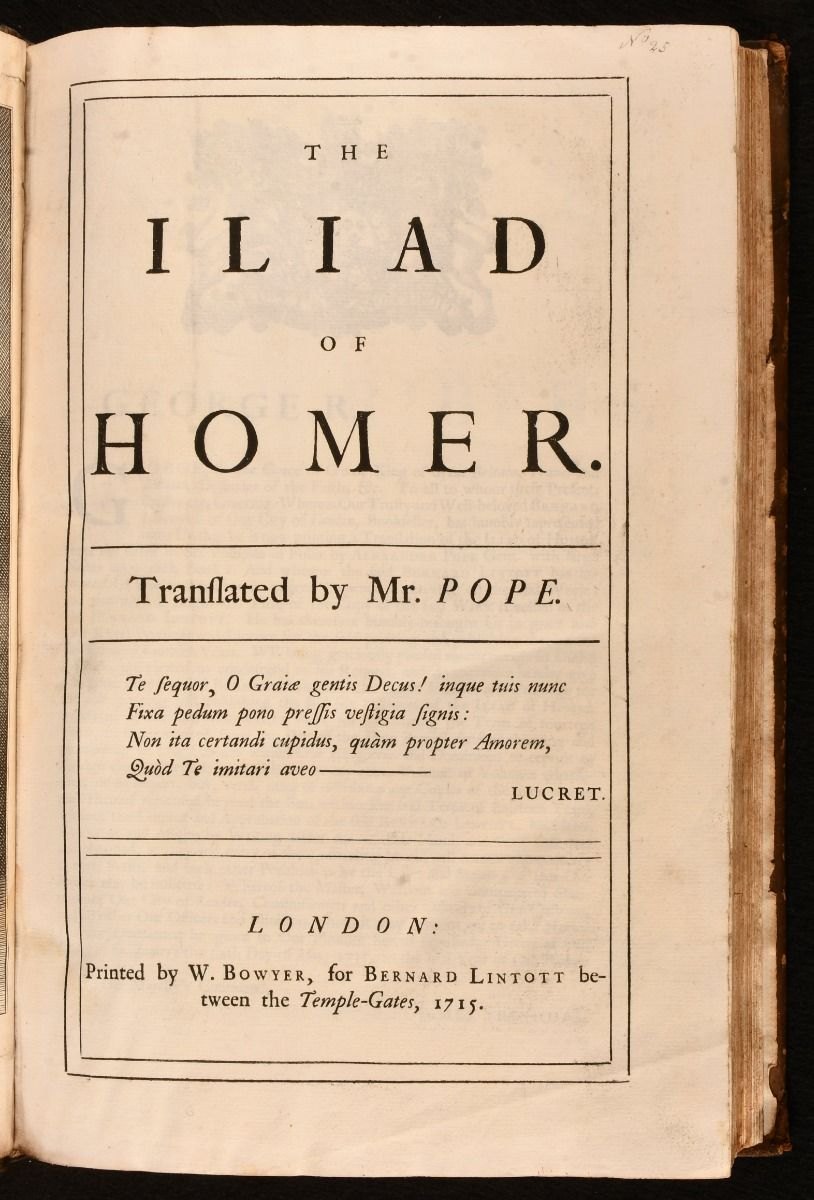
Jefferson assumed Homer was already part of Peter’s schooling. “In Greek and Latin poetry, you have read or will read at school Virgil, Terence, Horace, Anacreon, Theocritus, Homer.”
The Iliad and the Odyssey were the foundation every other ancient writer built on. Two years later, when Jefferson drew up a fuller list for Peter, Homer stood first under poetry.
Jefferson also knew the poems in English. Pope’s Iliad and Odyssey appear on the library list he made for his friend Robert Skipwith in 1771.
Read it today: The Iliad, translated by Alexander Pope and The Odyssey, translated by Samuel Butler (Project Gutenberg).
Sophocles: Tragedy as a School of Character
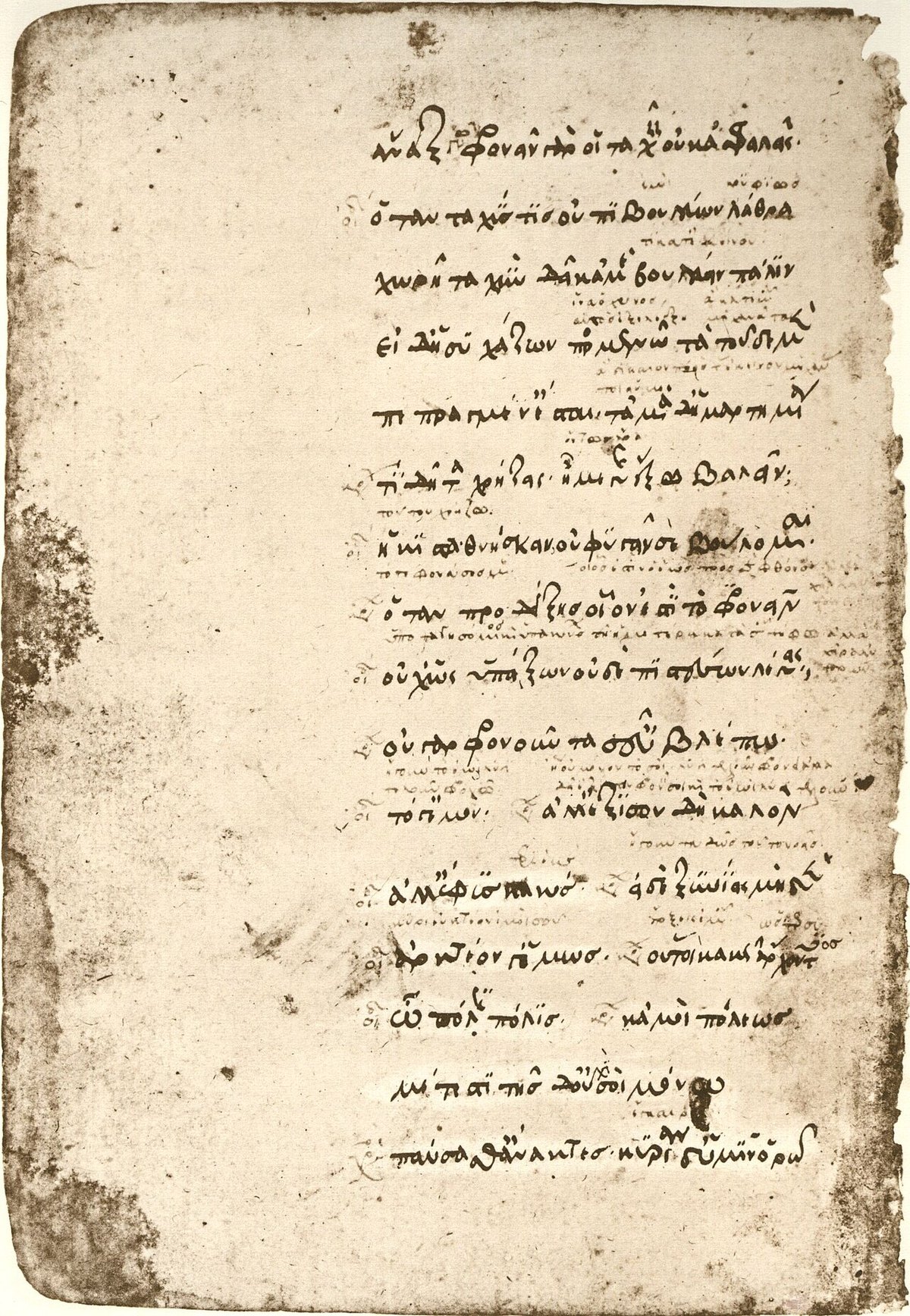
Sophocles joins the list in Jefferson’s follow-up to Peter, dated August 10, 1787. Its poetry heading reads: “Homer—Milton—Ossian—Sophocles—Aeschylus—Eurip.—Metastasio—Shakesp.”
Oedipus the King, Oedipus at Colonus and Antigone are plays about pride, duty and the limits of human control.
Jefferson believed great drama could teach morality better than lectures. In 1771 he wrote that a reader learns filial duty more effectively from King Lear “than by all the dry volumes of ethics and divinity that ever were written.” (Founders Online)
Read it today: The Oedipus Trilogy, translated by F. Storr or The Seven Plays in English Verse, translated by Lewis Campbell (Project Gutenberg).
Plato: The Socratic Dialogues
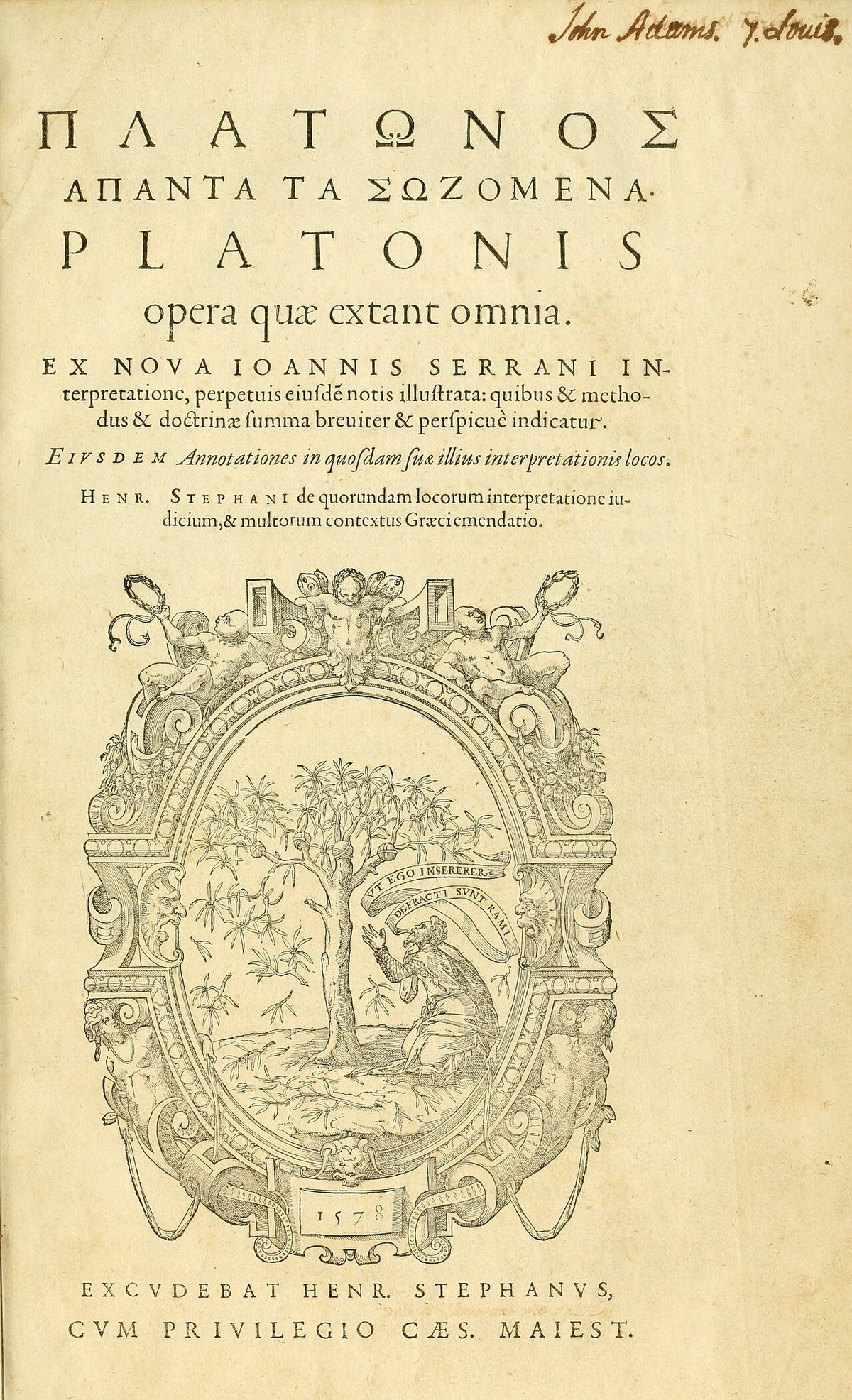
Under morality, Jefferson’s 1785 instruction was short: “In morality read Epictetus, Xenophontis memorabilia, Plato’s Socratic dialogues, Cicero’s philosophies.”
He chose the Socratic dialogues specifically: the Apology, Crito, Phaedo and their companions, in which Socrates questions, argues, and finally faces death for his convictions.
Jefferson argued with Plato for the rest of his life and grew sharply critical of the more speculative works. But he wanted Peter to meet Socrates, the man who insisted that an examined life was the only one worth living.
The edition pictured above, printed by Henri Estienne in 1578, gave scholars the page numbers still used to cite Plato today.
Read it today: Apology and Phaedo, translated by Benjamin Jowett (Project Gutenberg).
Cicero: The Roman Statesman’s Philosophy
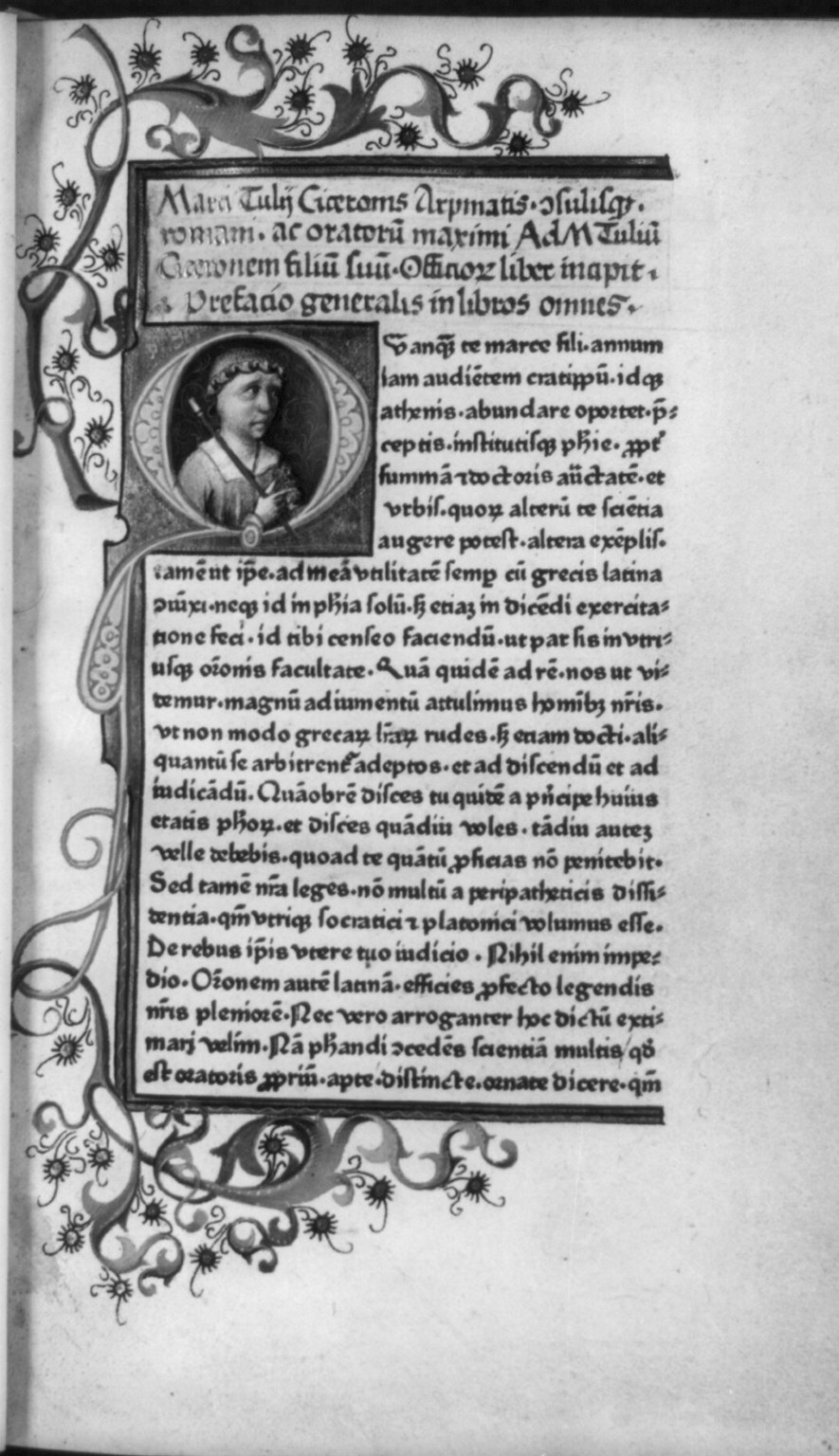
“Cicero’s philosophies” closed Jefferson’s morality list, and “Cicero’s works” were in the box he ordered from London.
Cicero was the model of what Jefferson hoped Peter might become: a lawyer, orator and public servant who also thought hard about ethics.
His On Duties (De officiis), written to his own son, explains how to be honourable and useful at the same time. In 1465 it became one of the first classical books ever printed, in the edition shown above.
Read it today: De Officiis, translated by Walter Miller and Treatises on Friendship and Old Age (Project Gutenberg).
Seneca: Letters on Living Well
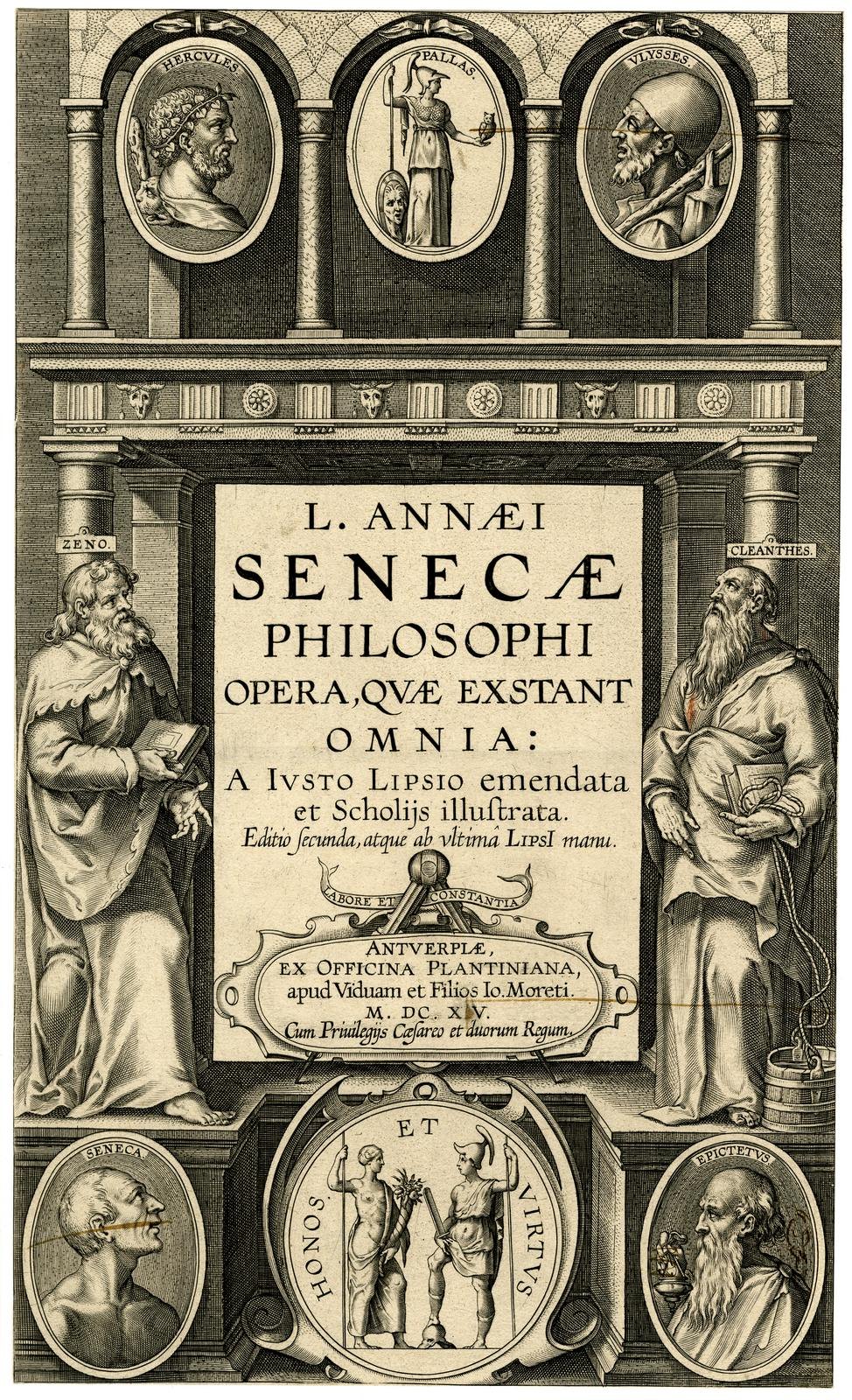
Seneca does not appear in the 1785 letter itself. He belongs to the wider library Jefferson recommended.
On the 1771 list for Robert Skipwith, under religion, Jefferson wrote: “Seneca. by L’Estrange.”
That was Roger L’Estrange’s Seneca’s Morals, a popular English abridgement of the Stoic’s essays on the happy life, anger, mercy and benefits.
Seneca wrote about calm, self-command and the right use of time. That last theme was exactly what Jefferson was urging on a nephew who had lost so much time.
Read it today: Seneca’s Morals of a Happy Life, Benefits, Anger and Clemency, translated by Sir Roger L’Estrange, the very translation Jefferson named, and On Benefits (Project Gutenberg).
Marcus Aurelius: The Emperor’s Private Notebook
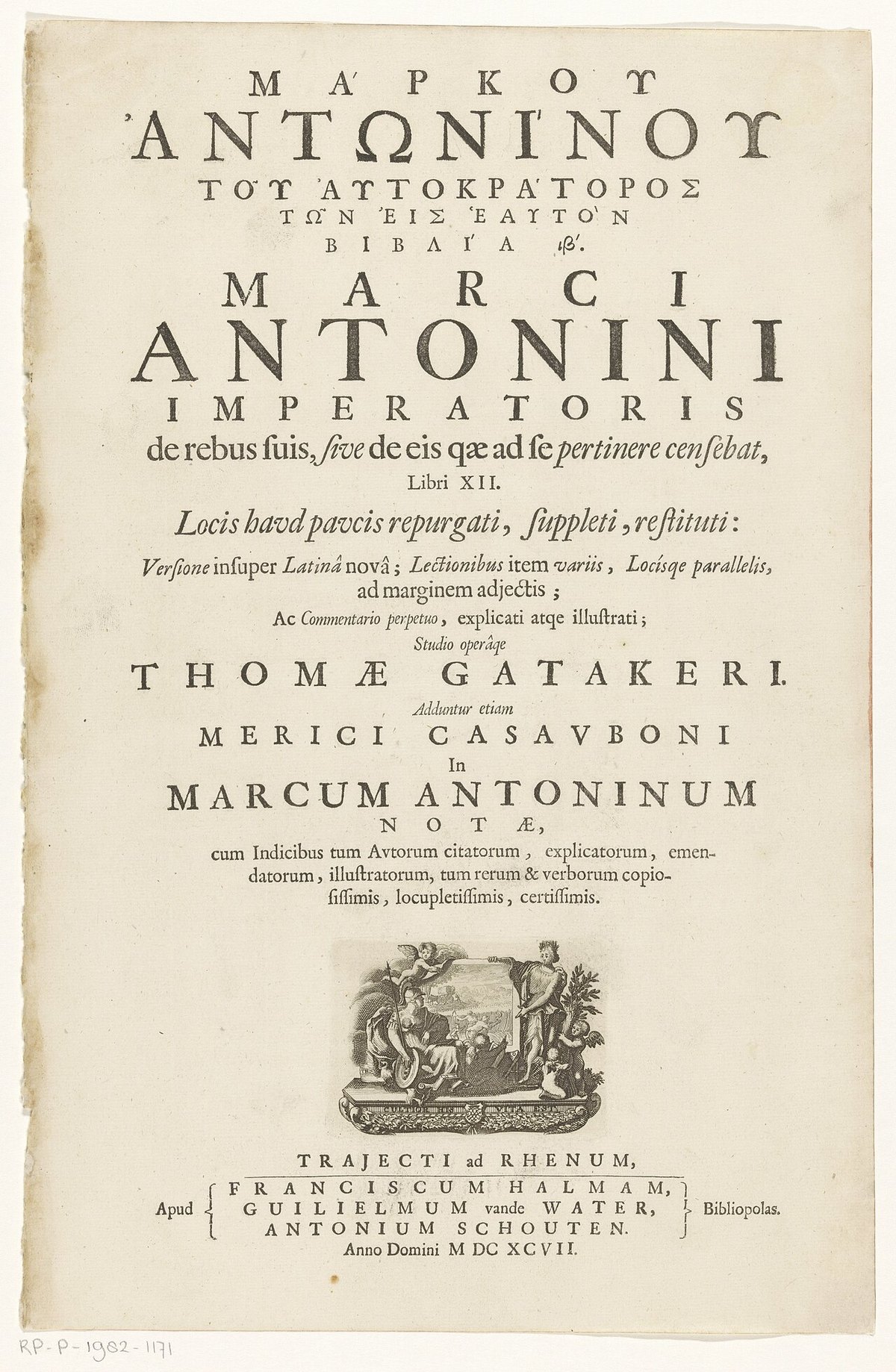
Marcus Aurelius sits beside Seneca on that same 1771 list: “Antoninus by Collins.”
The Meditations were never meant for publication. They are the private reminders of a Roman emperor trying to stay just, patient and humble while holding absolute power.
For Jefferson’s generation, which was trying to build a government that would not corrupt the people who ran it, that was a powerful example.
Read it today: Meditations, translated by Meric Casaubon or Thoughts of Marcus Aurelius Antoninus, translated by George Long (Project Gutenberg).
History, Philosophy, Poetry and Languages
Jefferson did not just hand Peter a stack of books. He told him how to divide his day.
After exercise, the free hours were to be split three ways: “Give the principal to history, the other two, which should be shorter, to Philosophy and Poetry.”
History came first because it showed how nations rise and fall. Philosophy taught how to live. Poetry trained the feelings and the style. He also added Milton, Pope and Swift “in order to form your style in your own language.”
And Jefferson wanted it all read the hard way: “reading every thing in the original and not in translations.”
That meant Greek and Latin. It also meant modern languages. Peter was to “push” his French, because the best books on mathematics and natural science were French. Spanish came next: “Our future connection with Spain renders that the most necessary of the modern languages, after the French.”
Beyond the Books: Honesty, Exercise and Walking
The most famous lines in the letter are not about reading at all.
On honesty: “Whenever you are to do a thing tho’ it can never be known but to yourself, ask yourself how you would act were all the world looking at you, and act accordingly.”
On integrity: “Give up money, give up fame, give up science, give the earth itself and all it contains rather than do an immoral act.”
On the body, Jefferson prescribed about two hours of exercise every day, “for health must not be sacrificed to learning. A strong body makes the mind strong.”
His favourite exercise was simple. “Walking is the best possible exercise. Habituate yourself to walk very far.”
And he insisted those walks be a real break. “Never think of taking a book with you. The object of walking is to relax the mind.”
He also gave a routine any modern productivity coach would recognise. Rise early at a fixed hour, go to bed early at a fixed hour, and take a half-hour walk on waking.
Two years later the message had not changed. “I repeat my advice to take a great deal of exercise, and on foot.” (Founders Online)
The Winning Streak Verdict
Jefferson’s plan was demanding, and for Peter Carr it was also an act of love from an uncle an ocean away.
The young man did grow into public life. He served in the Virginia legislature and remained close to his uncle.
Jefferson kept reading the same authors into old age. He went on to found the University of Virginia, built on the belief that a republic depends on educated citizens.
His reading list is not a museum piece. It is a training plan: history for judgment, philosophy for character, poetry for feeling, languages for reach, and long walks to keep body and mind strong.
Jefferson had to order these books from London and wait for them to cross the Atlantic.
You can still read every one of those books, free, tonight. The only thing standing between you and Jefferson’s education is the decision to begin.
Winning Streak explores remarkable sequences of human achievement and the people whose determination, ingenuity, and excellence changed history.