
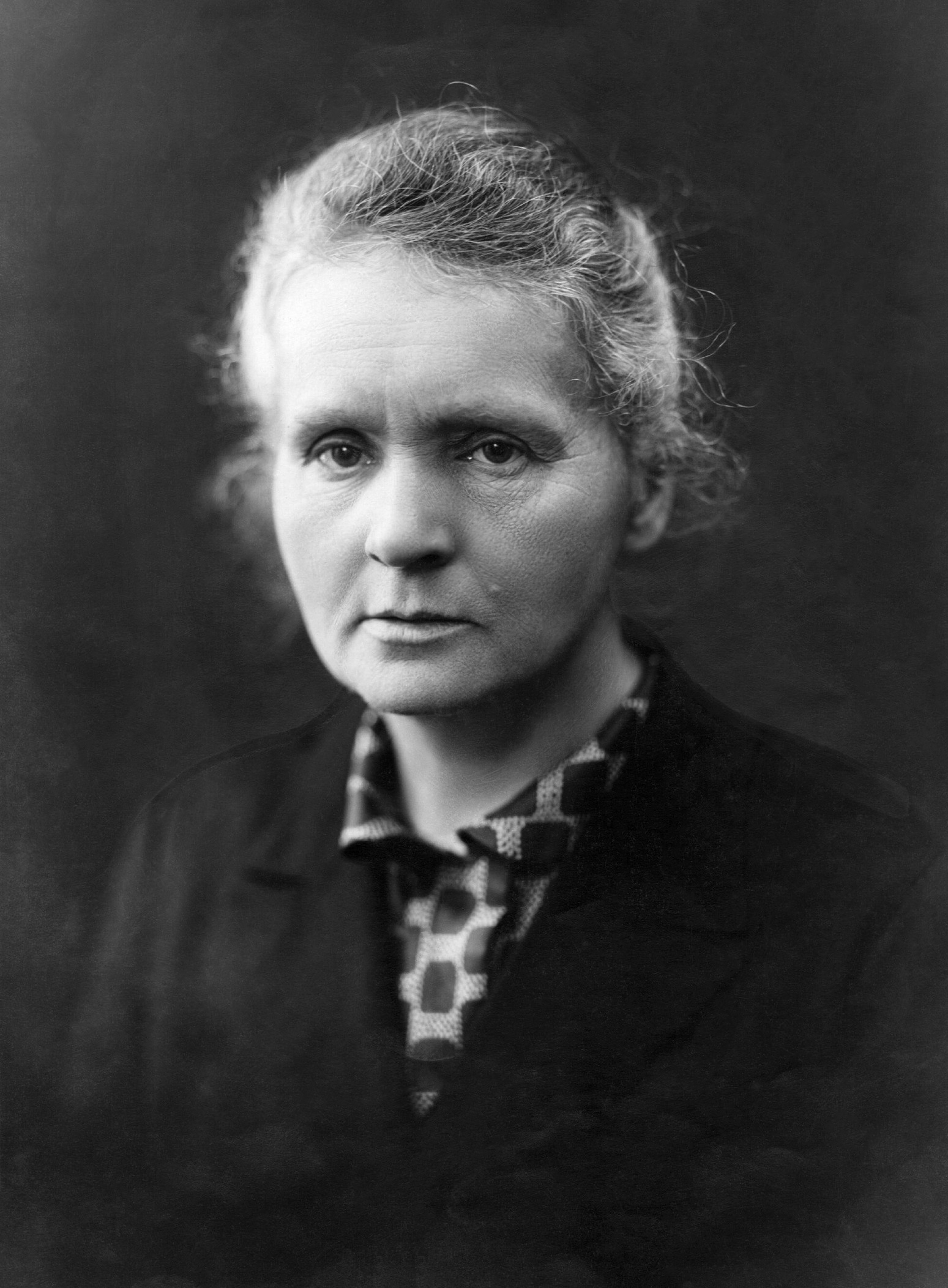
From a secret classroom in Warsaw to two Nobel Prizes in two different sciences, Marie Curie turned relentless experiment into one of history’s most remarkable winning streaks.
In December 1911, Marie Curie traveled to Stockholm to receive a Nobel Prize for the second time.
No one had ever done that before. And in more than a century since, no one else has won Nobel Prizes in two different sciences.
She had already been the first woman to win a Nobel Prize. Now she was the first person to win two.
Her streak had begun in a city where women were not allowed to attend university.
From Warsaw to Paris
Maria Salomea Skłodowska was born on November 7, 1867, in Warsaw, then part of the Russian Empire. Her father taught mathematics and physics, and he gave his children their first lessons in science.
Women could not enroll in a regular institution of higher education. So Maria and her sister Bronisława joined the Flying University, a clandestine Polish school that admitted women.
She worked as a tutor, studied in secret, and began her practical training in a chemistry laboratory in Warsaw.
She wanted to study in Paris, but first she worked as a governess to help pay for her sister’s medical studies there, and waited her turn.
In late 1891, she followed her sister to Paris. She earned a degree in physics in 1893 and a second degree in 1894.
That year she met a physicist named Pierre Curie. On July 26, 1895, they were married in a civil ceremony in Sceaux, outside Paris. Neither wanted a religious service.
The partnership that followed would change science.
Victory No. 1: Two New Elements (1898)
In 1896, Henri Becquerel discovered that uranium gives off mysterious rays.
Marie Curie chose to investigate those rays for her doctoral research. She found that the strength of the radiation depended on the amount of uranium present, which suggested that it came from the atoms themselves.
She and Pierre also coined a new word for the phenomenon: radioactivity.
She did not win every race. A German chemist, Gerhard Carl Schmidt, beat her to the report that thorium gives off rays in the same way as uranium.
Then came the breakthrough. Some uranium ores were more radioactive than the uranium in them could explain. Something else had to be hiding there.
In July 1898, the Curies announced a new element and named it polonium, in honor of Marie’s native Poland, which was then partitioned among three empires.
On December 26, 1898, they announced a second: radium, from the Latin word for ray.
Proving it was another matter. From a tonne of pitchblende ore, the Curies managed to separate just one-tenth of a gram of radium chloride, in 1902.
Victory No. 2: The First Nobel and the Hardest Loss (1903–1906)
In 1903, Marie earned her Doctor of Science degree.
That December, the Royal Swedish Academy of Sciences awarded the Nobel Prize in Physics to Becquerel, Pierre Curie and Marie Curie for their work on radiation. Becquerel received half of the prize, and the Curies shared the other half. Marie and Pierre were too busy to travel to Stockholm at the time, and finally made the trip in 1905.
At first, the Nobel committee had meant to honor only Pierre and Becquerel. A committee member and advocate for women in science, the Swedish mathematician Magnus Gösta Mittag-Leffler, alerted Pierre, and Marie’s name was added.
She became the first woman ever to win a Nobel Prize. The prize money allowed the Curies to hire their first laboratory assistant.
Then, on April 19, 1906, Pierre was killed in a street accident in Paris.
Marie was 38, with two young daughters. She did not stop.
The University of Paris offered her Pierre’s place, and she became Professor of General Physics, the first time a woman had held the position.
Victory No. 3: The Second Nobel (1910–1911)
In 1910, Curie succeeded in isolating pure radium metal. She also helped define an international standard for radioactive emissions, a unit eventually named the curie.
The Royal Swedish Academy of Sciences honored her again in 1911. The Nobel Prize in Chemistry was awarded to her alone, “in recognition of her services to the advancement of chemistry by the discovery of the elements radium and polonium, by the isolation of radium and the study of the nature and compounds of this remarkable element.”
But the year was also one of the hardest of her life.
Earlier in 1911, the French Academy of Sciences had narrowly failed to elect her a member. Then it emerged that she had a relationship with the physicist Paul Langevin, who was married, and the press turned on her. Some tabloids portrayed her as a foreign home-wrecker.
The chair of the Nobel committee, Svante Arrhenius, even tried to discourage her from attending the Stockholm ceremony.
Curie replied that she would be there. The prize, she said, had been given for her discovery of polonium and radium, and there was no connection between her scientific work and the facts of her private life.
She went to Stockholm, and on December 11, 1911, delivered her Nobel Lecture on radium and the new concepts in chemistry.
Victory No. 4: The Little Curies (1914–1918)
Curie had always believed that radium should be used to ease suffering, and she championed its medical uses throughout her life. When the First World War began in 1914, she put her science to work for soldiers.
She saw that battlefield surgeons needed X-ray centers near the front lines, where the images could guide an operation and, in some cases, help save limbs that might otherwise have been amputated.
So she brought the X-rays to the front.
She studied radiology, anatomy and car mechanics, gathered X-ray equipment, vehicles and generators, and built mobile radiography units, which soldiers nicknamed the petites Curies, or Little Curies.
She directed the installation of 20 mobile radiological vehicles and another 200 radiological units in field hospitals in the first year of the war. She was assisted by her daughter, Irène, then just 17.
Curie also became director of the Red Cross Radiology Service, and France’s first military radiology center was operational by late 1914.
After the war, she returned to the Radium Institute and to raising money for research. In 1921, she toured the United States, where President Warren Harding presented her with one gram of radium collected by American women.
The Streak in Milestones
Curie’s career can be read as a sequence of milestones:
- 1867: Born in Warsaw.
- 1891: Moves to Paris to study at the Sorbonne.
- 1895: Marries Pierre Curie.
- 1898: Announces polonium in July and radium in December.
- 1903: Earns her doctorate and shares the Nobel Prize in Physics; receives the Davy Medal with Pierre.
- 1906: Becomes the first woman to be a professor at the University of Paris.
- 1910: Isolates pure radium metal.
- 1911: Wins the Nobel Prize in Chemistry.
- 1914: The Radium Institute is completed in Paris, with Curie as director of the Curie Laboratory.
- 1921: Tours the United States, where President Harding presents her with one gram of radium.
- 1929: Receives $50,000 from American friends of science, presented by President Hoover, to buy radium for the Warsaw laboratory.
- 1932: Founds the Radium Institute in Warsaw.
- 1934: Dies on July 4, aged 66.
She deliberately refrained from patenting the radium-isolation process, so that other scientists could work without restriction.
The Winning Streak Verdict
Marie Curie died of aplastic anemia, an illness believed to have come from her long exposure to radiation.
Her notebooks remain radioactive. Radium-226 has a half-life of about 1,600 years, so they are expected to stay that way for well over a thousand years.
Yet her legacy is not one of danger. It is one of courage.
Her daughter Irène and son-in-law Frédéric Joliot-Curie shared the 1935 Nobel Prize in Chemistry. The Curie family has now won five Nobel Prizes. In 1995, Marie Curie’s remains were moved, with Pierre’s, to the Panthéon in Paris, making her the first woman honored there on her own merits.
The Curie Institute in Paris and the Curie Institute in Warsaw remain major centers for medical research.
She was offered the Legion of Honour by the French government and refused it. Fame was never the point.
Curie won her streak by refusing to wait for permission. She studied in secret when women were barred, kept working after her husband’s death, and went to Stockholm when others tried to keep her away.
Marie Curie did not just win two Nobel Prizes. She proved that the greatest victories are won by those who keep going.
Winning Streak explores remarkable sequences of human achievement and the people whose determination, ingenuity, and excellence changed history.