
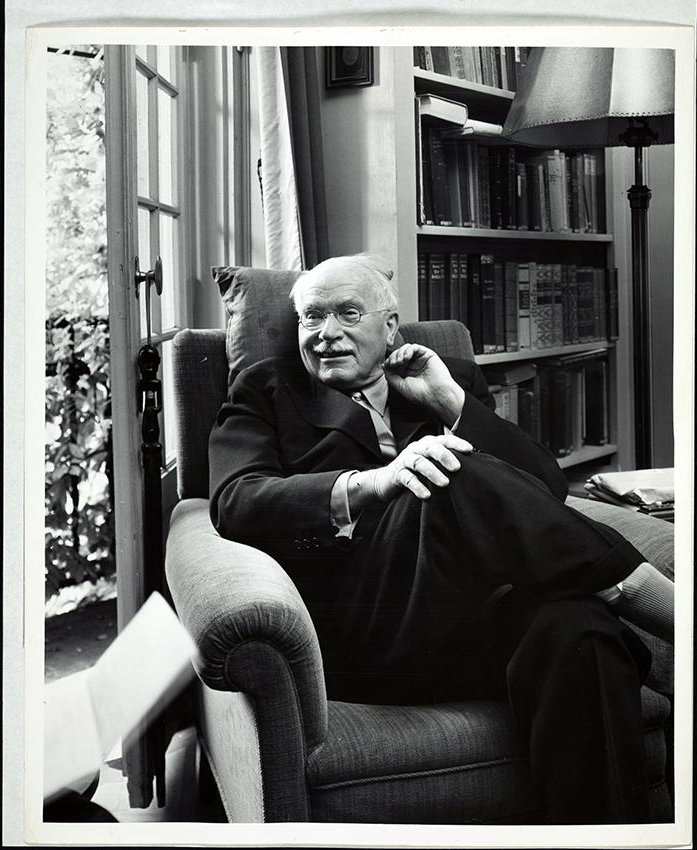
The discovery of psychological complexes. The birth of analytical psychology. Introverts and extroverts. Archetypes, the collective unconscious, and synchronicity. The extraordinary succession of ideas that made a Swiss psychiatrist one of the most influential thinkers of the twentieth century.
What if the greatest unexplored territory on Earth was not an ocean, a mountain range, or a distant continent?
What if it was the human mind?
At the beginning of the twentieth century, a young Swiss psychiatrist named Carl Gustav Jung began investigating a question that would occupy him for the rest of his life.
Why do human beings sometimes think, feel, dream, and behave in ways they do not consciously understand?
His investigation would produce an extraordinary succession of psychological theories, books, and discoveries that influenced generations of psychiatrists, writers, artists, philosophers, and spiritual thinkers.
Jung helped pioneer the study of psychological complexes.
He established analytical psychology as a distinct school of thought.
He popularized the psychological concepts of introversion and extraversion.
He proposed archetypes and the collective unconscious.
He explored the psychological significance of mythology, dreams, religion, and alchemy.
And late in his career, he developed the controversial concept of synchronicity: coincidences that appear meaningfully connected without a known causal relationship.
For Winning Streak, Jung represents a different kind of achievement: a sustained sequence of influential intellectual breakthroughs spanning more than fifty years.
His ideas have not all survived scientific scrutiny. Some remain controversial, difficult to test, or more influential in culture and psychotherapy than in experimental psychology.
But their historical impact is undeniable.
This is the story of a man who spent his life exploring the mysteries of human consciousness.
The Making of a Great Mind
Carl Gustav Jung was born on July 26, 1875, in Kesswil, Switzerland.
His father was a Protestant pastor, and his upbringing exposed him to questions about religion, morality, dreams, and spiritual experience.
Jung studied medicine at the University of Basel before beginning his psychiatric career at the Burghölzli hospital in Zurich in 1900.
The hospital was among Europe’s leading centers for psychiatric research.
Under the direction of psychiatrist Eugen Bleuler, Jung began investigating mental illness, unconscious thought processes, and the relationship between emotional experience and human behavior.
He was particularly interested in something that conventional medicine struggled to explain.
Why could an apparently ordinary word trigger an unexpected emotional reaction?
That question led to his first important breakthrough.
Breakthrough No. 1: The Word-Association Experiments — 1904–1907
Discovering the hidden influence of emotional complexes
Working at Burghölzli, Jung conducted word-association experiments in which participants responded as quickly as possible to a sequence of spoken words.
The responses were timed and analyzed.
Jung observed that certain words produced hesitation, repetition, unusual answers, or emotional reactions.
He proposed that these disruptions sometimes revealed emotionally charged associations operating outside conscious awareness.
He called these patterns complexes.
A complex, in Jung’s developing theory, was an organized cluster of thoughts, emotions, memories, and associations that could influence behavior without deliberate awareness.
The work helped establish his reputation as an innovative psychiatrist.
It also attracted the attention of Sigmund Freud, whose developing theories about the unconscious were transforming European psychology.
Winning Streak Achievement No. 1: Experimental research that helped establish the psychological complex as an influential concept in depth psychology.
Jung’s work had begun with measurable responses to words.
His next breakthrough would lead him into a far larger debate about the human mind.
Breakthrough No. 2: Beyond Freud — 1912–1913
The intellectual separation that created a new school
Jung and Freud met in Vienna in 1907.
The two men initially developed a close intellectual relationship.
Freud regarded Jung as an important ally in establishing psychoanalysis beyond its original circle.
Jung became the first president of the International Psychoanalytical Association in 1910.
But important differences emerged.
Freud emphasized the significance of sexuality, repression, and childhood experience in explaining psychological conflict.
Jung believed that the unconscious could not be adequately understood through those factors alone.
He increasingly explored mythology, religious symbolism, cultural traditions, and the possible developmental purposes of unconscious activity.
In 1912, he published Psychology of the Unconscious, a book that challenged aspects of Freud’s theoretical framework.
Their relationship deteriorated, with the personal and intellectual break becoming decisive in 1913.
Jung continued developing an independent approach that became known as analytical psychology.
It was a turning point in his career.
Rather than remaining within an established intellectual movement, he created a distinct framework for studying psychological experience.
Winning Streak Achievement No. 2: The establishment of analytical psychology as a separate intellectual tradition.
The separation carried personal and professional costs.
But it also opened the way for Jung’s most influential ideas.
Breakthrough No. 3: The Inner Expedition — 1913–1930
A journey into dreams, symbols, and imagination
Following his separation from Freud, Jung began an unusual period of personal exploration.
He recorded dreams, fantasies, images, and imagined conversations in a series of private notebooks.
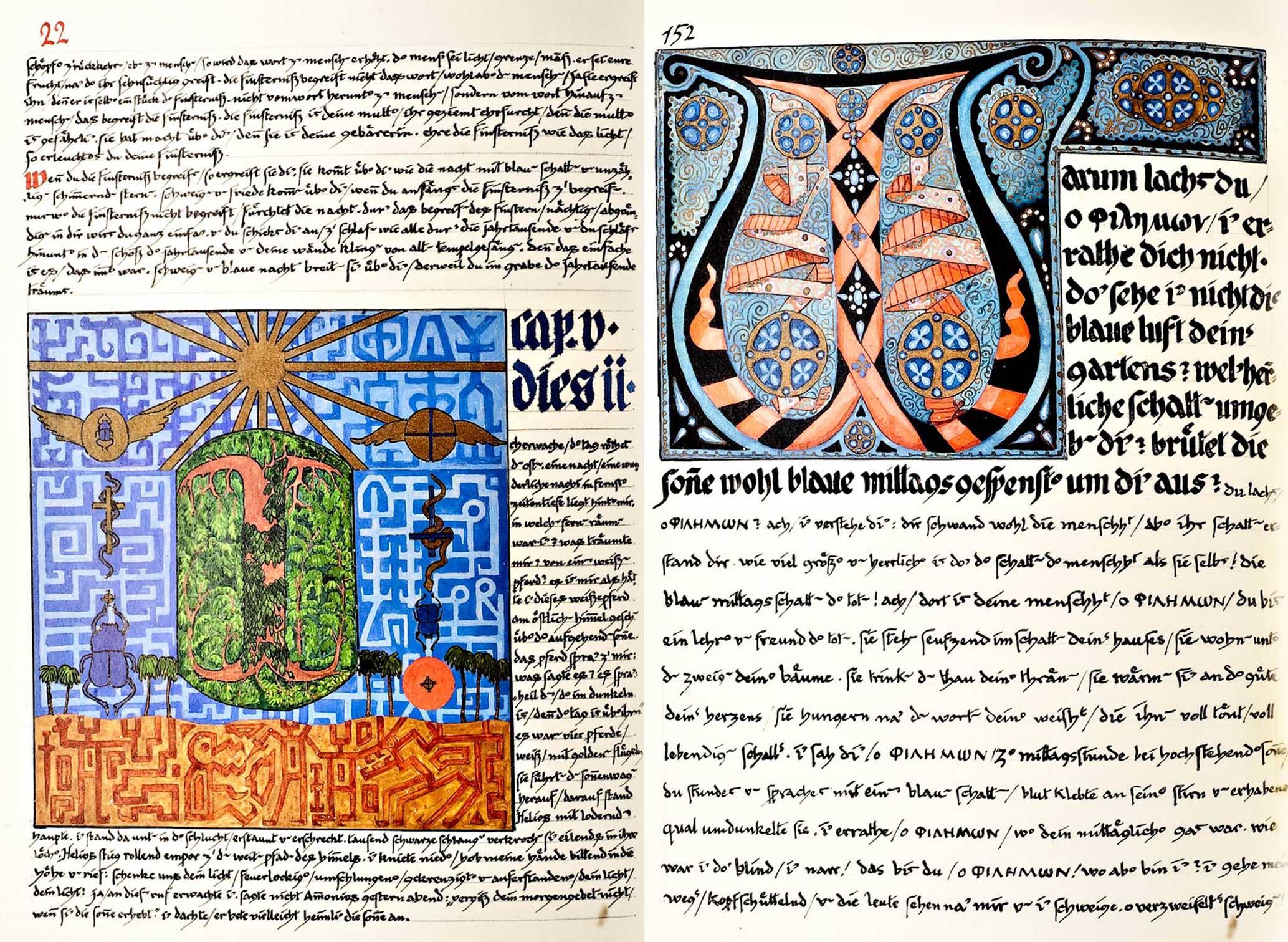
He later developed the material into an elaborate illustrated manuscript.
He called it Liber Novus, meaning New Book.
Today, it is better known as The Red Book.
Jung filled its pages with elaborate illustrations, symbolic figures, and handwritten reflections.
He developed a technique he called active imagination, in which an individual deliberately engages with images and fantasies arising in consciousness.
For Jung, the experience became central to his exploration of the psyche.
He believed that unconscious material could contribute to psychological development rather than merely represent symptoms requiring suppression.
The manuscript was an intensely personal investigation, not a conventional scientific experiment.
Jung continued working on it for years, largely between 1914 and 1930.
He did not publish it during his lifetime.
Nevertheless, he regarded the experiences recorded there as foundational to his later psychological theories.
Winning Streak Achievement No. 3: The development of an original approach to inner experience that influenced Jung’s subsequent work on symbolism, archetypes, and psychological development.
The manuscript would remain largely inaccessible to the public until 2009.
Its eventual publication became one of the most remarkable posthumous events in modern psychological history.
Breakthrough No. 4: Introverts and Extraverts — 1921
The personality concepts that entered everyday language
In 1921, Jung published Psychological Types.
The book introduced a systematic account of different psychological orientations and functions.
Among its most enduring contributions were the concepts of introversion and extraversion.
Jung proposed that people differed in their primary orientation toward inner subjective experience or the external world.
He also described four psychological functions: thinking, feeling, sensation, and intuition.
Together, these concepts formed the basis of his theory of psychological types.
Over time, the language of introversion and extraversion entered popular culture, education, business, and psychology.
Jung’s work later helped inspire the Myers-Briggs Type Indicator, developed by Katharine Cook Briggs and Isabel Briggs Myers.
However, contemporary personality research does not simply validate Jung’s original typology. Modern approaches often treat extraversion as a continuous personality trait rather than a rigid either-or category, and the scientific reliability of specific type-based classifications remains disputed.
Nevertheless, Jung’s influence upon the public vocabulary of personality is extraordinary.
Winning Streak Achievement No. 4: A theory of psychological types whose terminology became part of international everyday language.
Few psychiatrists have introduced concepts that ordinary people continue using more than a century later.
Breakthrough No. 5: Archetypes and the Collective Unconscious
Why do similar stories appear across civilizations?
Jung’s next great intellectual project involved a question that extended far beyond clinical psychiatry.
Why do myths, legends, dreams, religious traditions, and works of art from different cultures sometimes contain similar symbolic figures and narrative patterns?
He became fascinated by recurring images of heroes, mothers, shadows, transformations, and journeys.
Jung proposed that the human psyche contained more than personal memories and experiences.
He called this deeper hypothetical layer the collective unconscious.
According to his theory, human beings inherited underlying psychological predispositions that could give rise to recurring symbolic patterns.
He called these patterns archetypes.
Among the best-known Jungian concepts are the shadow, the persona, the self, and the archetypal hero.
Jung also developed the idea of individuation: a lifelong process of psychological development in which a person becomes more conscious of previously unrecognized aspects of the personality.
His interpretations drew upon religion, folklore, literature, ancient mythology, and comparative cultural studies.
The concepts became influential far beyond clinical psychology.
Writers, filmmakers, literary critics, artists, and scholars of mythology adopted or adapted Jungian ideas to interpret stories and symbols.
The collective unconscious remains a disputed scientific hypothesis, and recurring myths can have explanations involving shared human experiences, cultural transmission, and common social conditions without requiring an inherited symbolic system.
But Jung’s framework profoundly influenced the modern discussion of symbolism and psychological meaning.
Winning Streak Achievement No. 5: The development of a vocabulary for archetypes, symbolism, and psychological development that influenced multiple intellectual and artistic disciplines.
He had expanded his investigation from the psychology of individuals to the stories civilizations tell about themselves.
Breakthrough No. 6: Synchronicity — 1952
When coincidence appears meaningful
During his later career, Jung became increasingly interested in events that appeared connected through meaning rather than through an identifiable physical cause.
He described such experiences using the term synchronicity.
A familiar example would be thinking about someone unexpectedly and then receiving a message from that person.
For Jung, the significance lay not simply in the coincidence, but in the meaning experienced by the individual.
He discussed the idea publicly by 1930 and developed it further through correspondence with physicist Wolfgang Pauli.
In 1952, Jung published his mature treatment, Synchronicity: An Acausal Connecting Principle.
The theory proposed that certain events might possess meaningful relationships not adequately explained by conventional causal accounts.
The concept attracted considerable interest among philosophers, artists, psychologists, and readers concerned with the relationship between science and human experience.
It also generated substantial criticism.
Coincidences can arise from ordinary probability, selective attention, memory, and the human tendency to perceive patterns.
There is no broadly accepted scientific evidence establishing synchronicity as an independent causal or acausal principle governing events.
Its historical importance lies in Jung’s attempt to formulate a theory about the meaning people perceive in coincidence, rather than in a demonstrated scientific discovery of a new law of nature.
Winning Streak Achievement No. 6: An influential, though scientifically contested, philosophical and psychological hypothesis introduced into international intellectual debate.
At an age when many professionals had retired, Jung was still introducing new ideas.
The Shadow in Jung’s Own Legacy
An accurate assessment of Carl Jung must also address the controversies surrounding his life.
During the 1930s, Jung held leadership and editorial roles in professional psychotherapy organizations operating in Nazi Germany.
He made statements contrasting Jewish and non-Jewish psychology that have been criticized as antisemitic.
Historians have disagreed about his political intentions, the extent of his cooperation with Nazi-controlled institutions, and the significance of his later opposition to Hitler and Nazism.
The documentary record supports neither ignoring these concerns nor reducing his entire career to a single interpretation.
His intellectual achievements can be investigated alongside the ethical and historical controversies surrounding him.
There is also an important scientific distinction.
Jung’s clinical observations and experimental work helped contribute to the development of depth psychology.
But many of his later theories, particularly the collective unconscious and synchronicity, do not possess the kind of reproducible empirical support expected of established scientific explanations.
His influence is therefore best understood across several domains: historical psychiatry, psychotherapy, philosophy, literature, religious studies, and cultural interpretation.
That complexity makes his legacy more interesting, not less worthy of investigation.
The Final Chapter: A Book the World Had Never Seen
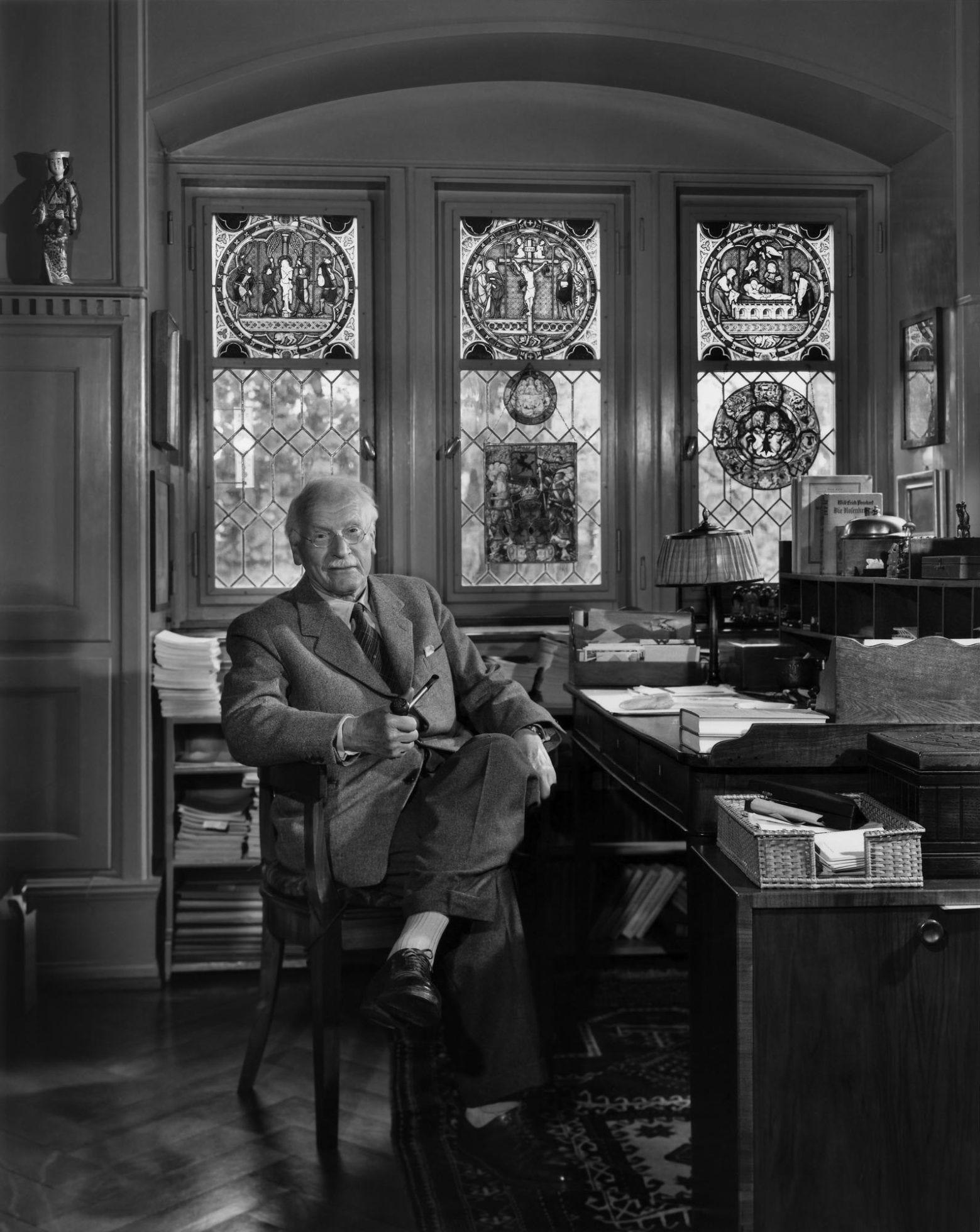
Carl Jung died in Küsnacht, Switzerland, on June 6, 1961.
He was 85 years old.
His published work had already established an enduring intellectual movement.
But an extraordinary final chapter remained.
For decades, The Red Book stayed largely inaccessible, held privately by Jung’s heirs.
In 2009, an illustrated facsimile edition was finally published under the editorship of Jung scholar Sonu Shamdasani.
The manuscript revealed the extraordinary imaginative material Jung had recorded during the development of his theories.
The Library of Congress subsequently mounted an exhibition examining its origins and influence.
Nearly half a century after Jung’s death, scholars and readers gained access to a major source for understanding his intellectual development.
The final milestone of Jung’s extraordinary career arrived forty-eight years after his death.
It was a reminder that intellectual achievements can continue producing new historical discoveries long after their authors are gone.
The Winning Streak Legacy
Carl Jung never competed in a tournament or pursued a world championship.
His achievements were not measured by consecutive victories over opponents.
Instead, he produced a sustained succession of influential ideas across more than five decades.
His contributions can be traced through a remarkable sequence:
- 1904–1907: Word-association experiments and the theory of psychological complexes.
- 1912–1913: The separation from Freud and development of analytical psychology.
- 1913–1930: The experiences and manuscript that became The Red Book.
- 1921: Publication of Psychological Types.
- 1920s–1940s: The elaboration of archetypes, the collective unconscious, and individuation.
- 1952: Publication of his mature theory of synchronicity.
- 2009: Posthumous publication of The Red Book.
Not every theory became established science.
Not every claim endured criticism.
But few twentieth-century psychiatrists generated such a wide-ranging and lasting conversation about personality, dreams, symbolism, identity, and psychological development.
His work encouraged generations of readers to examine the relationship between conscious intentions and the less familiar dimensions of human experience.
For Winning Streak’s Games & Great Minds collection, Jung offers an unusual example of sustained intellectual creativity.
Rather than solving one problem and declaring his work complete, he repeatedly expanded the scope of his investigation.
He began with experiments in a psychiatric hospital.
He continued through theoretical disputes, clinical research, cultural studies, and explorations of art and mythology.
And the consequences of his work extended far beyond his own lifetime.
Carl Gustav Jung (1875–1961). A pioneer of analytical psychology. Seven landmark chapters in a career of sustained intellectual inquiry. One extraordinary legacy in the history of ideas.
His winning streak was not an undefeated record.
It was a lifetime spent asking questions that continued to influence the world long after he was gone.
Carl Jung explored no distant continent. He helped change the map of the human mind.
Winning Streak chronicles remarkable consecutive achievements, investigating the history, individuals, decisions, and circumstances that made them possible.
Historical Research & References
- International Association for Analytical Psychology — Carl Gustav Jung — Biography, psychological development, and key theories.
- C. G. Jung Institute Zürich — Research — Word-association experiments and psychological complexes.
- Library of Congress — Before The Red Book — Early psychiatric research, Freud, and Jung’s intellectual development.
- Library of Congress — Jung’s Cultural Legacy — Psychological types, archetypes, and cultural influence.
- Library of Congress — Creation and Publication of The Red Book — The manuscript and its publication in 2009.
- Routledge Encyclopedia of Modernism — Carl Jung — Analytical psychology and its intellectual history.
- Princeton University Press — Synchronicity — History of Jung’s 1952 theory.
- PubMed — Jung and the Nazis: Some Implications for Psychoanalysis — Historical examination of the Nazi-era controversy.
- PubMed — A Collective Unconscious Reconsidered — Modern reconsideration of Jung’s theoretical framework.