
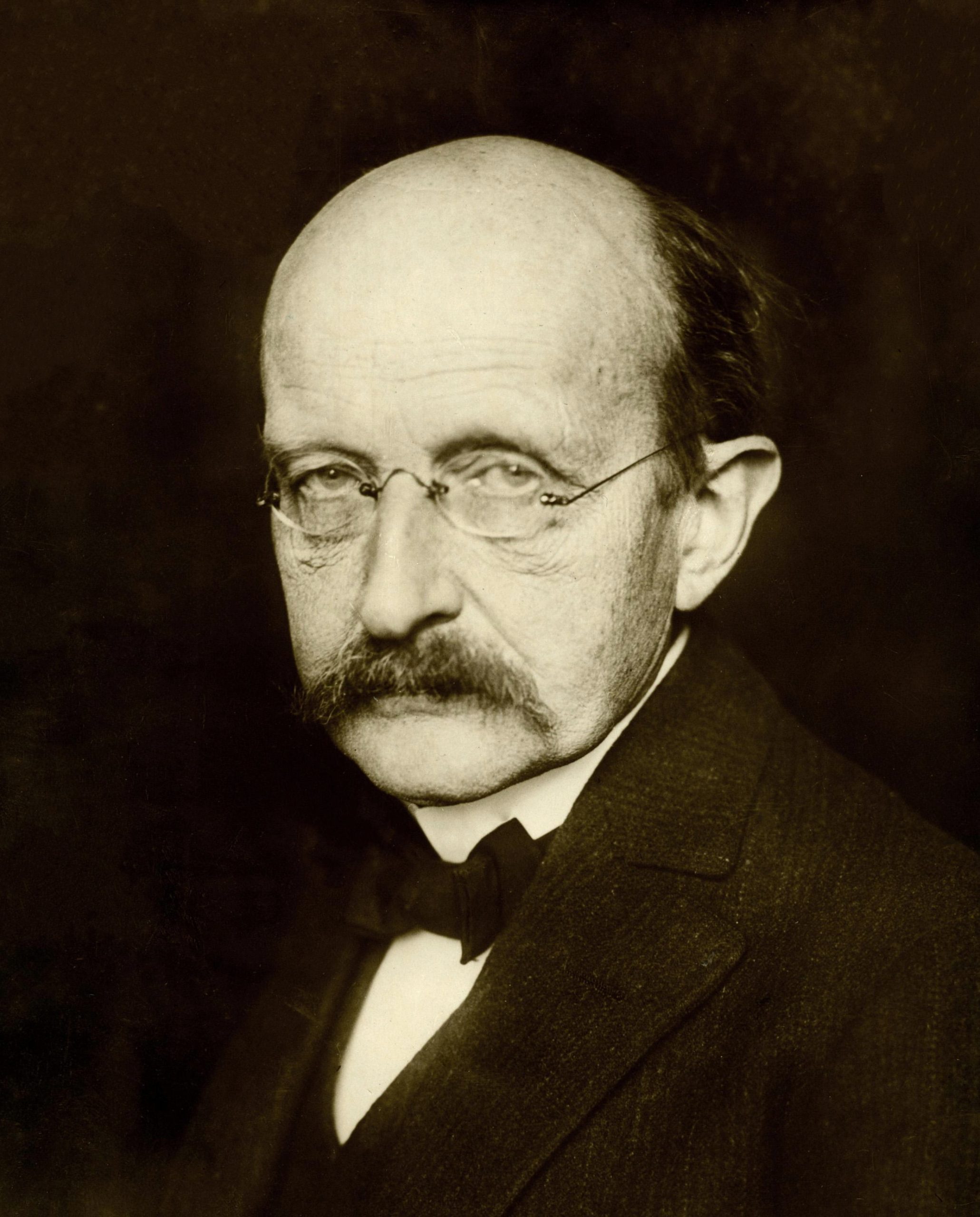
How a German physicist’s relentless pursuit of scientific truth launched the quantum revolution and established one of history’s most consequential intellectual winning streaks.
The Day Physics Changed Forever
On December 14, 1900, a 42-year-old German physicist named Max Planck stood before the German Physical Society in Berlin and presented an idea that would eventually overturn centuries of scientific understanding.
There were no fireworks, no extraordinary headlines, and certainly no immediate recognition that the foundations of modern physics had just shifted.
Planck proposed that energy, under certain circumstances, could be exchanged only in discrete quantities rather than continuously.
These tiny quantities became known as quanta.
With that discovery, Planck opened the door to quantum theory, one of the greatest intellectual revolutions in human history.
His achievement was not the result of a lucky experiment. It represented decades of disciplined thought, mathematical persistence, and an extraordinary willingness to challenge his own assumptions.
Max Planck had discovered that even the universe follows rules humanity had never imagined.
The Winning Streak Begins
Born on April 23, 1858, in Kiel, Germany, Max Karl Ernst Ludwig Planck grew up in an academic family that valued scholarship and intellectual discipline.
He studied physics at the universities of Munich and Berlin, earning his doctorate in 1879 at just 21 years old.
His principal interest was thermodynamics: the science of heat, energy, and the laws governing their transformation.
It was hardly the most glamorous field of scientific investigation. Yet Planck recognized that understanding energy could reveal something fundamental about the physical universe.
His career steadily advanced:
- 1879: Earned his doctorate, establishing his expertise in thermodynamics.
- 1885: Became associate professor of theoretical physics at the University of Kiel.
- 1892: Secured a full professorship at the University of Berlin.
- 1900: Discovered the quantum principle underlying his revolutionary radiation law.
- 1918: Awarded the Nobel Prize in Physics for his discovery of energy quanta.
- 1930–1937: Served as president of Germany’s prestigious Kaiser Wilhelm Society, helping lead one of the world’s great scientific institutions.
Unlike the winning streaks of champions who dominate tournaments or conquer territories, Planck’s victories accumulated through scholarship, patience, and mathematical insight.
His greatest triumph would emerge from a problem that other physicists could not solve.
The Problem Nobody Could Explain
During the late nineteenth century, physicists struggled to understand how heated objects emit radiation.
An iron bar glows red as it heats, eventually becoming yellowish and then white at higher temperatures.
Scientists could measure the radiation emitted at different frequencies, but existing physical theories could not fully reproduce the observed pattern.
The problem was known as blackbody radiation.
Planck believed that the established laws of physics should be capable of explaining the measurements. For years, he worked to reconcile theory with experimental evidence.
Then something remarkable happened.
In October 1900, Planck presented a mathematical formula that accurately described the observed radiation spectrum.
But obtaining a convincing theoretical explanation required an extraordinary step.
On December 14, he introduced the idea that energy associated with an oscillator could take only particular discrete values.
The size of each energy element depended on its frequency.
The relationship was beautifully simple:
E = hν
Where:
- E represents the energy of a quantum.
- h is Planck’s constant.
- ν represents the frequency.
Planck’s constant would become one of the fundamental constants of nature.
The discovery challenged the classical expectation that energy could always vary continuously.
Ironically, Planck had not set out to overthrow established physics. He was deeply committed to its principles and initially regarded quantization as a mathematical necessity rather than a complete description of nature.
Yet he had uncovered something his predecessors had missed.
The universe, at its smallest scales, behaved differently from the world described by classical physics.
The Discovery That Created a Dynasty of Genius
The significance of Planck’s achievement extended far beyond his original research.
In 1905, Albert Einstein advanced the quantum idea by proposing that light itself could behave as localized packets of energy, helping explain the photoelectric effect.
In 1913, Niels Bohr incorporated quantum principles into his model of the atom, helping explain the spectral lines emitted by hydrogen.
During the 1920s, Werner Heisenberg, Erwin Schrödinger, and other scientists developed the mathematical foundations of quantum mechanics.
Each breakthrough built upon the conceptual revolution Planck had initiated.
The consequences were extraordinary.
Quantum physics became essential to understanding atoms, molecules, electrons, and the behavior of matter itself.
It eventually helped make possible technologies that define the modern world:
- Transistors and semiconductor electronics
- Lasers and modern optical technologies
- Magnetic resonance imaging
- Atomic clocks and precision measurement
- Solar cells and advanced materials
- Emerging quantum computers and communication systems
The scientific revolution born from a question about heated objects ultimately transformed medicine, communications, computing, and industry.
Planck’s discovery was not simply a scientific victory. It created the foundation upon which generations of scientific victories would follow.
The Nobel Prize and the Price of Genius
In 1918, Max Planck was awarded the Nobel Prize in Physics in recognition of his discovery of energy quanta.
It was the defining public acknowledgment of a scientific achievement that had begun almost two decades earlier.
Yet his personal life was marked by extraordinary suffering.
His first wife, Marie, died in 1909. His eldest son, Karl, was killed during the First World War. His twin daughters, Grete and Emma, died in 1917 and 1919, respectively.
During the Nazi era, Planck attempted to protect German scientific institutions while navigating a dictatorship that increasingly subordinated scholarship to ideology. His record reflected difficult compromises rather than simple political defiance.
His son Erwin was executed in January 1945 following his alleged involvement in the conspiracy against Adolf Hitler.
Planck himself survived the destruction of much of the Germany he had known.
Despite these tragedies, he continued to regard scientific inquiry as a calling worthy of sustained dedication.
After the Second World War, he helped support the reconstruction of German science.
He died on October 4, 1947, at the age of 89.
The Legacy: A Winning Streak Beyond a Lifetime
Today, the Max Planck Society, named in his honor, operates an international network of research institutes dedicated to advancing scientific knowledge.
His name also lives on in Planck’s constant, Planck units, Planck’s radiation law, and numerous concepts central to theoretical physics.
Few individuals have left such a permanent signature on humanity’s understanding of reality.
Yet perhaps the most remarkable aspect of Planck’s story is that he was not pursuing scientific revolution for its own sake.
He was pursuing an answer.
He followed the evidence until it demanded a conclusion that conflicted with the physics he had trusted for most of his career.
That intellectual discipline became his greatest advantage.
Where others sought to preserve established explanations, Planck accepted the possibility that nature had something entirely different to teach.
And when his mathematics revealed the unexpected, he refused to abandon the discovery merely because its implications were uncomfortable.
The Winning Streak Verdict
Max Planck’s winning streak cannot be measured in consecutive championships, military victories, or financial returns.
It was a sustained progression of scientific achievements culminating in a discovery that permanently altered the direction of human knowledge.
From his early work in thermodynamics to the birth of quantum theory, his career demonstrated how intellectual perseverance can produce discoveries whose influence continues long after their originators are gone.
His work helped inspire a generation of physicists who transformed the twentieth century and laid the foundation for technologies still emerging in the twenty-first.
The greatest winning streaks do not always involve defeating competitors. Sometimes they involve defeating the limits of what humanity believes is possible.
Max Planck did exactly that.
And more than a century after his quantum breakthrough, the scientific revolution he began is still winning.
Winning Streak celebrates extraordinary sequences of achievement that changed history. Max Planck reminds us that one discovery, supported by decades of dedication, can become a victory for generations yet unborn.