
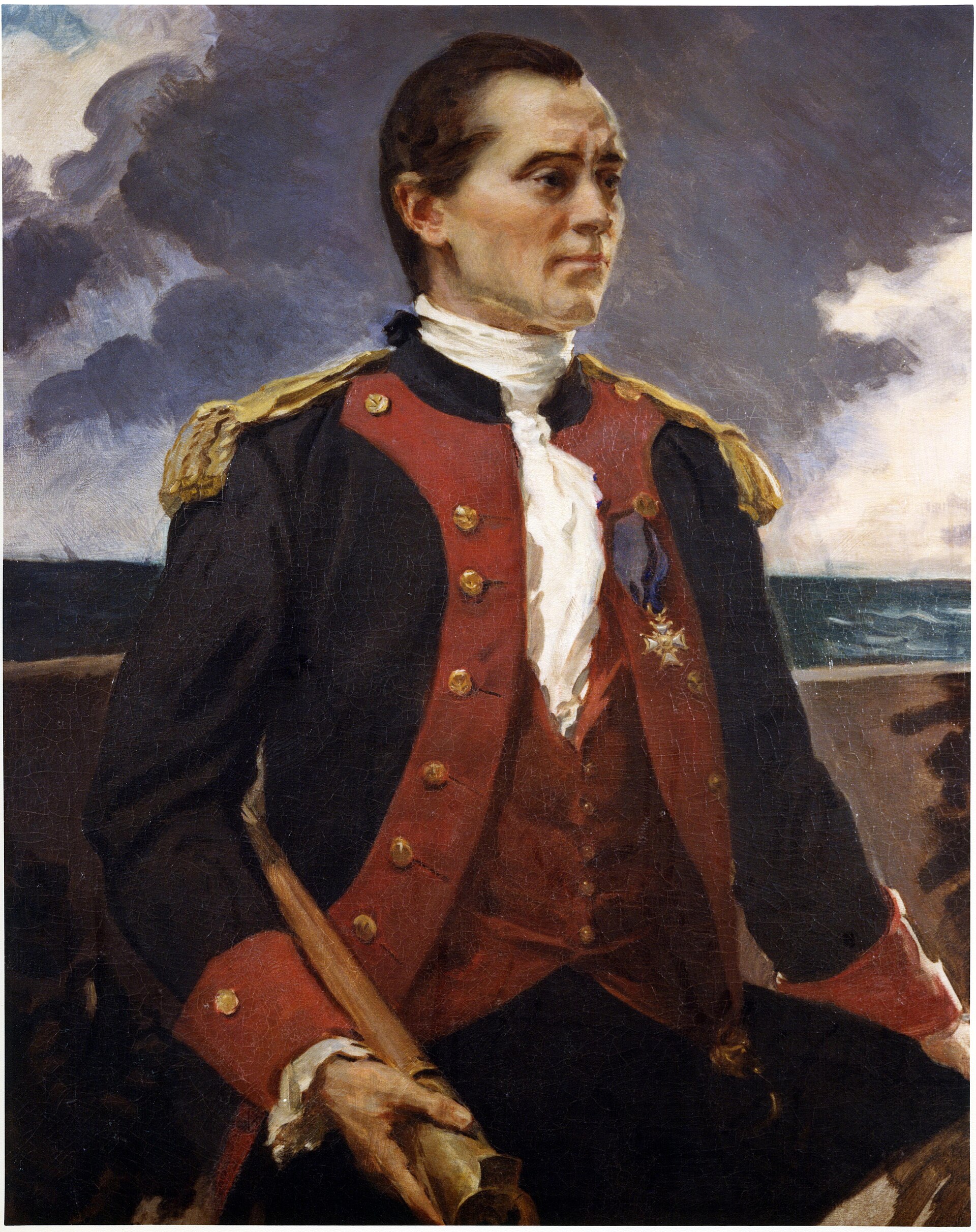
Sixteen British vessels captured or destroyed. A historic salute from France. Two legendary naval victories. The extraordinary story of the Scottish-born captain who helped establish the fighting traditions of the United States Navy.
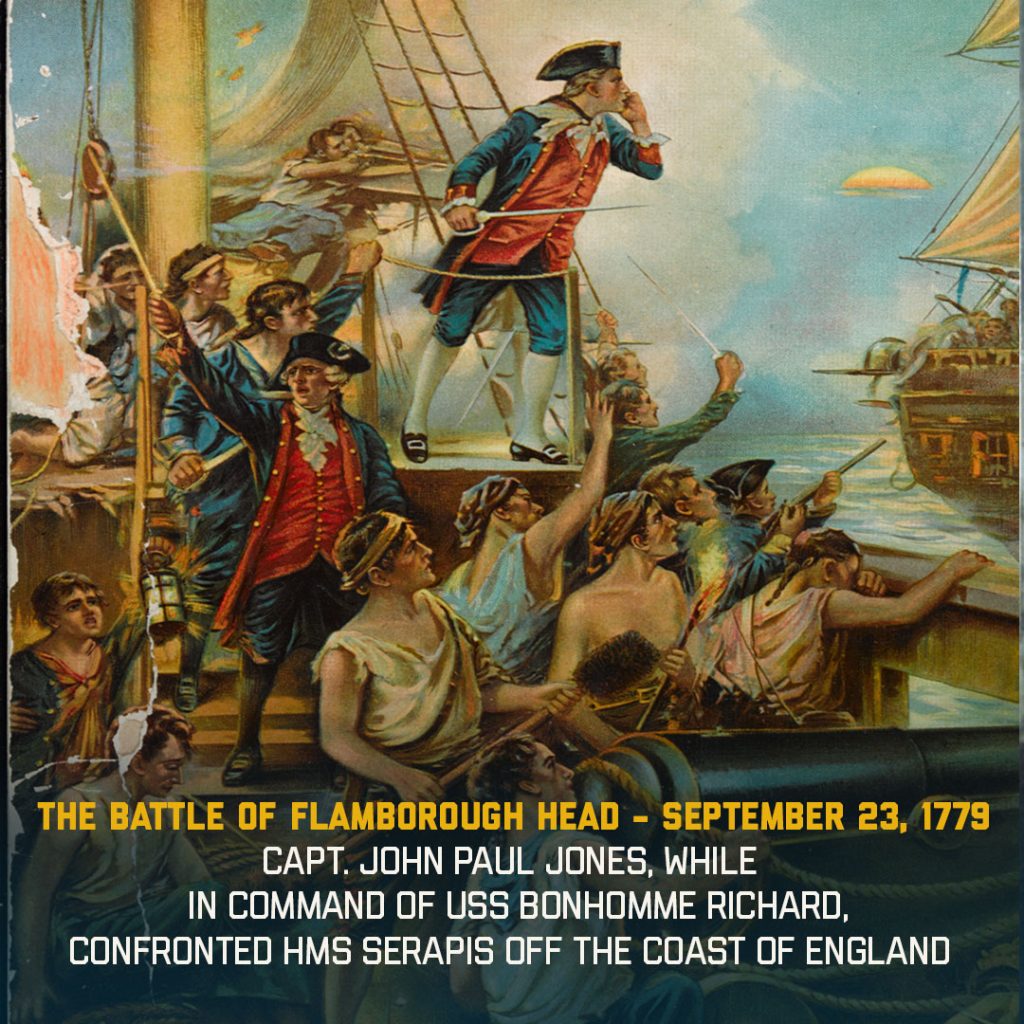
On September 23, 1779, off the northeastern coast of England, an American warship was being torn apart by British cannon fire.
Her decks were shattered. Her guns were disabled. Fire and water threatened to destroy her. Her crew was suffering devastating casualties.
The ship was the Bonhomme Richard, commanded by a 32-year-old Scottish-born captain named John Paul Jones.
Across the water, the powerful British frigate HMS Serapis appeared to have the advantage.
The British commander demanded to know whether Jones had surrendered.
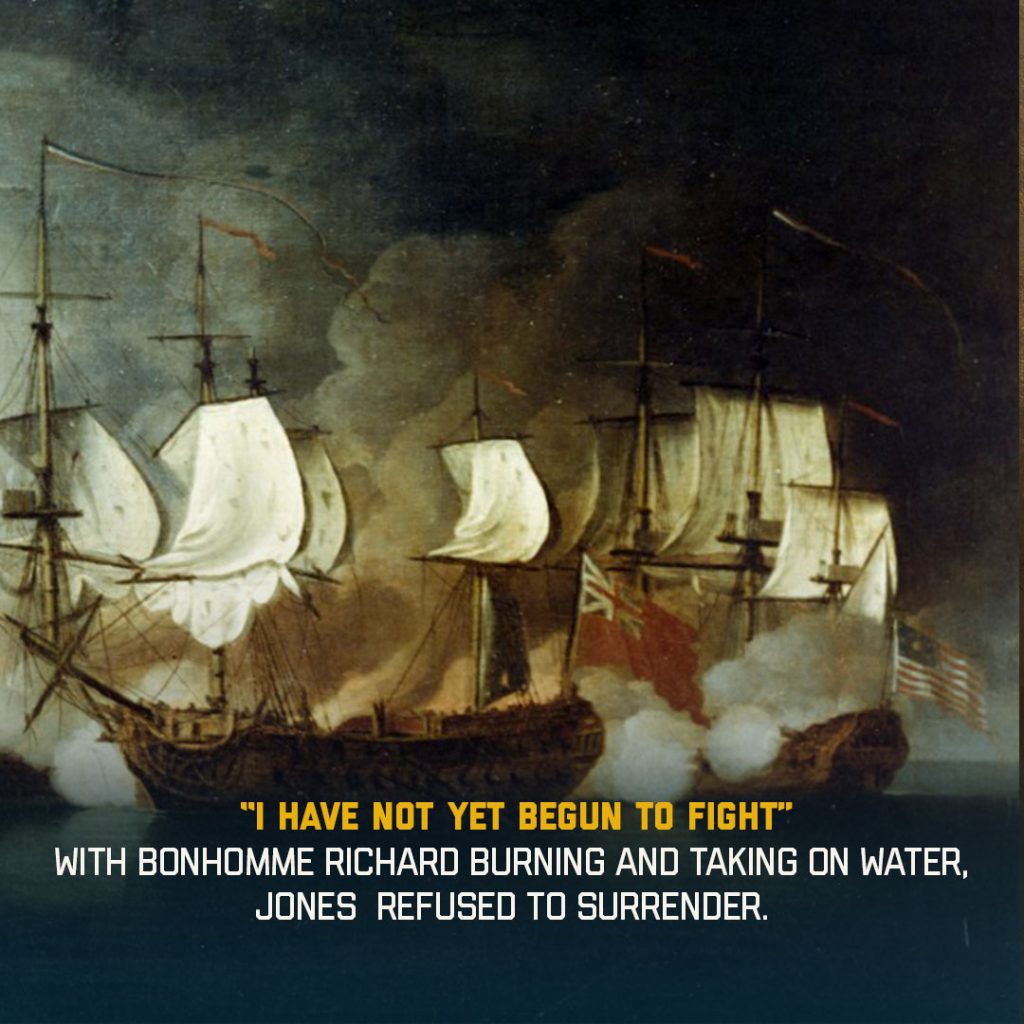
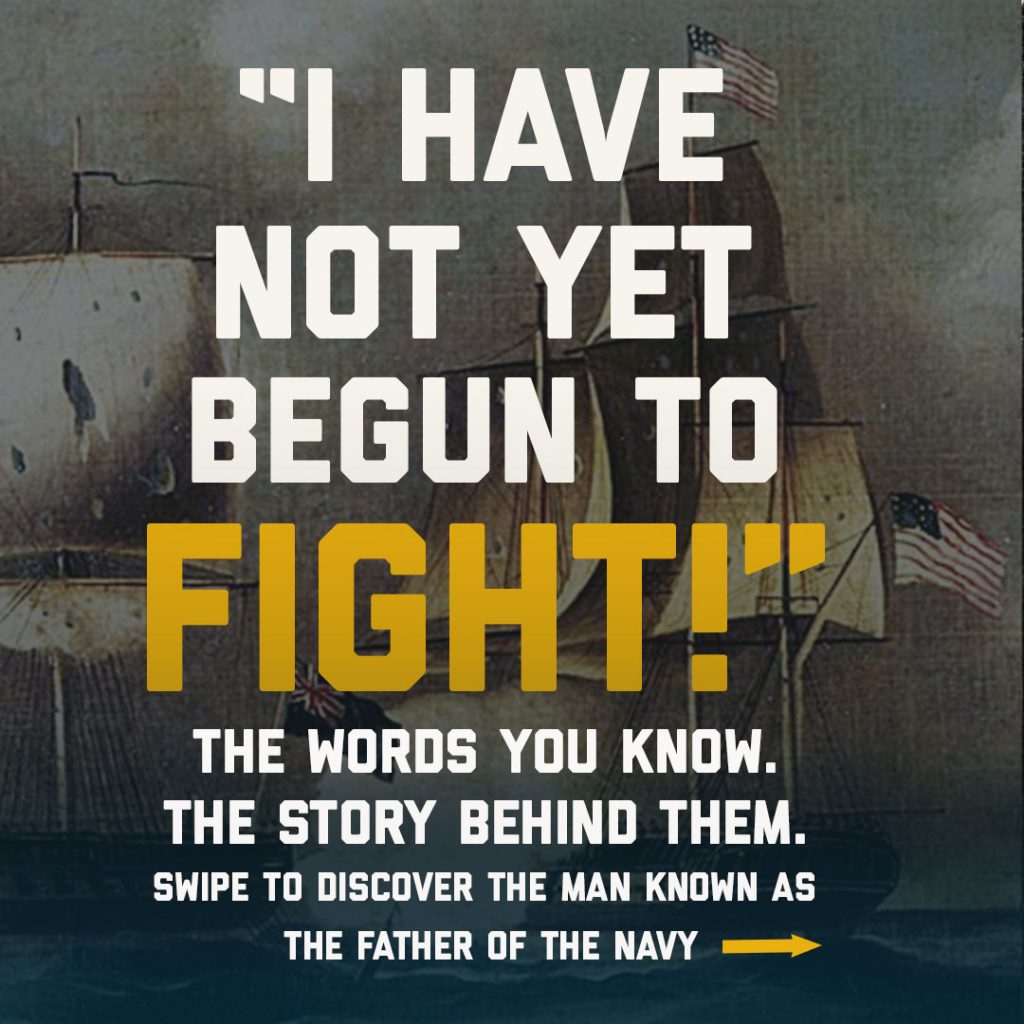
According to the most famous account of the battle, Jones responded with words that would echo through American naval history:
“I have not yet begun to fight!”
What followed was one of the most extraordinary reversals in the history of naval warfare.
Jones’s battered vessel would eventually sink.
But the British warship surrendered.
John Paul Jones had won a battle that appeared lost, completing a remarkable sequence of naval achievements that helped establish America’s reputation as a maritime fighting power.
From a nearly penniless immigrant to an internationally celebrated commander, Jones built his reputation through daring, tactical intelligence, remarkable persistence, and an unwillingness to accept defeat.
He would become widely known as the Father of the American Navy.
Yet the most compelling part of his story is not a single famous battle.
It is the winning streak that made that battle possible.
From Scotland to the American Revolution
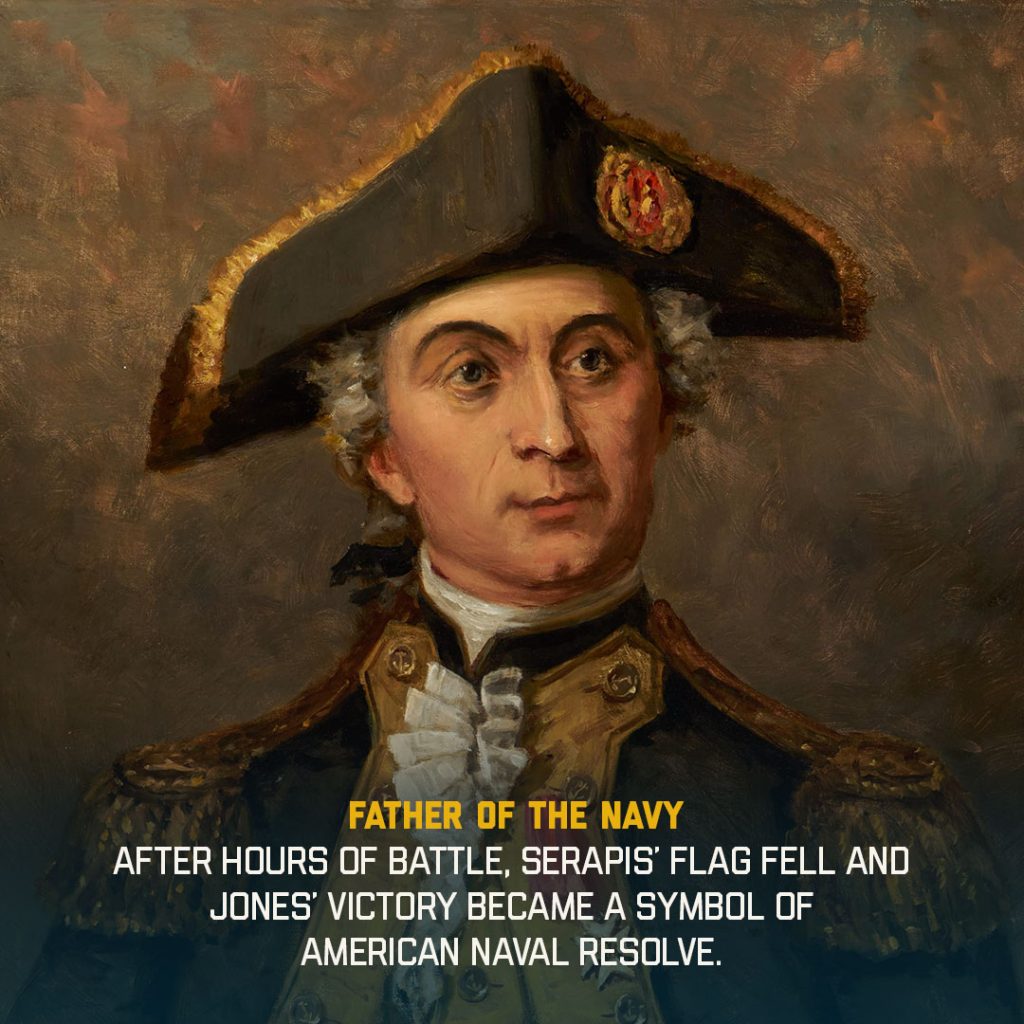
John Paul Jones was born John Paul on July 6, 1747, near Kirkbean, Scotland, overlooking the Solway Firth.
His father worked as a gardener. His family possessed neither great wealth nor political influence.
For a young man seeking adventure and advancement, the sea offered opportunities unavailable on land.
He began his maritime career at approximately 13 years of age, entering the British merchant service.
During the following decade, he learned navigation, seamanship, shipboard discipline, and the complex business of commanding sailors across the Atlantic.
His early career was not without controversy.
He served aboard vessels involved in the transatlantic slave trade, leaving that trade during the 1760s. Later disputes over his command decisions resulted in the deaths of two sailors in separate incidents.
In 1773, following a fatal confrontation with a crewman in Tobago that Jones maintained was self-defense, he fled to Virginia rather than face prosecution.
He eventually adopted the surname Jones.
When the American Revolution began in 1775, the former British merchant captain found an entirely new purpose.
The thirteen colonies were challenging the world’s most powerful maritime empire.
Britain possessed an established Royal Navy with experienced officers, formidable warships, overseas bases, and generations of institutional knowledge.
The Americans possessed comparatively little.
Their Continental Navy was being assembled almost from nothing.
For Jones, this imbalance represented an extraordinary opportunity.
He understood that a small naval force did not need to defeat the entire Royal Navy to make a meaningful contribution.
It needed to challenge British commerce, disrupt military supply lines, and demonstrate that American ships could carry the fight beyond their own coastline.
In December 1775, Jones became a lieutenant in the Continental Navy, serving aboard the flagship Alfred.
He had entered the service of a nation still struggling to establish its independence.
Within four years, his name would become famous across the Atlantic.
Winning Streak No. 1: Sixteen British Vessels — 1776
The captain who took the fight to sea
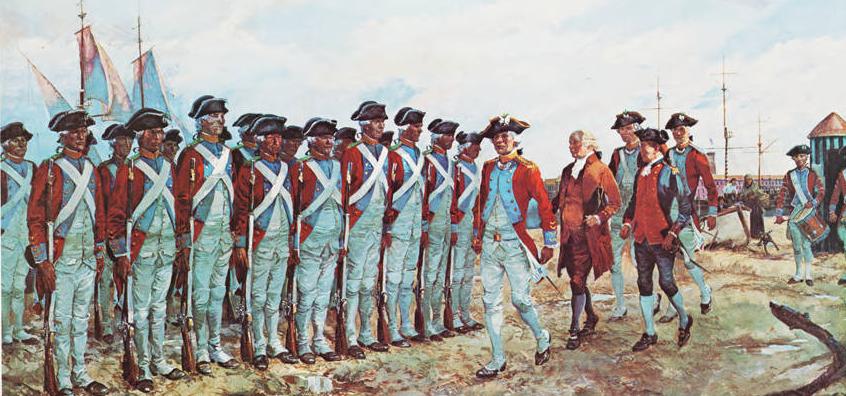
In 1776, John Paul Jones received command of the armed sloop Providence.
The small vessel was no match for Britain’s largest warships.
But Jones understood that naval warfare involved more than contests between heavily armed fleets.
Trade routes, fishing grounds, coastal communities, and merchant shipping were essential components of Britain’s Atlantic economy.
Against those targets, a fast and maneuverable American warship could become exceptionally dangerous.
Jones began conducting aggressive operations against British commerce.
He attacked shipping, intercepted merchant vessels, and struck British fishing interests along the Atlantic coast.
The results were remarkable.
In a letter dated October 17, 1776, Jones reported taking sixteen British vessels during his cruise.
Eight were sent into port as prizes.
The remainder were sunk, burned, or otherwise destroyed.
For a commander operating with limited resources against the dominant naval empire of his age, the result demonstrated extraordinary initiative.
Jones had found a way to impose real economic costs upon an opponent whose conventional naval strength vastly exceeded his own.
His operations also created an important psychological effect.
British merchants and coastal communities could no longer assume that the Royal Navy would provide complete protection.
American warships were becoming a threat beyond the immediate American coastline.
Winning Streak Achievement No. 1: Sixteen British vessels taken or destroyed during the 1776 Providence cruise.
It was an early demonstration that preparation, speed, and intelligent selection of targets could compensate for limited resources.
The achievement earned Jones greater responsibility.
His next mission would carry the American Revolution directly into European waters.
Winning Streak No. 2: The American Flag Wins Recognition — February 14, 1778
Thirteen guns answered by nine
In 1777, Jones received command of the Continental Navy warship Ranger, constructed at Portsmouth, New Hampshire.
He sailed to France carrying news of the American victory at Saratoga, a development of enormous diplomatic importance.
France was moving toward a formal alliance with the rebelling American colonies.
But America’s status as an independent maritime power remained an evolving question.
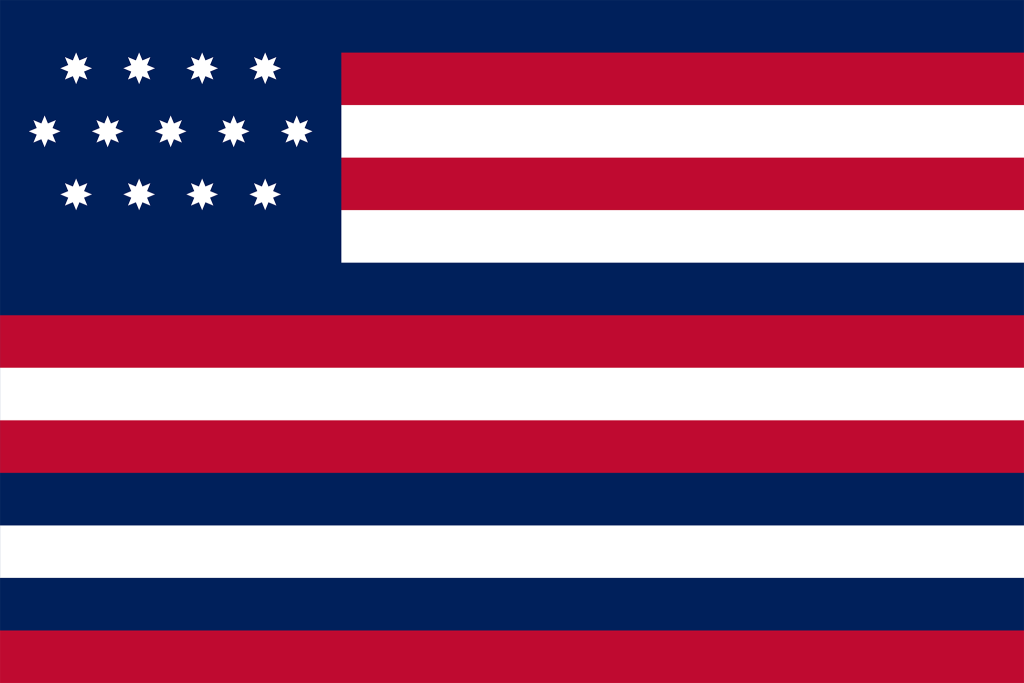
On February 14, 1778, Jones sailed Ranger into Quiberon Bay, where French warships were anchored.
He arranged an exchange of naval gun salutes with French Admiral La Motte-Picquet.
Ranger fired thirteen guns.
The French admiral returned nine.
The exchange was a formal acknowledgment of the American naval flag by a foreign warship.
Jones recognized the significance immediately.
It was not simply a gesture of courtesy.
It represented the emerging United States receiving recognition in the traditions of international naval diplomacy.
The distinction matters: an American vessel, Andrew Doria, had received a foreign shore salute at Sint Eustatius in 1776. The French exchange in 1778 is remembered specifically as the first formal salute to the Stars and Stripes by a foreign naval force.
Jones regarded the event as an acknowledgment of American independence.
Winning Streak Achievement No. 2: The Continental Navy’s new flag received a historic formal salute from the French fleet.
The captain was no longer simply winning prizes at sea.
He was helping establish the diplomatic standing of a new nation’s navy.
Winning Streak No. 3: HMS Drake Falls — April 24, 1778
Bringing the war to Britain’s doorstep
Only weeks after the French salute, Jones launched one of the most daring naval operations of the American Revolution.
Instead of remaining near friendly ports, he sailed Ranger toward the British Isles.
His objective was to strike British shipping and demonstrate that Britain itself was vulnerable to attacks from the American navy.
In April 1778, Jones led a raid on Whitehaven, an English port connected to his early seafaring experience.
The operation included an attempt to damage harbor defenses and set shipping on fire.
The raid achieved only limited physical damage, but its psychological significance was considerable.
An American naval commander had landed a raiding party on the British coast.
The implications were startling.
Britain’s own maritime communities were no longer beyond the reach of American retaliation.
Jones then sailed toward the Irish Sea, where HMS Drake, a British sloop-of-war, was stationed near Carrickfergus.
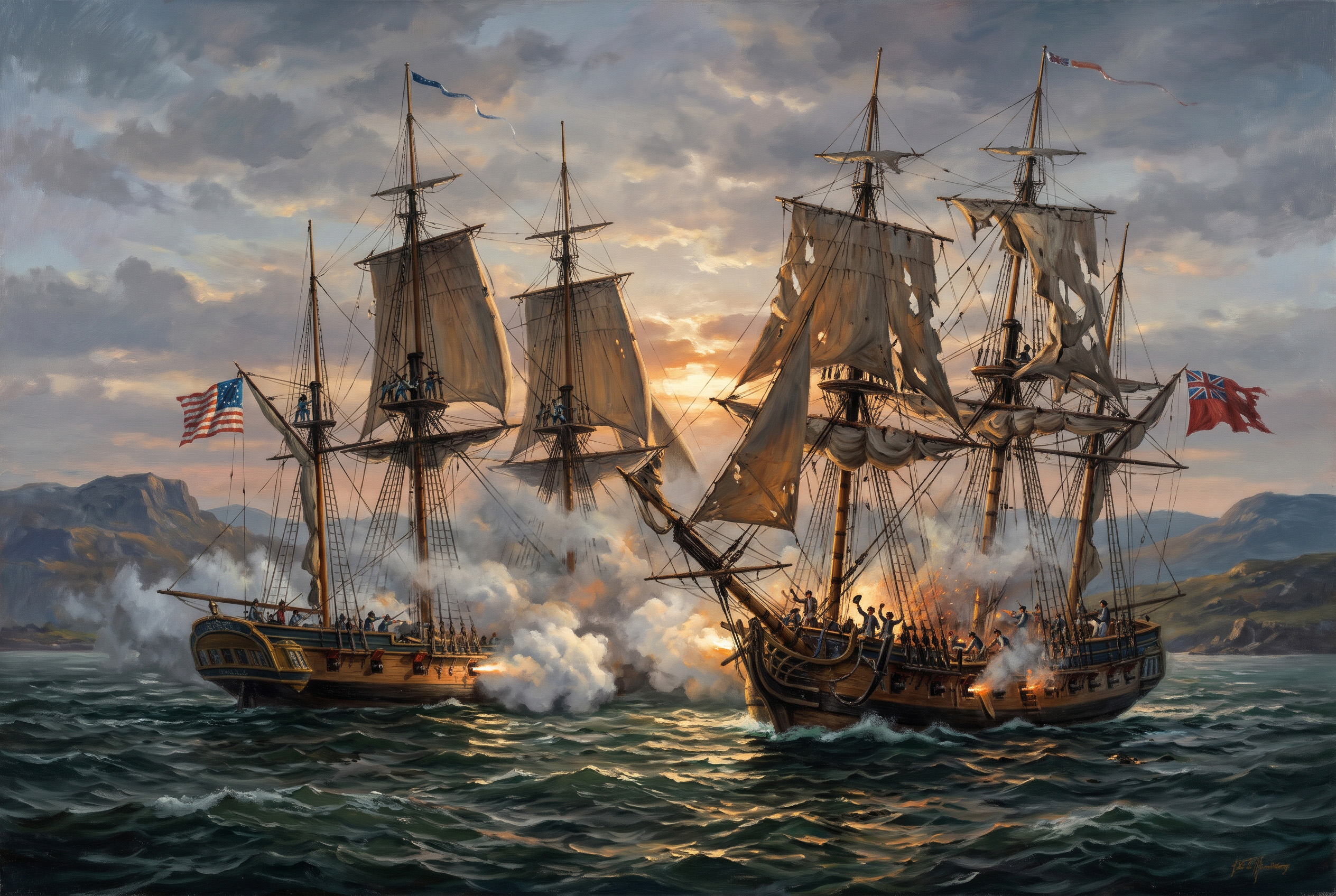
On April 24, 1778, Ranger engaged Drake.
The two vessels exchanged cannon fire in a fierce action lasting approximately an hour.
Eventually, the battered British warship surrendered.
Jones had captured a commissioned Royal Navy fighting vessel in British home waters.
Unlike the seizure of a merchant ship, this was a direct victory over the Royal Navy itself.
News of the engagement spread throughout Britain and France.
To American supporters, Jones had become a hero.
To many in Britain, he was denounced as a pirate, although he was acting as a commissioned naval officer of the revolutionary American government.
The victory helped establish his international reputation.
Winning Streak Achievement No. 3: The capture of HMS Drake, April 24, 1778.
It represented the moment when Jones demonstrated that the fledgling Continental Navy could directly challenge Britain’s own warships near its shores.
His greatest achievement was still ahead.
Winning Streak No. 4: The Battle of Flamborough Head — September 23, 1779

The battle America could not afford to lose
By 1779, John Paul Jones had become one of the most celebrated naval commanders serving the American cause.
Through the support of Benjamin Franklin and the French government, he obtained command of a converted French merchant vessel.
The ship was renamed Bonhomme Richard, honoring Franklin’s famous Poor Richard writings.
Jones assembled a Franco-American squadron and returned to British waters.
On September 23, near Flamborough Head on England’s northeastern coast, his squadron encountered a British merchant convoy protected by warships.
Among the escorts was HMS Serapis, a powerful and relatively new frigate commanded by Captain Richard Pearson.
Jones attacked.
What followed was a brutal struggle.
The Bonhomme Richard, originally a merchant vessel, was at a disadvantage against the more modern British warship.
Early in the action, explosions disabled some of Jones’s heaviest guns and killed members of their crews.
British broadsides inflicted devastating damage.
The American ship began taking on water.
Fires broke out.
Many commanders confronting those circumstances would have surrendered or attempted to escape.
Jones chose another course.
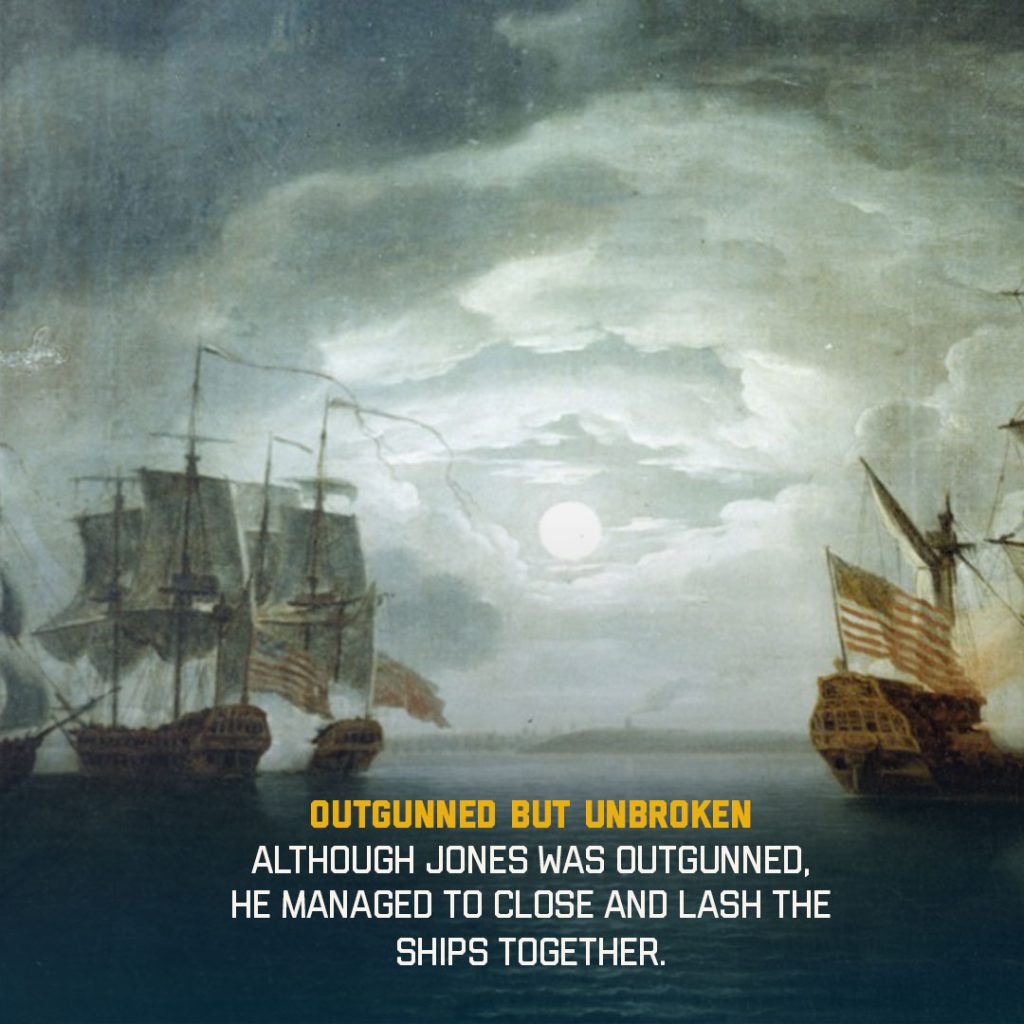
He maneuvered alongside Serapis, bringing the ships into extremely close contact.
Eventually, the vessels became entangled, transforming a conventional exchange of cannon fire into a desperate struggle at close quarters.
Musket fire, grenades, and boarding attempts intensified the battle.
At one point, Captain Pearson demanded to know whether the American vessel had struck its colors.
Jones refused to surrender.
His refusal became the source of the celebrated declaration associated with his name.
The exact words remain historically disputed.
The famous version was recorded decades afterward through the recollections of Jones’s lieutenant, Richard Dale. Jones’s own account confirms that he firmly rejected surrender but does not reproduce the famous sentence.
Regardless of the precise wording, Jones continued fighting.
After hours of combat, Serapis finally surrendered.
The result astonished observers.
The American commander had captured the more powerful British warship while his own vessel was mortally damaged.
The Bonhomme Richard eventually sank from battle damage.
Jones transferred his command to the captured Serapis.
Winning Streak Achievement No. 4: The capture of HMS Serapis despite the destruction of Jones’s own flagship.
It was an extraordinary military achievement and one of the defining naval battles of the American Revolution.
But it came at a terrible human cost.
Sailors on both sides had been killed or wounded. Jones’s victory was not bloodless or inevitable.
It depended upon the endurance and courage of a multinational crew that continued fighting under appalling conditions.
The triumph was theirs as well as their commander’s.
Why John Paul Jones Became the Father of the American Navy
The Framers of the Constitution understood our freedom depended on our strength at sea. That is why generations of Sailors have answered the call to protect our nation on the deck, beneath the waves, and in the skies above. 251 years. One team. One fight. 🇺🇸⚓ https://t.co/6YUecJnckh
— U.S. Navy (@USNavy) October 13, 2026
The title Father of the American Navy is frequently associated with John Paul Jones.
Yet, strictly speaking, he was not its sole founder.
The Continental Navy was created through the decisions of the Continental Congress, with contributions from numerous naval officers, political leaders, shipbuilders, and sailors.
Commodore John Barry, for example, also carries the title Father of the American Navy, particularly because of his service in both the Continental Navy and the permanent United States Navy established afterward.
John Adams was another essential figure in the development of American naval policy.
Jones’s distinction was different.
He helped create the American Navy’s early fighting identity.
He demonstrated that American naval forces could operate offensively, challenge British warships, cooperate with foreign allies, and undertake ambitious missions thousands of miles from American ports.
He also believed that successful naval operations required professional standards and properly trained officers and crews.
Jones represented a philosophy of naval command in which preparation and boldness were complementary rather than competing virtues.
A navy needed discipline.
It needed reliable ships.
It needed trained sailors.
But it also needed commanders willing to take calculated risks and exploit opportunities.
Jones supplied a vivid example of that combination.
His victories helped establish a naval tradition that extended beyond the Revolutionary War.
From American Hero to Russian Admiral

Jacob Philipp Hackert, 1771
The American Revolution ended without providing John Paul Jones with the long-term naval command he hoped to obtain.
The Continental Navy was gradually dismantled as the new United States struggled with financial and political challenges.
Jones continued seeking opportunities for service.
In 1788, he entered the Russian Navy under Empress Catherine the Great, receiving the rank of rear admiral.
He participated in operations against Ottoman forces in the Black Sea.
The assignment demonstrated the international recognition his naval abilities had achieved.
But his Russian service was troubled by rivalries, political disputes, and a serious allegation that damaged his position.
Jones ultimately left Russian service in 1789 and returned to Paris.
Despite serving under a foreign monarch, he continued to identify with the United States.
On July 18, 1792, John Paul Jones died in Paris at the age of 45.
The man who had carried the American flag into British waters was buried in France.
For more than a century, his grave remained largely forgotten.
His historical reputation, however, continued to grow.
A Naval Hero Returns Home — 1905 to 1913
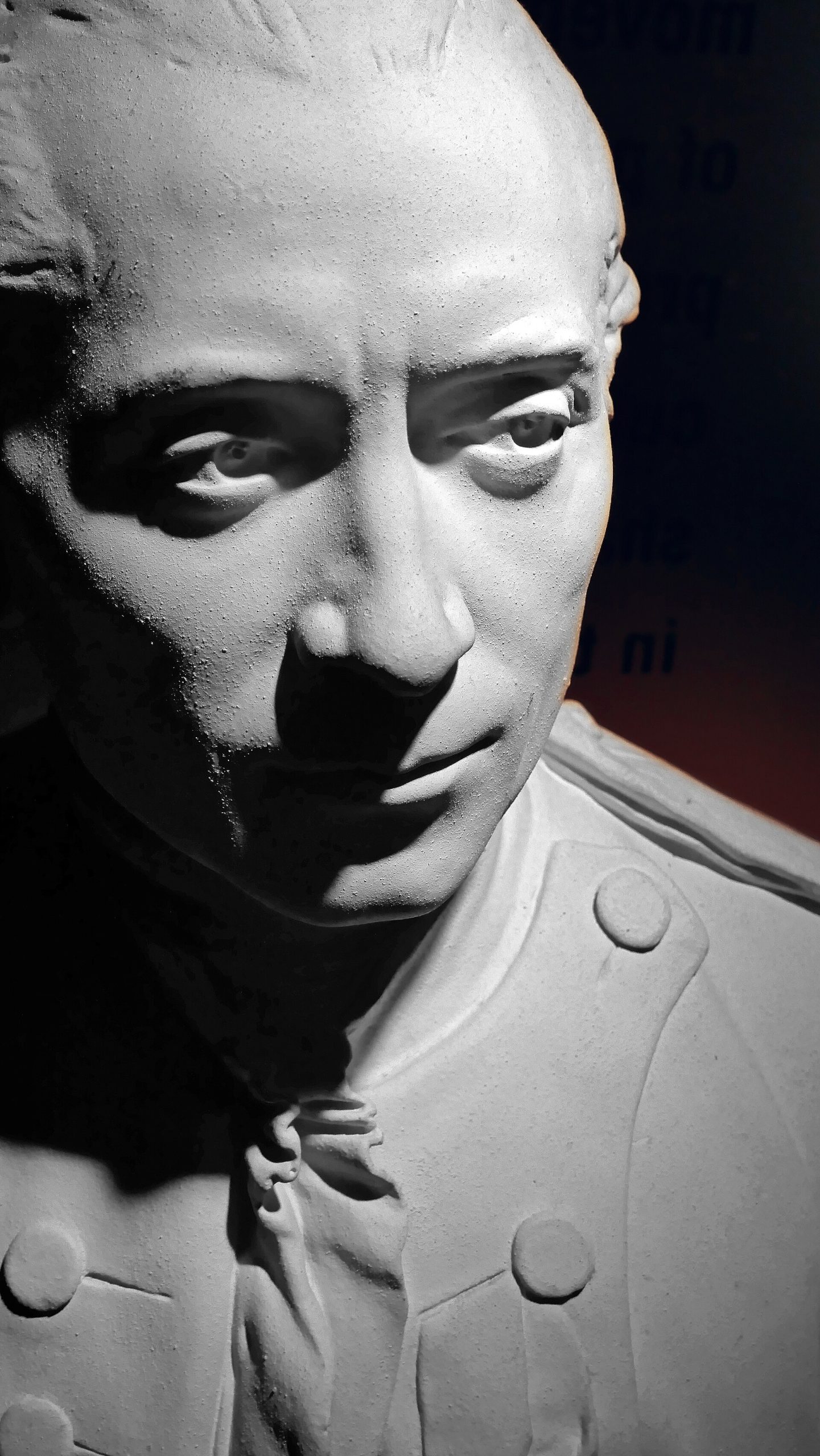
In 1899, American diplomat Horace Porter began an extensive search for John Paul Jones’s burial place in Paris.
After six years of research and excavation, his remains were identified in 1905.
The United States arranged their return aboard an American warship, accompanied by a naval escort.
On April 24, 1906, President Theodore Roosevelt participated in ceremonies honoring Jones at the United States Naval Academy in Annapolis, Maryland.
It was a fitting tribute.
One of America’s earliest naval heroes was being welcomed home by a nation whose naval forces had grown far beyond anything he could have imagined.
On January 26, 1913, his remains were finally placed in an ornate sarcophagus beneath the Naval Academy Chapel.
His tomb bears an inscription recognizing the traditions he helped establish:
“He gave our navy its earliest traditions of heroism and victory.”
That tribute captures why his name remains important.
Jones’s greatest legacy was not simply the destruction or capture of enemy vessels.
It was the example he established for future generations of American sailors.
The Winning Streak Behind an American Dynasty

John Paul Jones did not command a hereditary dynasty.
He did not establish a family that ruled a nation or controlled a fleet across generations.
The dynasty he helped create was institutional.
It was a tradition of professional naval service, carried forward through successive generations of officers, sailors, ships, and commanders.
His achievements during the American Revolution formed an extraordinary historical sequence:
- 1776: Sixteen British vessels taken or destroyed during his Providence cruise.
- 1778: Formal French naval recognition of the American flag at Quiberon Bay.
- 1778: Capture of HMS Drake in British home waters.
- 1779: Defeat and capture of HMS Serapis at the Battle of Flamborough Head.
These were separate landmark achievements, not a claim that Jones won every engagement or enjoyed an uninterrupted record of victories.
Their significance lies in the repeated ability to accomplish difficult objectives with limited resources against a vastly more powerful opponent.
Jones demonstrated that maritime strength depended upon more than the number of ships or guns available.
Leadership mattered.
Training mattered.
Adaptability mattered.
The willingness to confront an apparently superior opponent mattered.
And, above all, the ability to persist under extraordinary pressure could change the outcome of a battle.
His most famous victory was achieved aboard a ship that would never sail again.
That paradox defines his legacy.
He lost his flagship but captured his opponent.
He served a country without an established naval tradition and helped create one.
He was born in Scotland but became one of America’s most celebrated Revolutionary War commanders.
And although he died far from the United States, his name became permanently associated with the naval service he helped establish.
The Winning Streak Legacy: A Nation Finds Its Sea Power
More than 250 years after the Continental Navy was established in 1775, the American naval tradition remains one of the most recognizable institutions in military history.
Its modern ships, aircraft, submarines, and technological systems bear little resemblance to the wooden vessels commanded by John Paul Jones.
Yet the qualities associated with his greatest achievements—preparation, professional excellence, decisive leadership, and determination under pressure—remain central to the service’s understanding of its heritage.
For Winning Streak, John Paul Jones represents a remarkable historical lesson.
Great institutions are rarely created in a single moment.
They emerge from repeated achievements that establish expectations, inspire successors, and create traditions capable of surviving their founders.
John Paul Jones’s winning streak did not merely secure prizes or produce famous battles.
It helped establish the reputation of an American naval service that would outlive him by centuries.
John Paul Jones (1747–1792). Sixteen British vessels taken or destroyed in one cruise. A historic diplomatic salute. Two celebrated victories over Royal Navy warships. One enduring American naval legacy.
The captain who refused to surrender had helped give a new nation something priceless:
The confidence to fight—and win—at sea.
Winning Streak chronicles remarkable consecutive achievements, investigating the history, individuals, decisions, and circumstances that made them possible.
Historical Research & References
- U.S. Naval History and Heritage Command — John Paul Jones
- National Archives — The Papers of John Paul Jones
- U.S. Navy — Ranger I (1777–1780)
- U.S. Navy — Bonhomme Richard I
- Smithsonian Institution — John Paul Jones and HMS Serapis, 1779
- U.S. Department of State — Recovery of the Body of John Paul Jones, 1905
- U.S. Naval History and Heritage Command — John Barry